Condemnation Without Commitment: Three Strikes on Saudi Arabia Leave the Mecca Clause Unused as Ankara and Jerusalem Trade Genocide Charges
The Mecca Defense Alliance met its first live tests in the window, and none of them came from Israel. Between September 8 and September 14 Houthi forces and Iraq-based militias struck Saudi cities, the East-West pipeline, and King Khalid Air Base. Turkey answered each attack with a Foreign Ministry condemnation, offered no capability, and publicly praised Riyadh for not retaliating. Pakistan came closer to invoking the pact than any signatory has, then withdrew the language within a day. The mutual-defense clause has now sat unused through four attacks touching signatories. We assess that the alliance performed as a solidarity mechanism and not as a collective-defense system, and that every test it passes without invocation lowers the cost, for Ankara, of the next institutional step. On the Israeli-Turkish track the change was one of register. Both foreign ministries, and both foreign ministers by name, now accuse the other side’s leadership of genocide in official channels, and neither government paired the words with a military or diplomatic step. A direct Israeli-Turkish clash remains unlikely in the coming weeks. The confrontation matrix now carries a third theater, the Gulf, where a Saudi request for assistance under the pact would force Ankara to choose between the signal and the clause. This post updates our September 2 summary with the August 29 to September 15 record.
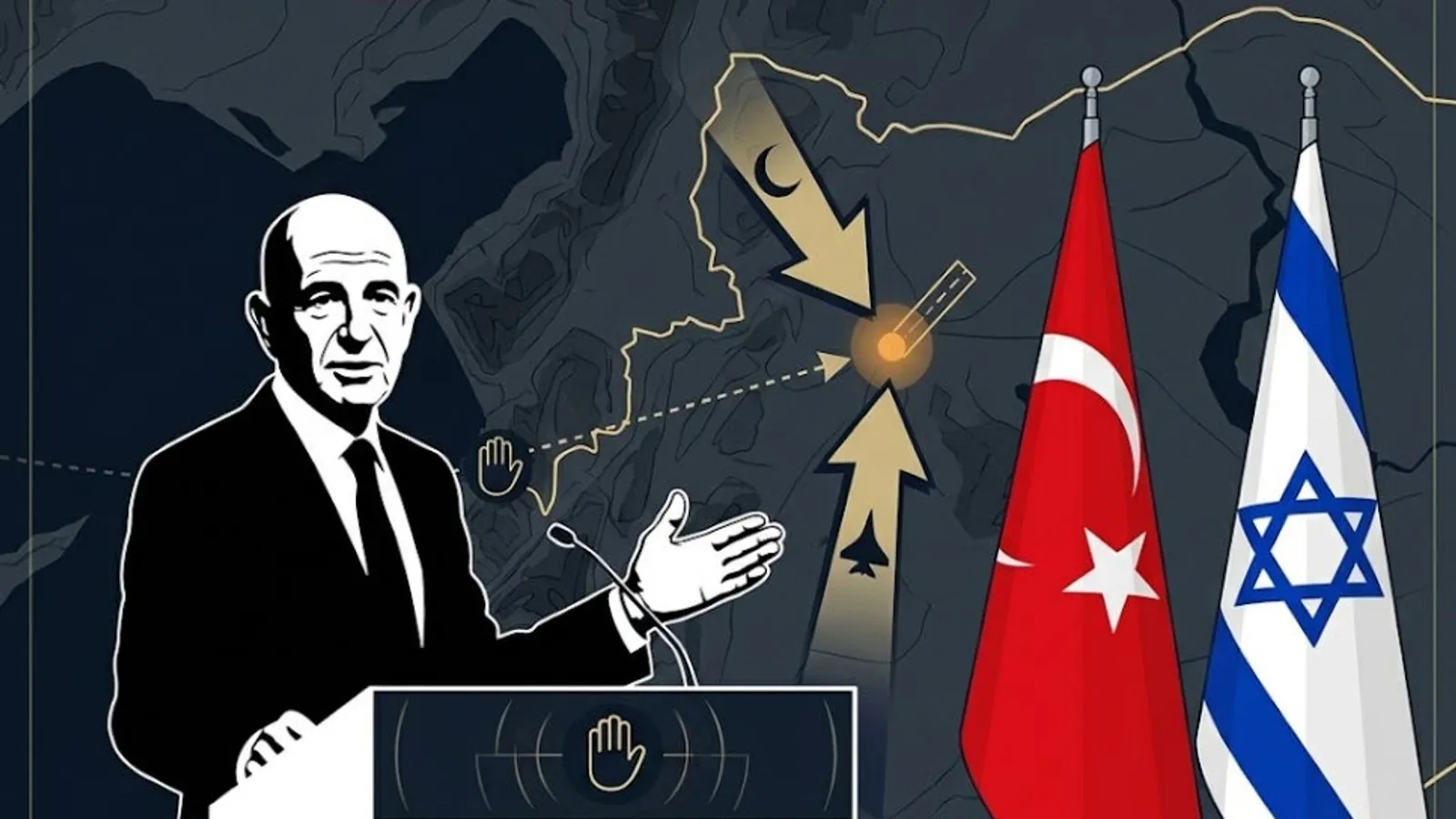
The Exchange Moves to Ministry Level
The most significant bilateral development of the window is a change of register. Anti-Israel rhetoric from Ankara is not new, and the series has documented it back to 2017. What is new is that the two foreign ministries now trade the heaviest historical vocabulary available within hours of each other, in official channels. The sequence began on August 28, when President Erdogan told a Mawlid al-Nabi audience in Istanbul that Zionism is a radical, occupying, and genocidal ideology and set international silence on Gaza beside the failures over Hitler and Pol Pot. Israel’s Foreign Ministry answered on X the next day, accusing Erdogan of antisemitic incitement and of spreading blood libels to divert attention from his conduct at home and in the region. Turkey’s Foreign Ministry replied the same day with Press Release No. 166, which accused the Netanyahu government of genocide and likened Israeli institutions to Nazi-era propaganda. On August 30 Netanyahu said Israel must prevent the emergence of new rivals such as Turkey.
On August 31, the day Israel and Greece signed Achilles Shield in Tel Aviv, Foreign Minister Hakan Fidan closed the first meeting of the Mecca Defense Alliance’s Strategic Political and Defense Committee in Istanbul with the sharpest personal language a Turkish foreign minister has used about Netanyahu. He called him a murderer and a perpetrator of genocide who has become the common enemy of humanity and must be stopped by the international system. He also dated the escalation to Israel’s election season, which lets Ankara present a structural rivalry as a passing Israeli phase and keep a post-Netanyahu reset open in words. Foreign Minister Gideon Sa’ar answered Fidan by name the same day, reprising October 7 as the definitional reply to any Turkish genocide charge and pointing to Turkey’s hosting of Hamas. Fidan carried the line into September. At a joint press conference in Damascus on September 13 he said the international community must turn Israel back from the wrong path it is walking. The verb is the one Erdogan applied to Greece on September 2. Ankara now addresses Athens and Jerusalem in the same grammar.
The report places these statements in a different category from the columns of Ibrahim Karagul, discussed below. They are statements by sitting foreign ministers, and they should be read as an escalation in sanctioned state discourse on both sides. The exchange is symmetrical, and it is personal. However, neither government attached a policy step to it. The July baseline finding applies. Information competition is conducted from the top of the Turkish diplomatic system, and every layer beneath the minister is licensed to go further.
Three Tests, No Invocation
The pact signed in Mecca on August 7 declares that an armed attack on any one of the three states shall be regarded as an attack on all. On August 31 it acquired a name, a committee at minister and chief-of-staff level, a secretariat in Riyadh, and a Pakistani first secretary-general. In the following two weeks a signatory was struck three times, and the response is the clearest evidence available of what the pact is and what it is not.
On September 8 Houthi forces launched dozens of drones and missiles against Khamis Mushait, home of King Khalid Air Base, and against Aramco facilities at Abha, Najran, and Jizan. Seventy-three people were wounded, and Reuters described the attack as one of the largest on the kingdom since the US-Israeli war on Iran began in February. A second wave hit the same region on September 9. The Houthis framed the strikes as retaliation for coalition air raids in northwestern Yemen and for Saudi-backed offensives in Al Jawf. Turkey’s Foreign Ministry issued Statement No. 173 on September 8, condemning the attacks in the strongest terms, reaffirming Saudi sovereignty, and calling on the Houthis to stop. It announced no deployment, proposed no consultation, and did not mention the alliance.
On September 10 drones launched from Iraq’s Maysan province struck the East-West pipeline in the Riyadh and Medina regions, and Aramco shut a line that had been carrying four to five million barrels a day around the closed Strait of Hormuz. Riyadh issued its strongest condemnation, said it would not retaliate for now at Baghdad’s request, and reserved the right to act. Iraq dismissed the Maysan operations commander, opened an investigation, and closed the Shalamcheh crossing with Iran. Turkey’s Foreign Ministry responded on September 12 in the same form as before, and it added praise for the restrained approach of the Saudi authorities. Two features matter. The target this time was the corridor asset that keeps Saudi exports moving while Hormuz is closed, which is the category of attack a defense pact exists to deter. And a signatory told another signatory, in public, that not responding was the right choice. On September 14 the Houthis claimed a large missile and drone attack on King Khalid Air Base in reply to more than 300 Saudi air strikes over five days. Riyadh did not confirm damage, and no Turkish statement on this third wave had appeared by the close of the window. We covered the pipeline attack and its effect on Gulf export routes in our September 12 daily.
Pakistan supplied the closest thing to an invocation. On September 9 Defense Minister Khawaja Asif said Islamabad was bound by the terms of the pact and would honor them if the need arose. He qualified the line himself, noting that the pact does not authorize offensive action and that the Houthis are non-state actors, which already raises the question whether the clause applies to this attacker. Within about a day the Foreign Ministry clarified that there were no discussions of a military response and described the pact as a defensive alliance with no plans to expand. No Turkish or Pakistani asset moved. Erdogan’s first presidential comment on the pact since the strikes began came in Samsun on September 14. He described the alliance as a signal to the Islamic world, said it had produced positive developments, and said Turkey had put its weight behind the region. He did not mention the attacks. The report reads the omission as confirmation of the July baseline. The alliance is a mobilizing structure whose meaning its audience understands without its text being tested.
Independent analysts reached the same conclusion from the other direction. Writing in War on the Rocks on September 9, Doga Eralp judged that the absence of a coordinated response beyond diplomatic condemnation illustrates the gap between political solidarity and operational deterrence. Omar Rahman of the Middle East Council on Global Affairs had written on September 2 that Iran would test the pact indirectly and that an Iraq-based militia attack would pose the invocation question before the consultation machinery existed. The September 10 pipeline strike is the case he named. Karagul read the same episode the opposite way. For him the Houthi crisis and the pact are evidence that Turkey’s project of map integration is displacing an Israeli-designed strategy of regional fragmentation. What independent analysts read as operational weakness, the government’s house paper reads as vindication of the pact’s civilizational purpose. For Israel the finding cuts two ways. The alliance has not become a deterrent that constrains Israeli freedom of action. At the same time, the secretariat, the standardization program, and the defense-industrial track continue whether or not the clause is used, and those are the positive developments Erdogan meant.
The Aegean, Answered in the Vocabulary of 1922
Aegean friction sharpened in words and produced no incident at sea. The stack is now four layers deep. The August legal protests over Greek marine parks and spatial-planning frameworks came first. The September 2 note to Athens and Erdogan’s warning of the same day, delivered on the flight home from Bishkek, came second and third. He said Turkey covets no one’s territory but does not let anyone trample its rights, warned that anyone who reads Turkish calm as weakness is making a grave mistake, and told Greece to abandon its wrong path and stop arming islands whose status is demilitarized. He placed the warning at Kas, the Turkish town facing Kastellorizo, at the end of the island chain where the Israeli-supplied Achilles Shield systems will be deployed. He did not name Israel. An anonymous Turkish source told Kathimerini that Turkey’s rules of engagement and disengagement would be revised often, and Prime Minister Kyriakos Mitsotakis told the European Council president that an active threat of war against Greece persisted and that Athens would accept no instructions on its defense.
The fourth layer is the most striking. On September 14 Turkey’s Foreign Ministry rejected Greek statements about the 1919 to 1922 war, cited massacres of civilians in Anatolia by Greek forces, and recalled that Greece had acknowledged those acts and its obligation to pay reparations under Article 59 of the Treaty of Lausanne. The report notes that Article 59 records Greece’s acknowledgment and Turkey’s renunciation of reparations in the same breath, so the statement works as historical memory and carries no legal claim. It sits with Erdogan’s Victory Day claim of a 2,235-year military past and Karagul’s September 1 column on the return of empires. Ankara is now answering Athens in the vocabulary of 1922 while insisting that it covets no one’s territory. The draft Maritime Jurisdiction Areas Law, known in the Turkish and Greek press as the Blue Homeland Law, remains unpassed, with any vote expected in October. Anticipation of the law is doing the work in the current cycle. Karagul had already written the frame for the next incident on September 1, forecasting Israeli-backed provocations in Cyprus, the Mediterranean, and the Aegean and declaring Turkey ready. The division of labor is the standing Turkish pattern. The president addresses Athens under treaty language, and the court press names Jerusalem.
Syria by Protocol, Iran by Asymmetry
The Syrian strike file stayed quiet. No Israeli strike on a Turkish-linked Syrian site occurred in the window, and the structural source of friction is unchanged. Turkey installed an ASELSAN surveillance radar with a reported range of 150 to 200 kilometers at Damascus International Airport in January and is reported to be weighing a layered air-defense network for the T4 airbase in Homs. The structural source of Turkish-Israeli friction in Syria is that overlap with the corridor Israel uses for strikes, and individual incidents like Abu al-Duhur grow out of it. Fidan spent September 13 and 14 in Damascus. He met President Ahmed al-Sharaa, Foreign Minister Asaad al-Shaibani, and Interior Minister Anas Khattab, discussed a coming visit by Erdogan, met representatives of Syria’s Turkmen community, and visited the tombs of Ibn Arabi and Salahuddin al-Ayyubi. The visit prepares what would be the highest-level Turkish presence in Damascus since the fall of the Assad government, stages the Turkmen constituency as Turkey’s own community inside Syria, and places the Turkish foreign minister at Salahuddin’s tomb in the week the court press is writing about a return to Jerusalem. Nothing in it referred to Abu al-Duhur or to air defense. The confirmed negative finding holds. Fidan, Chief of Staff Selcuk Bayraktaroglu, and Defense Minister Yasar Guler made no personal statement on the strike through the window, and no movement of Turkish air-defense components toward Syrian bases was observed.
On Iran, Ankara’s asymmetry held. It condemned Iran-aligned strikes on Saudi Arabia twice in five days and said nothing about US strikes on Iran or Iranian strikes on US assets. It condemned the Israeli strike at Abu al-Duhur in August and did not condemn Iran’s mid-August strikes on Iraqi Kurdish targets. Turkish mediation between Tehran and Washington remains confirmed contact, and no instance of Turkey hosting a joint session was identified. The concrete development on the Iran file came from the US Treasury. On September 4 the Office of Foreign Assets Control designated Istanbul-based Golden Global Investment Bank and two subsidiaries, saying the bank enabled an Iranian shadow-banking network to move oil-sale revenue from China back into Turkey in cash and gold and provided correspondent access to accounts tied to Sitki Ayan, a Turkish oil trader sanctioned in 2022 over proceeds routed to the IRGC Quds Force and Hezbollah. The bank denied wrongdoing and promised legal recourse. Ambassador Tom Barrack said the next day that Turkish officials would be mistaken to read a narrow measure as a judgment on Turkey, and Finance Minister Mehmet Simsek answered on September 9 in technical terms without engaging the laundering allegation. The report scopes the finding carefully. The designation is the most concrete primary-source evidence in this series of a Turkey-based conduit for Iranian sanctions evasion tied to IRGC- and Hezbollah-linked networks. It does not establish state policy, no action targeted the Turkish state or its regulators, and independent verification of the scale of the alleged activity beyond the OFAC text and Nordic Monitor reporting does not exist.
The economic file moved against the Gulf and toward Anatolia. The East-West pipeline stayed offline with no restart date, the number of commodity vessels transiting Hormuz fell to single digits over the weekend of September 12 and 13, and Brent traded near $106 to $107 per barrel on September 15, a four-month high and up about 17 percent on the month. Turkey’s Kirkuk-Ceyhan line, renewed with Iraq in August at 750,000 barrels a day, and Erdogan’s request at the Shanghai Cooperation Organisation summit to harmonize the Middle Corridor with the Belt and Road belong to the same argument. Every disruption of the Gulf route is a case for the Anatolian one, and the pipeline attack was the largest disruption of the war so far.
The Court Press and the Home Front
Karagul, the former editor-in-chief of Yeni Safak, published four columns in the window, and the series reads them as a leading indicator because three of his earlier framings have surfaced in official language after a lag. His September 1 column declared the era of returning empires and forecast an Israeli-backed provocation in the Aegean. His September 3 column set out Turkey’s game plan as a connecting element between the poles, neither Western nor Eastern, and stated the double game in one line, that Turkey will defend the West but will not go to the front for it. His September 8 column read the collapse of the German-French axis as the product of European dependence on Washington and Israel. The September 9 column is the outer bound of pro-government discourse in the window. Tying Yemen, Kashmir, and Jerusalem into one project, he wrote that the aim is “to eliminate Israel’s right to exist on the map.” The object to be undone in that formulation is Israel’s existence itself. The report reproduces the line because of its evidentiary weight and attributes it to no one but its author. No senior official has used comparable language on the record. The gap between Karagul and the Presidency narrowed in tone this fortnight, because Fidan’s language rose to meet it, and stayed open in substance, because no official reached his conclusion.
The home front supplies the second ideological layer. Writing in Foreign Policy on September 3, the Kurdish-affairs analyst Giran Ozcan argued that Turkey’s domestic Kurdish peace process, which acquired its first legal basis in August with a law permitting PKK members to disarm and exiles to return, is justified by its architects as a response to regional and Israeli threat. The report checked his sourcing against Turkish primaries and corrected one date. The Speaker of parliament’s remark that Turkey is the primary force to be absorbed in a so-called Greater Israel project dates to March 2026, not September. The fresh instance is Speaker Numan Kurtulmus’s August 26 statement that Israel fears only Turkey. Erdogan set the frame in October 2024, when he said Israel’s aggression encompasses Turkey and that the Netanyahu government would eventually set its eyes on the Turkish homeland. The linkage is current even where the formulation is old. Turkey’s most consequential domestic reconciliation in decades is, in its authors’ own telling, a home-front measure inside the regional project, and Ankara describes the removal of the Kurdish constraint as a defeat for Israel.
Outlook: Three Theaters
The report’s assessment is that the architecture of the double game did not move, and four things did. The rhetoric became ministerial and symmetrical. The Mecca alliance met three live tests in a week and answered each with condemnation and no commitment, after which the president restated its purpose without mentioning them. The Aegean register widened backward in time to Lausanne and 1922. And Syria advanced by protocol, with a presidential visit in preparation and the strike file quiet. Two calm weeks on the ground and a hot fortnight on the declaratory plane are consistent with the Turkish method as the report describes it. The July baseline argues that the Turkish project requires time, the absence of a decisive Western response, and a steady supply of adversary actions that can be converted into legitimacy, and that it does not require a war. Israel provided the words, the Iranian axis provided the attacks on a signatory, and Ankara converted both, the first into proof that Turkey is the target and the second into proof that the alliance is defensive and its members restrained.
In the short term a direct military clash remains highly unlikely. No Turkish official has threatened force against Israel, the Mecca clause has been left unused through three strikes on a signatory by other actors, and the US deconfliction channel in Syria remains in place, untested since its first failure. The near-term risks are an Aegean or Cyprus incident, which would be Greek-Turkish in form and Israeli-Turkish in Turkish narrative, and an Israeli strike near a Turkish-linked Syrian site around Erdogan’s Damascus visit. Over one to six months the risk of renewed friction is moderate to high and runs on three tracks. In Syria the sequence of Turkish site interest, survey visit, and Israeli strike remains intact. In the Eastern Mediterranean, Achilles Shield deployment will be tested by Turkish reconnaissance, exercises, marine-park enforcement, and the maritime law. In the Gulf, further Houthi or Iraq-launched strikes on Saudi Arabia are likely while the Iran war continues, and a Saudi request for assistance under the pact, or a Saudi retaliation that Ankara is asked to endorse, would pose the invocation question in a form that condemnation cannot answer. Beyond six months a full war stays outside the base case at any horizon, because the Turkish endgame does not require one. The report adds a fourth development to the three that would change the picture. A Turkish military deployment to Saudi Arabia under the pact would convert the alliance from signal to structure and place Turkish forces on the Red Sea coast that the court press already lists in its encirclement of Israel. The correct question for Israeli planning remains which province is next. This window’s answer is the Eastern Mediterranean, and now the Gulf, where the first Saudi request would force Ankara to choose between the signal and the clause.
Key Points
- The Israeli-Turkish exchange has moved from columnists and presidential speeches to ministry-level personal invective on both sides, with each foreign ministry accusing the other’s leadership of genocide in official channels within hours. Nothing operational accompanied it (high confidence).
- The Mecca Defense Alliance faced three live tests in one week, all from the Iranian axis. Turkey answered each with condemnation and no capability offer, Pakistan hedged and walked back within a day, and the clause was not invoked. The pact performed as declaratory solidarity and showed no collective-defense function (high confidence).
- Erdogan’s September 14 remarks in Samsun are the first presidential comment on the pact since the tests began. They defend its purpose as a signal to the Islamic world without addressing its non-response, which confirms the mobilizing function the July baseline assigns to the alliance (high confidence).
- No signatory has invoked, or moved to invoke, the mutual-defense clause since August 7, through Abu al-Duhur, three strikes on Saudi territory, and a Saudi decision to hold retaliation at Baghdad’s request. The activation threshold sits above missile and drone strikes on a signatory’s energy and military sites (high confidence).
- The Aegean posture hardened in words without an incident at sea. Erdogan’s warning, the note to Athens, the reported change in rules of engagement, and the Lausanne Article 59 statement form a sharper register than the legal protests of August, and Karagul has pre-attributed any incident to Israel (moderate-to-high confidence).
- Syria advanced on the diplomatic track through Fidan’s two-day Damascus visit and the preparation of a presidential visit, while no Israeli strike on a Turkish-linked site occurred and Turkey’s senior military stayed silent (high confidence).
- The OFAC designation of Golden Global Bank is the most concrete evidence in the series of a Turkey-based financial conduit for Iranian oil revenue tied to IRGC- and Hezbollah-linked networks. It does not establish state policy, and the scale of the activity is not independently verified (high confidence on the designation, scoped as stated).
- Karagul’s September 9 column, which calls for eliminating Israel’s right to exist on the map, is the outer bound of pro-government discourse. No official has used comparable language, and on the series’ record his frames cross into official speech after a lag (high confidence on content, moderate on the leading-indicator read).
- Direct military confrontation with Israel stays unlikely in the coming weeks. The structural risk now has three theaters, another strike on a Turkish-linked Syrian site, an Aegean or Cyprus incident already pre-attributed to Israel, and a strike on Saudi Arabia that produces a Saudi request for assistance under the pact (moderate-to-high confidence on the structural read).
What to Watch
- Any further Houthi or Iraq-launched strike on Saudi Arabia, and whether Turkey’s response moves beyond condemnation on a repeat test. Any Saudi request for assistance or consultation under the pact, and any Turkish, Pakistani, or joint deployment to the kingdom.
- Establishment of the Mecca alliance secretariat in Riyadh, appointment of the Pakistani secretary-general, and the first joint exercise or standardization decision, and whether institutional growth continues to run ahead of operational performance.
- The first official Turkish reference to the alliance in an Israel dispute, and any Saudi or Pakistani statement of support in such a dispute.
- The Fidan-Sa’ar and Erdogan-Israeli Foreign Ministry exchanges, and whether either government moves the rhetoric toward a policy step ahead of Israel’s October 27 election.
- The date and content of Erdogan’s Damascus visit, Turkish basing or air-defense decisions announced around it, and any Israeli strike on a Turkish-linked Syrian site before, during, or after.
- Turkish operational activity around the eastern Aegean islands and Cyprus as Achilles Shield deployment begins, passage or further delay of the Maritime Jurisdiction Areas Law, and follow-up to the September 2 note and the September 14 Article 59 statement.
- Whether the Golden Global Bank designation produces visible change in Turkish-Iranian financial flows, Turkish regulatory action, or further Treasury actions against Turkey-based entities.
- The restart of the East-West pipeline, Hormuz transit volumes, and Turkish messaging on Kirkuk-Ceyhan and the Middle Corridor as alternatives.
- Karagul’s next columns, and the first appearance of encirclement, imperial-return, Jerusalem, or right-to-exist language in any official Turkish statement. Whether Bayraktaroglu or Guler break their public silence on Israel by name.
- Turkish follow-up on Shanghai Cooperation Organisation status after Bishkek, the UNIFIL mandate transition, any procedural movement on the Interpol request against Netanyahu, and Qatar-Turkey defense or intelligence contact beyond protocol.
The series now tracks nine trajectory-change indicators, including invocation of or a formal consultation request under the Mecca clause after a strike on a signatory and any senior official echoing Karagul’s right-to-exist formulation. None was met in this window. The report’s stated intelligence gaps include the absence of any Turkish statement responding by name to Pakistan’s walk-back, to the Saudi decision not to retaliate, or to the September 14 King Khalid attack, and the lack of a date or agenda for Erdogan’s Damascus visit beyond Fidan’s reference to it.
This post summarizes the Iran Dossier Turkey Watch regional press and policy monitor for August 29 to September 15, 2026, compiled on September 15. The report draws on Turkish primary sources, including Presidency and ministry transcripts, state and pro-government media, and opposition press, cross-referenced against Israeli, Greek, Gulf, and international reporting and independent think-tank analysis. Every quotation in the report is checked against its original publication, and opinion items are identified by author and by the writer’s relationship to the outlet. Where an expected voice did not comment, that silence is reported as a finding. The report reads the window against the July 2026 baseline assessment, Turkey’s Strategic Double Game, and against the earlier Turkey Watch editions on Abu al-Duhur, its August 23 update, and the Mecca pact.