Collecting Positions: Ankara Makes Al-Aqsa a Red Line and Runs the Mecca Pact's First Consultation While Courting Washington
Turkey used the UN General Assembly to pursue a single policy with two audiences. At the podium on September 22, President Erdogan accused Israel of state terrorism and genocide in Gaza, and in the same speech he credited President Trump with the ceasefire. Hours later Trump praised him in front of Gulf leaders. The report judges that these are not competing policies. Israel serves as the adversary that rallies Muslim leadership behind Ankara, and Washington supplies the access that keeps the project affordable. Over the two weeks, the Turkish response to Israel became institutional, with the Presidency, the Foreign Ministry, the UN mission, and the Defense Ministry all answering Israeli criticism within 48 hours. Jerusalem emerged as a coordinated religious front, the Mecca pact held its first consultation under its mutual-defense clause, and Israel became a named third party in Turkey’s maritime disputes with Greece and Cyprus. No Turkish military move matched the rhetoric. We assess that Ankara is accumulating positions under defensive labels, and that for Israeli planners the question is which arena comes next. This window points to Jerusalem’s religious status and the Eastern Mediterranean seabed. This post updates our September 15 summary with the September 14 to 28 record.
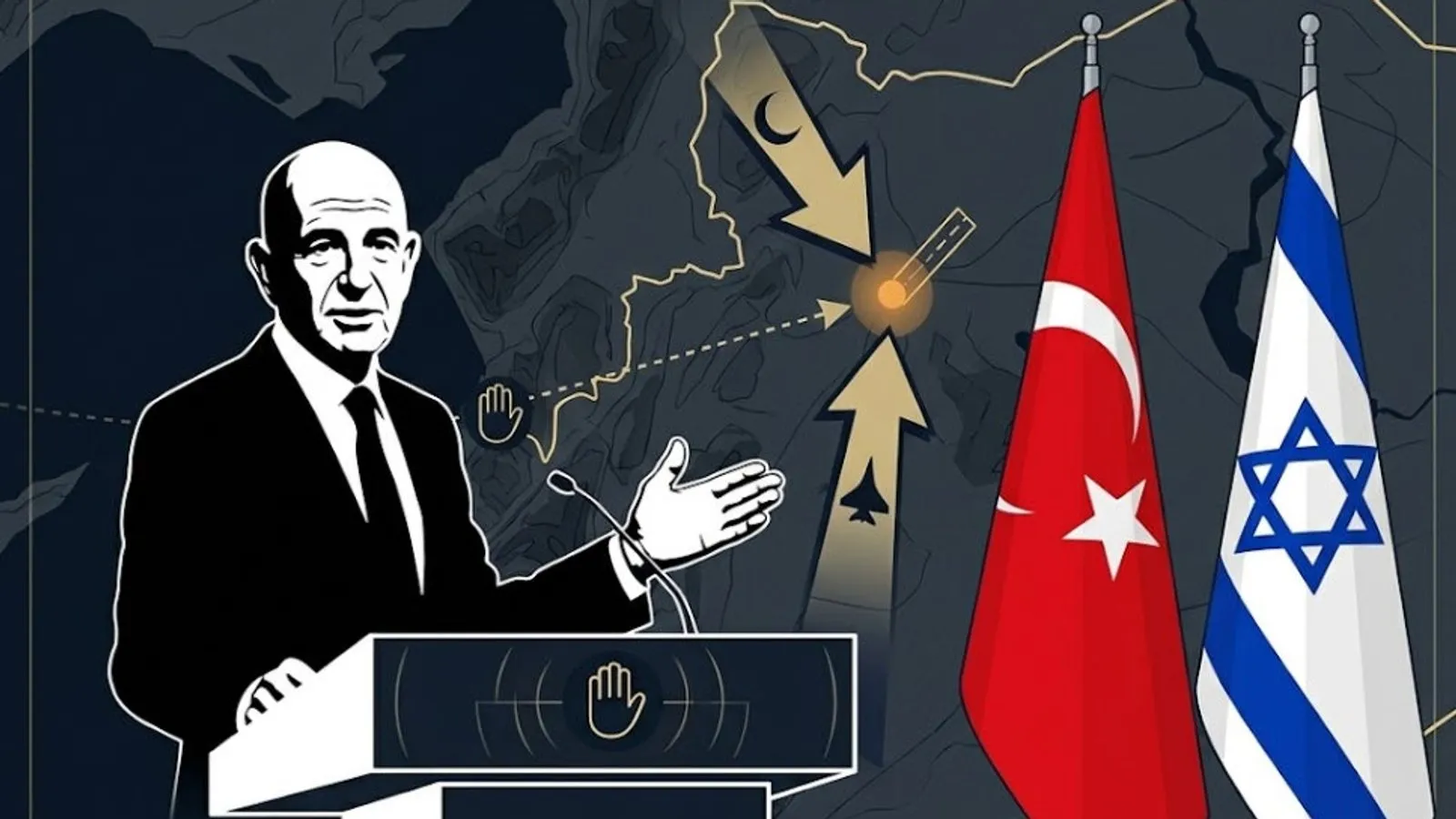
Erdogan at the UN and the Turn to Institutional Confrontation
Erdogan delivered his 16th address to the General Assembly on September 22. He built the speech around Gaza, UN Security Council reform, and what he called regional ownership. He described Gaza as a concentration camp and the world’s largest children’s cemetery, spoke of Israel’s state terrorism and a genocidal mindset, and restated Turkey’s support for a Palestinian state on the 1967 lines with East Jerusalem as its capital. He closed with lines from the Islamist poet Sezai Karakoc. Iran’s delegation stood to applaud, and the Israeli representative left the hall.
Two details stand out. The speech never named Prime Minister Netanyahu, and it gave Trump credit for the ceasefire. Erdogan reserved his harshest language for Israel and his warmest for Washington. The report judges that the image of Iran applauding a NATO leader will not help Ankara in Washington but will help it in the Muslim world, which was the speech’s intended audience.
The exchange with Israel then reached a new peak. After Defense Minister Katz and Netanyahu attacked Erdogan personally on September 24, Ankara replied through the Directorate of Communications, senior ruling-party figures, and a formal right of reply at the UN delivered by a third secretary, the lowest diplomatic rank in the hall. The choice of messenger was itself a signal. On the same day, the Defense Ministry’s weekly briefing described Israel as a threat to the whole world. Foreign Minister Hakan Fidan said on September 26 that Israel faces unprecedented isolation and must pay heavy prices for its actions.
In a September 19 interview published in full by the Foreign Ministry, Fidan gave the clearest official account of Ankara’s view. He argued that Netanyahu needs a Turkish threat to stay in power, that Syria will be the next arena, and that Turkey will not fall for provocations. The report notes that Ankara continues to separate Netanyahu and his government from the Israeli public. Erdogan told Newsweek that Turkey has no enmity toward the Israeli people. In late August the attacks on Netanyahu came from a single voice. They now come from a coordinated system.
Jerusalem Becomes a Religious Front
On September 27 the Jerusalem Islamic Waqf reported that about 1,500 Israelis had entered the Al-Aqsa compound under police protection. Turkey’s Foreign Ministry condemned the entries the same day in Statement No. 185, and four more senior voices followed within hours: Parliament Speaker Numan Kurtulmus, Communications Director Burhanettin Duran, Family Minister Mahinur Ozdemir Goktas, and ruling-party spokesman Omer Celik. Duran restated Erdogan’s position that Al-Aqsa is a red line. Kurtulmus warned that Turkey would not accept any change to Jerusalem’s historical and religious status.
The multilateral layer reinforced the message. The eight-country statement on Gaza of September 22 and a separate four-country statement with Egypt, Pakistan, and Saudi Arabia both used the same formula on East Jerusalem as a Palestinian capital, as did Erdogan’s UN speech.
The report found no new Turkish project, visit, or funding decision inside East Jerusalem in this window. Turkish instruments in the city, including the aid agency TIKA, the religious affairs directorate, and associations that restore Ottoman-era sites, predate the period. What moved was the narrative. The Speaker of Parliament now uses the Ottoman-heritage vocabulary of those associations. The report judges that Al-Aqsa is the one file in which Turkish official language already carries the vocabulary of a casus belli without any military referent. The indicator to watch is the first Israeli restriction on a Turkish state or quasi-state body operating in the city, and how Ankara responds.
The Mecca Pact Is Used for the First Time
The Mecca Joint Defense Agreement moved from signature to its first consultation under the mutual-defense clause. After Houthi missile and drone strikes on Saudi cities and on facilities in the Mecca area, the foreign ministers of Turkey, Saudi Arabia, and Pakistan met in New York on September 24. Their joint statement affirmed Saudi Arabia’s right to self-defense under Article 51 of the UN Charter and called an urgent military meeting to examine assistance under the pact. The next day the three chiefs of staff met in Riyadh and pledged to put the agreement’s commitments into practice. Egypt joined a separate four-country consultation with the three signatories without becoming a party to the pact.
The limits matter as much as the step. No Turkish or Pakistani deployment, capability offer, or endorsement of Saudi retaliation was announced. Saudi Arabia has not been reported to have made a formal request, and the Turkish Defense Ministry still says the alliance is not directed against any country. The pact is not yet binding in Turkish law, and parliament may vote on it in October. In our September 15 summary, the pact had absorbed three strikes on a signatory without any consultation. The report now judges that the machinery has been used once, and it will be easier to use a second time. Institutional growth continues to outpace operational use.
The Eastern Mediterranean: Israel as a Third Party
Israel is now written into Turkey’s Aegean and Cyprus files. Greece signed the roughly €3 billion Achilles Shield air-defense agreement with Israel on August 31. Turkish reaction arrived in September through the Greek domestic debate over whether Athens would hold the system’s source code. Pro-government outlet A Haber framed the deal as an Israeli trap that would expand Israel’s military and intelligence presence through Greece. The Turkish state has not criticized the agreement by name. Its complaints have focused on the militarization of Meis (Kastellorizo), the US extension of the lifted Cyprus arms embargo, and subsea cable work.
The cable is the physical object at the center of the dispute. The Great Sea Interconnector would link the Greek, Cypriot, and Israeli power grids, and its surveyed route crosses waters Turkey claims south of Kasos, Karpathos, and Rhodes. The French firm Meridiam now holds a 66 percent stake and Nexans will lay the cable, which places a French-flagged vessel between the project and the Turkish navy. On September 24 the Defense Ministry said unauthorized cable, pipeline, or research activity on Turkey’s continental shelf is not permitted. Greek reporting on September 28 said Athens and Paris are weighing a reroute around Turkey’s Fethiye-Kas marine park before surveys resume. Meanwhile, a draft Maritime Jurisdiction Areas Law, which would codify the Blue Homeland (Mavi Vatan) doctrine in domestic statute, is expected in parliament in October.
The report assesses that French participation lowers the odds of a repeat of the 2024 survey confrontations and raises the cost to Ankara if one occurs. The new law would allow the next Turkish action at sea to be framed as enforcement of domestic statute. Nothing in the window points to Turkish action against Israeli platforms or personnel. However, the pro-government press has already cast Israel as the author of any future Aegean incident.
Sanctions and Washington: Partial Payment
Toward the United States, Ankara offered partial payment. It moved quickly against targets Washington had already named. The state deposit insurance fund took over the US-designated Golden Global, the banking regulator revoked Bank Mellat’s license, Mahan Air flights were suspended, and Turkish Airlines, AJet, and Pegasus canceled Iran routes until March 2027. A new Treasury rule requires checks against UN sanctions lists. However, Ankara did not adopt US sanctions law, the rule names no country, Iranian carriers can still fly, and the gold trade that has financed Iran for years is untouched. Erdogan summarized the balance for Newsweek: “The US is our NATO ally. Iran is our neighbor.”
The return Ankara seeks is the F-35. Trump called Erdogan a tough cookie and a fantastic guy at the September 22 meeting with Gulf leaders, US Ambassador Tom Barrack said the S-400 dispute will be resolved, and talks on 40 F-16 Block 70 aircraft have resumed. No F-35 formula is public, and the S-400 remains unresolved. The report judges that US-Turkish ties are at their warmest at the leader level since 2016, and that Ankara pays with Iran measures while giving nothing on Israel, Hamas, or the S-400.
A second exposure opened on September 16, when the House passed the Graham sanctions bill authorizing tariffs of up to 100 percent on the five largest buyers of Russian oil. Turkey sources about 60 percent of its crude from Russia and ranks among those buyers, although the final text names no countries and application rests with the president. At home, the Capital Markets Board liquidated 131 funds in a separate manipulation case affecting 455,758 investors. Brent closed the window near $107 per barrel after Trump rejected Iran’s conditional offer on Hormuz.
Key Points
- Erdogan’s UN address served two audiences at once. It accused Israel of state terrorism and genocide, thanked Trump for the ceasefire, and left Netanyahu unnamed (high confidence).
- The Turkish-Israeli exchange became institutional. The Presidency, the Foreign Ministry, the UN mission, and the Defense Ministry all replied to Israeli criticism within 48 hours, and personal insult is now normal state language on both sides (high confidence).
- Jerusalem is now a coordinated religious front. Five senior Turkish voices condemned the September 27 Al-Aqsa entries within hours and restated the red line, and the file now sits beside Gaza and Syria as a standing trigger (high confidence).
- Ankara’s Gaza position is fixed on the Road Map, under which Hamas decommissioning proceeds alongside full Israeli withdrawal and the deployment of an international stabilization force. Turkey seeks a guarantor and reconstruction role that Israel opposes (high confidence).
- Israel is now a named third party in Turkey’s Aegean and Cyprus files, which treat the Achilles Shield, the power cable, and the marine park as a single front (moderate-to-high confidence).
- The Mecca pact held its first consultation under its clause after the Houthi strikes. Article 51 was cited and the chiefs of staff met, but nothing was deployed (moderate-to-high confidence).
- Turkey’s Iran measures are real but calibrated. Named US targets were hit, US law was not adopted, and the gold channel remains open (high confidence).
- The Graham Act creates a second sanctions exposure through tariff authority aimed at the largest buyers of Russian oil, although its application depends on the president (moderate confidence).
- Columnist Ibrahim Karagul of Yeni Safak went further than any official by calling for removing Israel from the regional map. He holds no state role, and no official has echoed the line (high confidence).
What to Watch
- The Turkish parliamentary vote on the Mecca pact, expected in October, the naming of its Pakistani secretary-general, and any deployment decision following the Riyadh chiefs’ meeting.
- Passage and text of the Maritime Jurisdiction Areas Law, and the first use of it to justify action at sea.
- Resumption of Great Sea Interconnector surveys east of Kasos, the reroute decision, and Turkish naval behavior toward a French-flagged vessel.
- Achilles Shield installation timelines and any official Turkish statement naming the agreement.
- Al-Aqsa entries during the autumn holidays, any Israeli restriction on TIKA, the religious affairs directorate, or Turkish associations in East Jerusalem, and any Turkish consular or religious-affairs activity in the city.
- Any US step on the F-35, a CAATSA waiver, or a public S-400 formula.
- New OFAC designations of Turkish banks, exchange houses, or gold traders, any Halkbank review, and presidential signature of the Graham Act with its first determination of top buyers.
- Israeli strikes near Turkish positions in Syria, Turkish air-defense moves there, and the date of Erdogan’s Damascus visit.
- The composition of the international stabilization force in Gaza and any Turkish response to exclusion.
- The Organization of Turkic States summit in Ankara on October 30 and the Turkey-Africa summit in Libya in December.
Of the ten trajectory-change indicators the series tracks, one was partly met in this window: the three ministers’ Article 51 statement and the chiefs’ meeting under the pact, without a formal Saudi request or deployment. The report’s intelligence gaps include the absence of a Turkish transcript for Defense Minister Guler’s reported remark that the armed forces are ready for war, the outcome of the Riyadh meeting, and whether Turkish gold exports to Iran have fallen.
This post summarizes the Iran Dossier Turkey Watch OSINT intelligence assessment for September 14 to 28, 2026, compiled on September 28. The report draws on Turkish primary sources, including Presidency, Foreign Ministry, and Defense Ministry statements and transcripts, state and pro-government media, and independent Turkish outlets, cross-referenced against international reporting, US Treasury actions, and think-tank analysis from FDD, ECFR, SETA, and the New Lines Institute. Turkish quotations are given in English translation. Opinion columns are identified by author and are not treated as government policy. The report reads the window against the July 2026 baseline assessment, Turkey’s Strategic Double Game, and the earlier Turkey Watch editions on Abu al-Duhur, the Mecca alliance and Achilles Shield, and the first strikes on Saudi Arabia.