Commitment Before Ratification: The Mecca Pact Directs Forces to Saudi Arabia as Ankara Recasts Israel as a Structural Threat
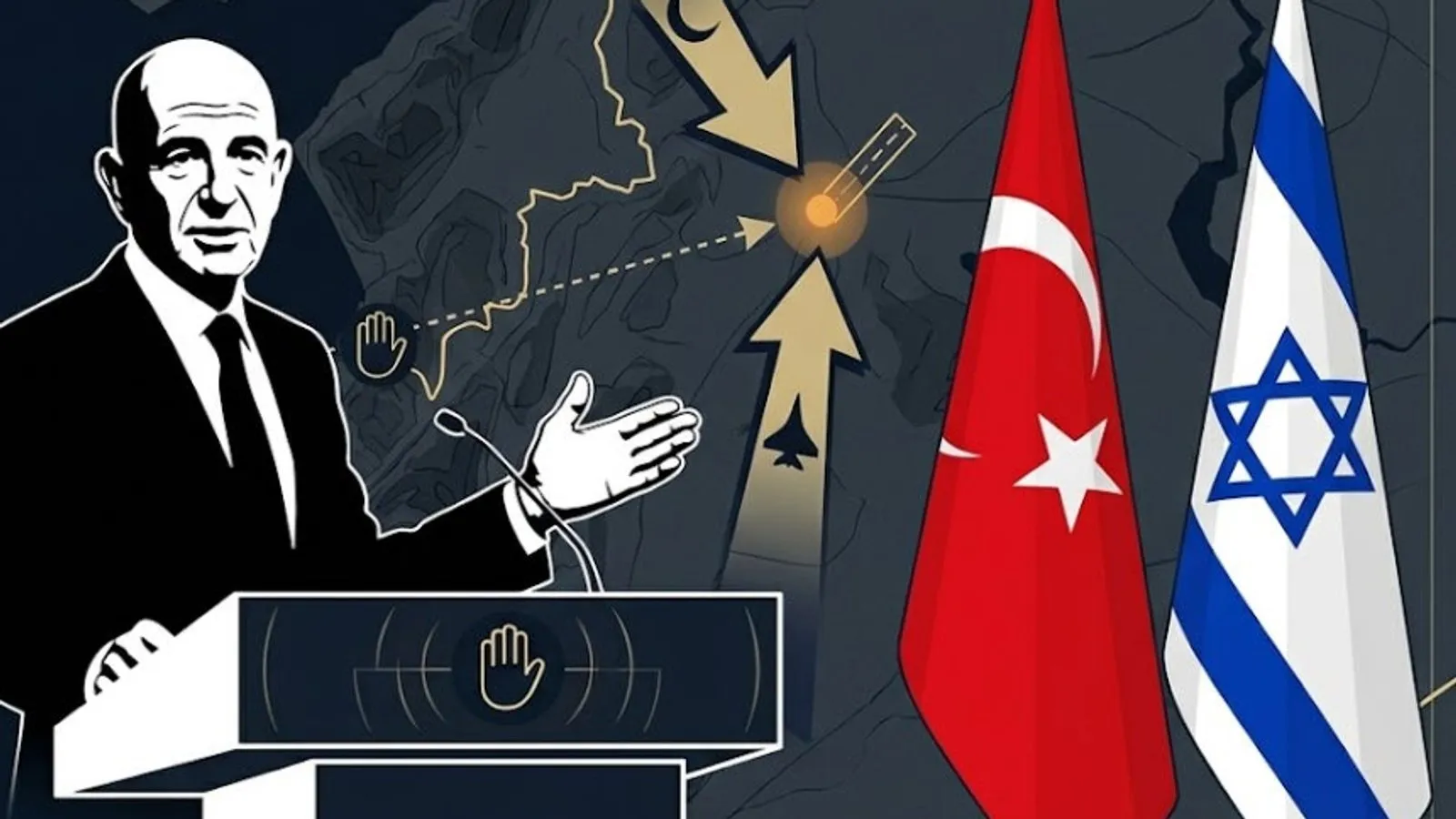
The Mecca pact moved from consultation to commitment in the two weeks to October 14. On October 5 in Riyadh, the alliance’s defense committee directed measures to provide the agreed military forces and capabilities to Saudi Arabia and to deploy them rapidly. Ankara then set legal limits around that decision. Officials said the pact is defensive, that any Turkish contribution will follow national law, and that the treaty will go to parliament in the coming days. Meanwhile, officials cited by Reuters said Turkish equipment, intelligence, and air-defense support are already reaching the kingdom on a bilateral basis. Ankara’s view of Israel hardened in the same period. President Erdogan and Foreign Minister Fidan now describe Israel as a structural threat to its neighbors whose policy will not change after its election. Israeli works on the Sufa 53 line in southern Syria drew condemnation from three Turkish institutions, and Israel’s defense minister threatened the Hamas leader Fidan had received in Ankara two days earlier. The report concludes that its July baseline holds and that the Gulf is the province where Ankara advanced fastest. This post updates our September 28 summary with the record through October 14.
The Mecca Pact Takes Its First Operational Decision
The Strategic Political and Defense Committee of the Mecca alliance held an emergency session in Riyadh on October 5. It was the committee’s second meeting, after the first in Istanbul on August 31, and Fidan, Defense Minister Yasar Guler, and Chief of General Staff Selcuk Bayraktaroglu all attended. The joint statement published by the Turkish Foreign Ministry contained four decisions. The committee directed measures to provide the agreed forces and capabilities to Saudi Arabia and ensure their rapid deployment, in line with each party’s national legislation. It condemned the attempted targeting of Mecca and Medina, and it named a retired Pakistani lieutenant general, Nauman Mahmood, as secretary-general for three years. Saudi Defense Minister Khalid bin Salman said the committee had decided to activate collective deterrence measures.
Support is already moving. Two officials cited by Reuters on October 7 said Turkish help so far consists of military equipment, intelligence sharing, and weapons systems, including air defense, and that it is largely bilateral because the Turkish parliament has not ratified the pact. A US official described defensive capabilities, planning and logistics help, drone operators, and surveillance. Government sources quoted by the Turkish journalist Murat Yetkin expect a support and training unit. They do not expect a combat unit. A Halk TV columnist reported that Turkish military experts are already in the kingdom under earlier bilateral agreements. No numbers or locations are public, and no joint headquarters exists yet.
The decision came as the war in Yemen intensified. On October 4 Yemen’s government announced a Saudi-backed offensive toward Bab el-Mandeb, which the Houthis called fabricated. On October 10 a Houthi missile struck King Khalid International Airport in Riyadh, killing 12 people and injuring 309. Ankara condemned the strikes through the Foreign Ministry, the Directorate of Communications, and a joint statement with Egypt, Pakistan, and Saudi Arabia that held the Houthis fully accountable. Egypt signed that four-country statement but is not a party to the three-country treaty.
Ankara Builds a Legal Fence Around the Commitment
Turkish officials spent the following week defining what the decision does not mean. At a press conference on October 8, Fidan said, “This is not an attack agreement.” He explained that the parties stand by any member that is attacked, that military committees are studying how Turkey and Pakistan can help Saudi Arabia defend itself against attacks from Yemen, especially in air defense and electronic warfare, and that Turkey would not send troops into another country to attack it. The Defense Ministry said the same day that any Turkish contribution would be handled in line with the Constitution and the relevant legislation.
Erdogan completed the frame after the cabinet met on October 12. He said activities under the pact will be carried out on the basis of national legislation, as in NATO, and that work to send the treaty to parliament in the coming days is under way. He also said Turkey does not view the region through an ethnic or sectarian lens. That line answered critics who argue the pact places Turkey in a Sunni bloc against Iran.
The report draws attention to the sequence. The pact has taken an operational decision, Turkish help is in the field, the treaty has not yet reached parliament, and no troop motion has been drafted. The treaty text itself has never been published. Yetkin argued that parliament must receive the full treaty and then vote openly on any troop deployment, and he recalled the March 2003 vote in which parliament rejected a US troop request. The opposition YENI Party called action under an unratified treaty a constitutional crime. The report judges that the NATO analogy and the national-legislation clause allow Ankara to present each Turkish step as a sovereign decision that the alliance merely coordinates. In practice, this lets the government act without a vote until it chooses to hold one.
Israel Becomes a Structural Threat
The most significant shift in the window concerns how Ankara describes Israel. In September, Fidan attributed Israeli hostility toward Turkey to Netanyahu’s need to appear indispensable. On October 8 he spoke of Israel’s regional expansionism as rooted in history as well as in domestic politics, and he said he does not expect much change in Israeli foreign policy after the coming election. The next day, at the International Justice Summit in Istanbul, Erdogan said Israel regards the peace and security of the region, and above all of its neighbors, as a direct threat to itself. He cited more than 74,000 Gazans killed and said 1,500 Palestinians have died since the ceasefire took effect in October 2025. On October 1, opening the new legislative year, he had already placed an imperialist-Zionist alliance at the command center of efforts to divide Turkey.
The report notes the planning implication. A problem attributed to one prime minister ends when he leaves office. A problem attributed to the Israeli state survives an election, and Ankara has now said so at the foreign minister and presidential levels within two days. The report judges that a change of government in Israel would soften the tone of Turkish rhetoric but would not, in Ankara’s stated view, change its substance.
Syria and the Hamas File Open New Fronts
Southern Syria became the active Turkish-Israeli file again. On October 5 the Foreign Ministry condemned Israel’s resumed work on the Sufa 53 line in Quneitra, saying it erodes the 1974 Disengagement of Forces Agreement, and Communications Director Burhanettin Duran demanded an Israeli withdrawal. On October 8 the Defense Ministry spokesman called the works an open violation of the 1974 agreement and listed house raids, detentions, and border violations beside them. On October 10 Bayraktaroglu called his Syrian counterpart. No Turkish military move followed, and no Israeli strike near a Turkish-linked site was reported. The report assesses that the site matters to Ankara mainly as evidence. It lets Turkey argue, together with Syrian, Gulf, and Egyptian partners, that Israel is moving the line south of Damascus while Turkey builds the Syrian state to the north.
A second trigger emerged on October 11. Two days after Fidan received a Hamas delegation led by political bureau chief Khalil al-Hayya in Ankara, Defense Minister Israel Katz accused Erdogan of rolling out a red carpet for Hamas leaders and, according to the Turkish rendering of his post, said al-Hayya’s turn would come. Duran and ruling-party spokesman Omer Celik replied within hours, and Ankara took no other step. The report describes this as the first threat in the series by an Israeli cabinet minister against a named person hosted by the Turkish foreign minister. It judges that Ankara’s likely response to an actual attempt would combine arrests, publicity, and diplomatic measures, based on its record against alleged Israeli intelligence networks.
The uniformed leadership stayed silent on Israel throughout. Guler spoke of deterrence at the Ates Serbest exercise on October 13 and cited the Mecca pact as evidence of the weight Turkey gives regional security. The exercise displayed HISAR and KORKUT air defense and components of the Steel Dome system. Bayraktaroglu’s only public activity was a set of calls to Syria’s chief of staff and to Pakistan’s Field Marshal Asim Munir. The report judges this division of labor deliberate and notes that the chief of general staff naming Israel would be a stronger signal than any new statement from the Presidency.
The Aegean, Washington, and the Sanctions Ledger
The Eastern Mediterranean was calm but primed. In Athens, Secretary of State Marco Rubio pledged diplomatic support for the Great Sea Interconnector power cable, said the United States is in constant contact with Turkey, and called a Greek-Turkish war unthinkable. Washington then announced roughly $4 billion in arms sales to Greece. Prime Minister Kyriakos Mitsotakis said Greece will make no concessions to Turkey, and a Greek survey notice for the Crete-Cyprus section of the cable is expected within weeks. The Turkish Defense Ministry repeated that it will not permit unauthorized activity on its continental shelf. At the same time, Ankara signed a defense cooperation roadmap with France, home of the cable’s majority owner, and continued confidence-building talks with Greece in Athens and Crete.
Rubio also closed the F-35 question in public for now. He said the transfer is legally impossible until the S-400 issue is resolved, although a solution might eventually be found. Erdogan’s hope for concrete steps in 2027 has no published formula behind it. Ankara’s European track moved instead, through the France roadmap, talks on the SAMP/T air-defense system, Meteor missiles for the Eurofighter, and a Safran-Baykar partnership.
On sanctions, the report’s verdict from September still holds. Researchers at the Foundation for Defense of Democracies counted more than 90 landings in Turkey by Iranian airlines after the US grounding date of September 23 and named a Turkish ground handler serving sanctioned carriers. The figures are the authors’ own, and FDD advocates pressure on Ankara. Turkey continues to close channels Washington has named and to leave open those it has not. A larger exposure arrives on October 18, when purchases of Russian crude begin to count toward the Graham Act’s tariff list of up to 100 percent on the five largest importers. Turkey relies heavily on Russian crude. Annual inflation fell to 29.73 percent in September, the first reading below 30 percent since 2021.
The Court Press Runs Ahead
Ibrahim Karagul, the Yeni Safak columnist who holds no office but often anticipates official framing, published four columns in the window. On October 8 he wrote that Turkey would defend the Kaaba again and claimed that Turkish soldiers, missiles, and electronic-warfare assets were being sent to Saudi Arabia. Officials describe support and training, and nothing confirms his claim. On September 29, the day after Fidan visited Abu Dhabi, he accused the UAE of planning a front against Turkey with Israel. On October 13, a day after Erdogan warned of proxy forces and fragmentation, he named Israel, Iran, and the UAE as the region’s breakers of states. The report flags the last point as new. Until September his adversary was Israel alone, and the pro-government press has begun to name Iran openly at the moment Turkey’s alliance went into action against an Iran-aligned force.
Ottoman memory now has a live referent. Karagul invoked Fahreddin Pasha’s defense of Medina from 1916 to 1919, a deputy chairman of the Nationalist Movement Party described the two holy sanctuaries as currently under Saudi sovereignty, wording the report reads as an echo of Ottoman rule, and the rector of the National Defense University praised small, fast regional pacts over slow NATO-style alliances. The official line stayed restrained. The pro-government SETA foundation had urged a policy of measured solidarity on October 6, built on air defense, counter-drone, and early warning, and Fidan’s statement two days later followed that line almost point by point.
Key Points
- The Mecca pact took its first operational decision on October 5, directing forces and capabilities to Saudi Arabia for rapid deployment and naming a Pakistani secretary-general (high confidence).
- Ankara placed legal limits around the commitment. Officials describe it as defensive only, with no troops for offensive action, governed by national law, and subject to parliament (high confidence).
- Turkish equipment, intelligence, and air-defense support are reaching Saudi Arabia before ratification, on a bilateral basis. No numbers or locations are public (moderate to high confidence).
- Turkish leaders now frame Israel as a structural threat that will outlast Netanyahu, and an Israeli election is unlikely to reset Ankara’s view (high confidence).
- Southern Syria is the active Turkish-Israeli file again. The Sufa 53 works drew the Foreign Ministry, the Presidency, and the Defense Ministry within four days (high confidence).
- Katz’s threat against al-Hayya makes Hamas leaders hosted in Turkey named Israeli targets and creates a new trigger tied to a person instead of a place (high confidence).
- Turkey’s military chiefs said nothing about Israel. The ministry spokesman carries that message, and the division of labor is deliberate (high confidence).
- Ankara kept every Western channel open while the pact moved, including the France roadmap and confidence-building talks with Greece, and it presents the pact as NATO-like (high confidence).
- The F-35 remains blocked until the S-400 is settled, and Ankara’s 2027 expectation rests on a formula no one has published (high confidence).
- The Eastern Mediterranean is quiet but primed, with a Greek survey notice expected within weeks and no Maritime Jurisdiction bill yet tabled (moderate confidence).
- On sanctions, Turkey still complies with what Washington names and little else. The Graham Act’s October 18 threshold turns its reliance on Russian crude into a dated exposure (moderate confidence).
- Karagul’s columns ran ahead of the state on troop deployment and against it on the UAE. His claim of Turkish troops and missiles has no official confirmation (high confidence).
What to Watch
- Submission of the Mecca treaty to parliament, publication of its text, committee hearings, and any troop motion.
- Creation of a joint headquarters, the posting of Turkish liaison officers, and any Turkish casualty or asset struck in Saudi Arabia.
- Israeli statements or actions against al-Hayya or other Hamas figures in Turkey, and any Turkish counterintelligence announcements.
- Further Sufa 53 works in Quneitra, the date of Erdogan’s visit to Damascus, and any Turkish air-defense moves in Syria.
- The Greek survey notice for the Crete-Cyprus cable section, Turkish naval behavior toward a French-flagged survey vessel, and any Maritime Jurisdiction bill.
- The Graham Act threshold on October 18, the first determination of top buyers, and any Treasury action against Iranian airline handling in Turkey.
- Israel’s election and any change in the Turkish line after it.
- The Organization of Turkic States summit in Ankara on October 30, the US midterm elections on November 3, and the Trump administration’s Iran timetable.
- Whether any Turkish official adopts Karagul’s framing of Mecca as a new Jerusalem or his naming of Iran and the UAE.
Of the standing indicators the series tracks, one is now largely met in substance: invocation of the pact after a strike on a signatory, followed by deployment. The decision of October 5 provides forces and capabilities, and Turkish support is in the field, but no combat unit or troop motion exists. None of the indicators tied directly to Israel was met. The report’s short-term outlook judges a direct Israeli-Turkish military clash highly unlikely and ranks the near-term risks as an Israeli action against a Hamas figure linked to Ankara, an Israeli strike near a Turkish-linked site in Syria, and a Greek-Turkish incident at sea that the Turkish press would attribute to Israel.
This post summarizes the Iran Dossier Turkey Watch OSINT intelligence assessment for September 29 to October 14, 2026, compiled on October 14. The report draws on Turkish primary sources, including Presidency, Foreign Ministry, and Defense Ministry statements and transcripts, state and pro-government media, and independent and opposition Turkish outlets, cross-referenced against Reuters, Al Jazeera, Greek and Cypriot reporting, US legal texts, market data, and think-tank analysis from SETA, FDD, and the Yetkin Report. Turkish quotations are given in English translation. Opinion columns are identified by author and are not treated as government policy, and the Kurtulmus speech in Konya rests on a single report. The report reads the window against the July 2026 baseline assessment, Turkey’s Strategic Double Game, and the earlier Turkey Watch editions on the Mecca alliance and Achilles Shield, the first strikes on Saudi Arabia, and the pact’s first consultation. For Doha’s reading of the same Gulf war, see today’s Qatar Watch.