The Strike That Washington Answered: Abu al-Duhur and the Turkey-Israel Rift
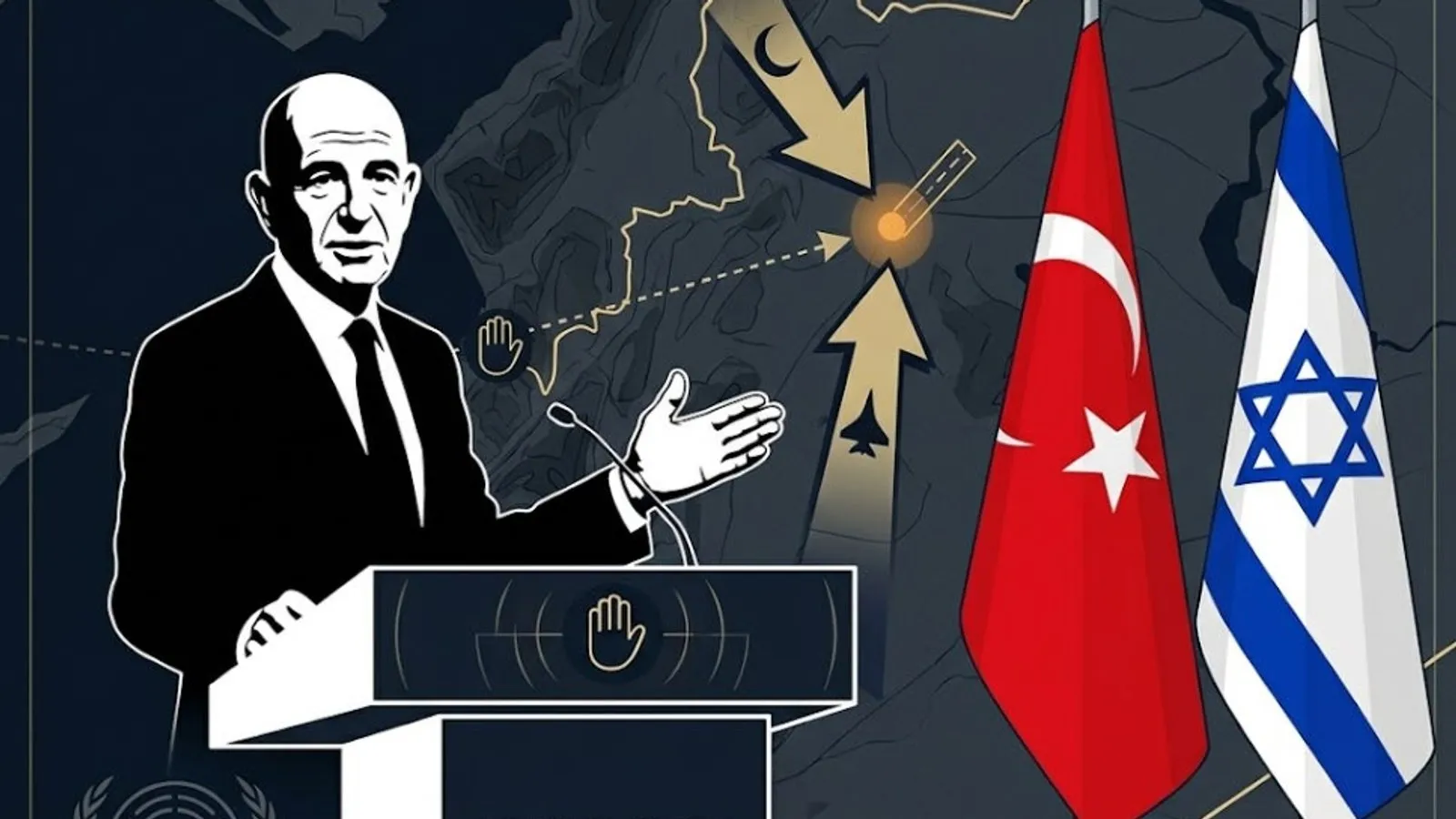
Israeli warplanes struck the Abu al-Duhur air base in the eastern Idlib countryside in the early hours of August 18: eight strikes on the runway and storage facilities, no casualties, the first reported Israeli strike on Syrian government military assets since March. The base sits roughly seventy kilometers from the Turkish border, had been out of service as a military airfield for more than a decade, and was hit only hours after a Turkish military delegation visited to inspect plans for reactivating its runways. Israel said nothing for most of a day, then claimed the strike in Netanyahu’s name as enforcement of an understood security status quo that Damascus neared breaching by permitting Turkish troops to deploy. Ankara answered by making Netanyahu personally the subject. And the loudest, most consequential voice in the whole episode belonged to neither capital, but to Washington. This post summarizes our Turkey Watch special report covering August 17-19.
Ankara’s Narrow Answer
Turkey’s official response was conspicuously smaller than the incident. Only two institutions spoke on the record: the Foreign Ministry, whose single statement condemned the strike as an attack on Syria’s sovereignty and territorial integrity and called on the international community to ensure accountability, and the Presidency’s Communications Directorate, which condemned the strike on the day and then, a day later, delivered the sharpest Turkish line of the window: a formal rejection of the Israeli deployment claim as frivolous allegations meant to legitimize unlawful strikes, driven by Netanyahu’s intent to sustain expansionist and destabilizing policies ahead of Israel’s October elections. Notably, neither statement confirmed or denied that Turkish personnel were at the base; the position ran through motive, not presence. An unnamed Turkish official went further to the independent outlet Serbestiyet: “There was no Turkish presence at the base,” with Israel accused of inventing excuses to bomb its neighbours.
The report treats the silences as findings in their own right, checked systematically against Turkish primary sources. President Erdoğan said nothing about the strike through August 19; his only reported activity on the day was a call with President Trump covering Iran-US tensions, the Mecca pact and Gaza, with no mention of Syria. Foreign Minister Fidan issued no personal statement, though his ministry’s readouts show him discussing Hormuz with his Qatari counterpart and regional developments with Syria’s al-Shaibani that same day. The Chief of the General Staff and Defense Minister Güler said nothing; forty-four written questions from an opposition İYİ Party deputy to the Defense Ministry went unanswered through the window. And İbrahim Karagül, the pro-government columnist this series has long treated as writing ahead of official policy, published a column roughly an hour after the strike that was entirely about domestic politics. His next scheduled column, on August 20, just outside the window, is the earliest available reading of the register Ankara intends to adopt.
Turkish media across the spectrum framed the strike as an attack on Syrian sovereignty rather than on Turkey directly, with pro-government outlets reaching for the standard “murderer Israel” epithet rather than escalation-specific language. The loudest framing of the strike as a message to Ankara came not from the state apparatus but from independent and specialist outlets, which built their coverage around the delegation visit hours before the strike and described a near-miss confrontation. Only one Turkish outlet in the window even mentioned the Mecca pact alongside the strike, and only as background.
Washington Answers Loudest
The most consequential reaction came from Washington. US envoy Tom Barrack, who is also ambassador to Turkey, publicly called the strike an unnecessary escalation, disclosed that Türkiye had received no advance warning and watched the Israeli aircraft on radar heading toward its territory, and credited calm heads with preventing deterioration. He said Washington is actively building a permanent deconfliction mechanism among Israel, Turkey and Syria. The report ranks this among the most open US rebukes of Israel over Syria policy since the fall of the Assad government, and notes the reporting, flagged by Quincy’s Responsible Statecraft via Israel’s Channel 13, that Israeli officials had weeks earlier asked President Trump to approve a strike on a Turkish military site in Syria and been refused, with no established link to this strike. The mechanism carries a second-order effect worth tracking: a standing channel that routes Israeli operations through advance notification to Ankara converts an Israeli operational prerogative into a negotiated one, a Turkish gain irrespective of how the mechanism performs. Washington, not Ankara or Jerusalem, is currently setting the terms of de-escalation.
What the Analysts Converged On
The small set of institutions that published inside the window converged on a narrow read. ACLED assessed it highly likely the strikes specifically aimed to prevent Turkey from using the base to anchor its influence, placed the episode in a wider Israeli goal of preventing Syria from restoring any meaningful strategic military capability, and drew the direct precedent: the April 2025 strikes on the T4 airbase, which likewise followed Turkish inspection visits. Israel’s Alma Center ruled out any Iranian or Hezbollah dimension, separating this case from the old weapons-corridor pattern and reading it as a message to the al-Sharaa government and possibly a third country. Carnegie’s Kheder Khaddour read it as Israel refusing to let the new Syria hold an air force at all; the Arab Center’s Navvar Saban as a red line against Turkish-assisted Syrian air capability; ECFR’s Aslı Aydıntaşbaş disputed the threat premise itself, noting months of Syrian-Israeli security negotiations. Most major Western and Israeli think tanks had not yet published dedicated analysis by the window’s close, a gap the report logs explicitly.
One connection nobody drew: no analyst or outlet in the window linked the strike causally to the Mecca Joint Defence Agreement. The closest is CFR’s Steven Cook, writing before the strike, who noted that Saudi and Pakistani forces would presumably back Türkiye should Ankara and Israel come to blows over Syria.
The Pact’s First Empirical Test
Abu al-Duhur is the first live test of the judgment this series issued on August 9: that the Mecca pact functions as architecture rather than an operational alliance. The episode supports it. Ankara did not invoke the pact, announced no consultations with Riyadh or Islamabad, and never mentioned the agreement in any official statement on the strike. The pact’s near-term function remains deterrent signalling, and the threshold at which it would become operative sits considerably higher than a strike on a Syrian airfield that produced no casualties; Turkish casualties on Syrian soil is the condition the report assesses would move it.
Outlook
The report closes with a three-horizon outlook, treating Ankara’s restraint as a tactical choice inside an established trajectory rather than evidence of a softer position. In the next few weeks, a direct military clash is unlikely: Turkey’s response stayed narrow and legalistic, no official threatened retaliation, Washington is actively building the deconfliction channel, and Netanyahu’s office left an explicit opening by saying Israel would welcome a return to the status quo, which reads as an offer to close the episode. The near-term uncertainty is declaratory: Erdoğan’s silence should not be read as a final position, and Karagül’s August 20 column is the first real test of where Ankara places the incident.
Over one to six months, renewed friction is likely because the drivers are structural: Turkey wants a larger military footprint in Syria, and Israel wants freedom to strike any site it judges threatening. Abu al-Duhur followed the same sequence as the March 2025 strikes on T4 and Palmyra, a Turkish inspection visit followed by an Israeli strike within hours, so another strike on a Turkish-linked site is plausible if Ankara proceeds with basing plans. The wider signal lies in the distance between this episode’s narrow Syrian-sovereignty framing and Ankara’s own stated position: Erdoğan told his parliamentary group on June 10 that Israeli actions in Lebanon and Syria had reached the point of threatening Turkey itself. Measured against that record, the language of August 18-19 holds a single incident below the threshold rather than marking a retreat.
Beyond six months, a full Israeli-Turkish war remains unlikely: the costs are lopsided, Turkey is a NATO member, and the United States is mediating. Lebanon is best understood as a dormant axis, live only through an expanded Syrian security role for Ankara rather than an independent Turkish move; nothing in this window connects Abu al-Duhur to Lebanon, and Alma explicitly ruled out an Iranian or Hezbollah role in this case. Short of those conditions, the likely path is continued low-level friction: periodic Israeli strikes on Syrian sites tied to Turkish expansion, and Turkish statements calibrated to avoid framing the dispute as a direct confrontation while the underlying position hardens.
Key Points
- Ankara deliberately framed the strike as a violation of Syrian sovereignty, not an attack on Turkey, positioning itself as Syria’s advocate rather than the aggrieved party, and its 19 August rebuttal attacked the motive behind Israel’s claim, election-driven pretext, without ever confirming or denying a Turkish presence at the base.
- The chain of command that would normally comment stayed silent through 19 August; only the Foreign Ministry as an institution and the Communications Directorate spoke, a narrower official response than the incident’s scale suggests, and the loudest message-to-Ankara framing came from independent outlets, not the state.
- The most consequential outcome is American: Barrack’s open rebuke, the no-warning disclosure, and the push for a formal Israel-Turkey-Syria deconfliction mechanism show Washington setting the terms, and a standing notification channel would convert an Israeli prerogative into a negotiated one, a Turkish gain regardless of performance.
- The analytic consensus reads the strike as a message to Ankara delivered through a Syrian target, executed by the method used against T4 and Hama in 2025 but applied closer to the Turkish border, inside Turkey’s own zone of influence.
- The Mecca pact’s first empirical test supports the architecture-not-alliance judgment: Ankara did not invoke it, and the threshold that would activate it, Turkish casualties on Syrian soil, was nowhere near crossed.
- Restraint here is tactical, not a change of position: measured against Erdoğan’s June formulation that Israeli conduct threatens Turkey itself, the narrow sovereignty language holds one incident below the threshold while the underlying rivalry over Syria continues to harden.
What to Watch
- Karagül’s August 20 column and whether Abu al-Duhur enters it: the earliest available reading of the register Ankara intends to adopt.
- Any on-record statement by Erdoğan, Fidan, Güler or the General Staff after the window closes, and whether it returns to the June formulation that Israeli conduct threatens Turkey or holds the Syrian-sovereignty frame.
- Whether Turkey confirms, denies or leaves unanswered the question of personnel at the base; the forty-four İYİ Party questions to the Defense Ministry are the domestic pressure point.
- The terms of the Barrack deconfliction mechanism: participants, notification thresholds, and whether Damascus enters as a party or a subject.
- Any Turkish reference to the Mecca pact in a Syrian context, including consultations with Riyadh or Islamabad; continued absence remains the baseline expectation.
- Resumption of runway work at Abu al-Duhur, or a Turkish delegation visit to another Syrian airfield, either of which restarts the sequence that produced this strike.
- Dedicated analysis from the institutions that had not published by 19 August, in particular INSS, the Washington Institute, the Middle East Institute and the Atlantic Council.
- Israeli election-cycle rhetoric on Turkey through the October vote, which supplies Ankara with continuing evidence for its claim that the strike was electorally driven.
This post summarizes the Iran Dossier Turkey Watch special report on the Abu al-Duhur strike, covering August 17-19, 2026. Section A draws exclusively on Turkish primary sources, the Foreign Ministry, the Presidency’s Communications Directorate, and outlets across the political spectrum, with every Turkish quotation verified in the original; Section B reviews international wires, the US envoy’s remarks, Israeli media and the think tanks that had published inside the window. Where an expected voice said nothing, that silence is reported explicitly as a finding rather than filled in with assumption.