Two Waterways, One Settlement: Doha Signs On to Saudi Security, Fuels Gaza, and Heads to UNGA as Brokers Sell Hormuz Passage
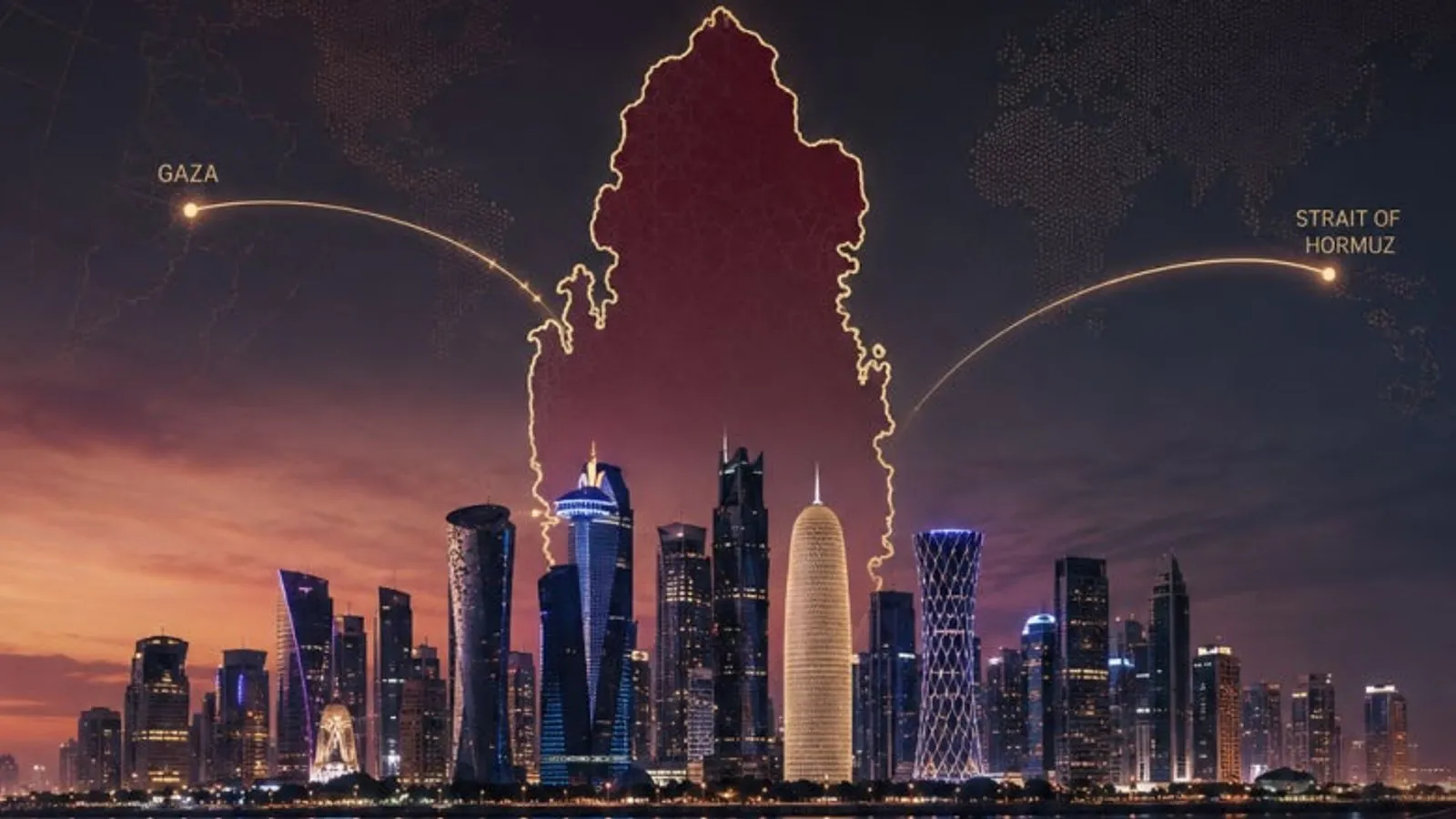
Qatar moved its Saudi solidarity onto an institutional track on September 17, and that is the strongest new signal in the Qatar Watch review for September 18. Doha condemned the Houthi drone attack on Taif, which killed one civilian and injured two, and the Qatari and Saudi interior ministers signed the minutes of the fourth meeting of their joint Security and Military Committee in Riyadh. Gaza returned to Qatar’s operational humanitarian portfolio through an agreement with the United Nations to deliver about 1.3 million liters of fuel, which Al-Sharq presented as a standing national commitment. Majed Al Ansari said Doha will use the UN General Assembly for meetings on de-escalation, mediation, and humanitarian access, and Al-Araby Al-Jadeed reports, citing Axios, that President Trump will brief Gulf leaders on a post-war plan for Iran on the sidelines on Tuesday. Qatar-linked platforms now offer three readings of the Houthi advance. Al Jazeera Arabic opinion and Emad Hajjaj’s cartoon tie it to Tehran, while the Doha-based Arab Center credits the Houthis with a calculation of their own. The war economy remains the binding constraint. Kpler data reported by Reuters show four commodity crossings of Hormuz on Thursday against a ten-day average of about 16, Al-Araby reports that shipowners pay brokers up to $2 million per large vessel for passage cleared with Iranian bodies, Asian spot LNG sits near $26 per million British thermal units, and QatarEnergy is seeking multi-year US supply to defend market share. The report judges that Doha is pairing its mediation brand with harder Gulf-security commitments and a hedged LNG portfolio while preserving its Palestinian legitimacy through the Gaza fuel grant. The weak point is physical. Qatar can move contracts and diplomacy faster than it can restore Ras Laffan output or normal Hormuz traffic. This post summarizes the Qatar Watch daily intelligence review for September 18.
From Solidarity to Architecture: Taif and the Riyadh Committee
The Qatar News Agency carried a categorical line on the Taif attack. Doha called the Houthi drone strike a reprehensible act of aggression, a violation of Saudi sovereignty and international law, and an attack on a security space that Qatar defines as shared with Saudi Arabia and the Gulf Cooperation Council. The statement follows the Cabinet communiqué and the Mecca statement described in Red Lines and Quiet Rooms, and it completes a week in which Doha has condemned each Houthi strike on Saudi territory in progressively firmer terms. The Taif attack killed one civilian, a Yemeni resident struck by drone debris according to Al-Araby Al-Jadeed, and injured two.
The same day brought the more important development. Interior Minister Sheikh Khalifa bin Hamad Al Thani met Saudi Interior Minister Prince Abdulaziz bin Saud in Riyadh for the fourth meeting of the Security and Military Committee under the Qatari-Saudi Coordination Council. The two ministers signed the minutes and discussed deeper security and military cooperation. Gulf Times and the Qatar Tribune gave the meeting prominent treatment, including Sheikh Khalifa’s statement that it reaffirmed the bilateral security partnership. The report’s assessment is that the institutional meeting matters more than another condemnation. As Houthi attacks produce civilian casualties and the Mecca controversy persists, Doha has an incentive to show that its ties to Iran and its mediation role leave GCC collective security intact. The Saudi-Qatar mechanism gives that message organizational substance. The indicator to follow is operational follow-up beyond the signed minutes, whether in intelligence coordination, maritime-security initiatives, or joint measures on Yemen.
Gulf Times gave the English-language argument its sharpest form. Its lead analytical item, “Why the region must heed Qatar’s warning on Bab el-Mandab,” turned the Foreign Ministry’s earlier warning into a strategic case. It linked Houthi control of Yemen’s Red Sea coast, renewed Saudi-Houthi fighting, and crude above $100 to Doha’s central concern, which is that the global system cannot absorb a Bab al-Mandab disruption on top of Hormuz. The piece carries no new government statement, and the report treats it as amplification of Doha’s maritime-security message in English.
The Gaza Fuel Grant and the Road to New York
Qatar signed an agreement with the United Nations to bring about 1.3 million liters of fuel into Gaza for hospitals, health centers, and other fuel-dependent services. Doha says about 2.1 million Palestinians rely on those services. The Peninsula’s late-evening report on September 17 added the most useful English detail, which is that Qatar delivered about 30 million liters between October 7, 2023 and March 2026. The report files the grant in the humanitarian influence file as well as the Gaza file, because it is an operational commitment delivered through a UN channel. Al-Sharq’s September 18 editorial, “Continued Humanitarian Support for the Palestinian Brothers,” turned the grant into a statement of national policy. It argued that fuel is inseparable from the preservation of basic life and that Qatar puts humanitarian considerations first in its Palestine policy. The report reads the editorial as evidence that Doha wants the grant understood as a durable approach.
The division of labor is familiar and effective. The state delivers a measurable input through the UN, and Qatar-based media carry a harder causal and moral narrative about Israel. Al-Araby Al-Jadeed’s Gaza coverage frames damaged infrastructure and blocked reconstruction equipment as a continuation of Israeli violence. Its September 18 issue adds reporting on Israel-backed militias fragmenting behind the Yellow Line, which leaves more than 60 percent of Gaza under Israeli control, and on a new E1 settlement tender timed before the Knesset elections. The economy page reports that the Saada building collapse in Gaza City killed 21 people, and a public works ministry source now counts about 2,000 buildings at risk of collapse and about 1,000 more with hazardous hanging concrete, well above the roughly 400 cited a day earlier. The joint EU, UN, and World Bank assessment puts recovery needs at $71.4 billion over ten years. The grant gives Doha a concrete answer to the criticism that its Gaza role is mainly political or media-driven.
The diplomatic calendar points to New York. Majed Al Ansari said Qatar has completed preparations for high-level participation in the 81st General Assembly. He listed international peace and security, mediation, de-escalation, international law, multilateralism, humanitarian access, and sustainable development as priorities, with bilateral and multilateral meetings planned around the regional crisis. Al-Araby Al-Jadeed, citing Axios, reports that Trump will brief GCC leaders or foreign ministers on a day-after plan for ending the war with Iran at a meeting on the UNGA sidelines on Tuesday. Finishing touches are expected after the November 3 midterm elections, and the meeting may widen to Arab and Muslim leaders. Trump again claimed that Iran had contacted his administration directly in search of a deal, and Tehran did not comment. The report could not locate the Axios item independently and treats the meeting as moderate-confidence reporting attributed to Al-Araby. If it takes place, it puts Qatar inside the post-war design discussion at the same venue where Al Ansari has said Doha will concentrate its diplomacy.
Two institutional items round out the official feed. The agency reported Qatar-Russia technical cooperation on tax administration and GCC economic coordination, and Estithmar Holding completed the acquisition of a 48.68 percent stake in Syria’s Shahba Bank. The bank deal gives a Qatari group a regulated financial foothold in Syria while Doha’s regional diplomacy stays active. Al-Arab led its morning site with the UNGA story, and no item in Al-Watan, Al-Rayah, Lusail, or Doha News changed the core assessment.
Three Readings of Houthi Agency
Qatar-linked platforms now describe the Houthi advance in different ways, and the spread is itself a finding. On Al Jazeera Arabic’s opinion page, Nasr Taha Mustafa, a former Yemeni information minister writing as a guest contributor, argued on September 17 that the Houthi offensive belongs to a wider Iranian pressure strategy that runs through Hormuz, Iraqi armed factions, Hezbollah, and the Houthi move toward Bab al-Mandab. He expects Houthi control of Mocha to prove temporary, because regional and international actors will not accept durable Houthi leverage over the strait, and he notes contested contacts between Houthi representatives and US embassy staff in Muscat. The piece is signed opinion and does not state Al Jazeera’s editorial position. The report nonetheless finds it unusually explicit in tying the Houthi move to Tehran.
Emad Hajjaj’s cartoon in Al-Araby Al-Jadeed on September 18 goes further. A swarm of delta-wing attack drones, each carrying the head and robes of Abdul-Malik al-Houthi, dives toward a map marked Bab al-Mandab, while an officer in a green cap marked IRGC works a video-game controller in the lower corner. The house cartoonist draws the Houthis as expendable Iranian munitions steered from Tehran, and the cartoon runs on the same day as Doha’s condemnation of the Taif attack.
The Doha-based Arab Center for Research and Policy Studies, headed by Azmi Bishara, published a study the same day that assigns the Houthis a calculation of their own. The Houthis took six districts in Taiz and Hodeidah on September 11, about 5,400 square kilometers including Mocha, Perim, and the Hanish islands. The study dates the trigger to the July Mahan Air incident, when an aircraft carried a Houthi delegation to Khamenei’s funeral, and it reads the offensive mainly as a Houthi decision that Iran exploits politically. It notes that the Houthis still honor their May 2025 understanding with Washington and exempt all shipping except Saudi vessels. It warns that the shift could create a Houthi influence network across the Red Sea and the Gulf of Aden toward the African coast.
Al Jazeera English, by contrast, gave the most space to the Houthi denial. Its September 17 report counted at least five people killed across the renewed Saudi-Houthi exchanges, and it quoted Abdul-Malik al-Houthi dismissing the Saudi accusation that his forces targeted Mecca as a fabrication. It also carried Iran’s cautious line that attacks on holy sites are condemnable but that a Saudi interception claim alone does not establish Houthi responsibility. Al Jazeera Arabic’s news pages stressed human cost and the government counteroffensive, with UNICEF figures showing more than 104,000 people displaced in two weeks. The report’s assessment is that three Qatar-linked platforms give three readings of Houthi agency and agree in opposing the campaign. That spread gives Doha room to condemn Houthi attacks on Saudi Arabia while keeping a channel to Tehran. The Arabic-English differential is indicative and not conclusive, since the items belong to different genres.
Al-Araby’s Front Page: Beijing’s Request, Israel’s Triggers, and a Gulf State Weighing Normalization
Al-Araby Al-Jadeed’s September 18 print issue led with the Reuters exclusive that Beijing has asked Tehran to rein in the Houthis, based on three Iranian sources, with Tehran’s reply tying regional stability to an end of the US and Israeli war. Secondary decks carried al-Houthi’s Mecca denial, which dated the escalation to the July strike on Sanaa airport, and the Taif death. The photo feature showed ships anchored off Bandar Abbas under the headline “Hormuz Brokers.” The report verified the China item against the Reuters original and treats the front page as consistent with Doha’s interest in a China-assisted maritime formula.
The Iran pages carried a dense set of signals. A Russian-Chinese double veto killed a US draft to extend the Security Council’s Iran sanctions committee, with Pakistan and Somalia abstaining. Abbas Araghchi wrote after his Beijing visit that the decisions taken there would determine the region’s strategic balances. IRGC Ground Forces commander Brigadier General Mohammad Karami toured the Gulf islands and warned of a harsh response to any miscalculation. Tasnim reported an MQ-9 shot down over Qeshm, CBS published images of damage at US sites in the region including a direct hit on an E-3 Sentry at Prince Sultan Air Base, and Iran gave a Swedish diplomat 48 hours to leave. Pakistan’s Defense Minister Khawaja Asif said it is time to activate the August 7 Mecca Agreement among Saudi Arabia, Pakistan, and Turkey, and that Islamabad had relayed a Saudi message to Tehran about the Houthi attacks. Crown Prince Mohammed bin Salman discussed freedom of navigation with President Macron by phone. Tehran’s own handling of the day, including the Guard Corps strike on a tanker in the strait, is covered in the Hormuz-axis daily.
A boxed item on Israeli options deserves attention in Doha. Maariv and Al-Monitor quoted a senior Israeli intelligence official saying that the security establishment opposes a pre-emptive strike on the Houthis and favors a regional coalition, but that three triggers could change that view. The first is a US-Iran escalation in which Tehran orders Houthi attacks on Israel, the second is a Houthi grip on Bab al-Mandab that chokes the port of Eilat, and the third is a Saudi request for Israeli involvement in its defense. The report judges the third scenario the most sensitive for Qatar’s GCC positioning. A Yemeni military source told the paper that government forces retook positions on Jabal Kahbub in Lahij, which overlooks Bab al-Mandab. In Iraq, the September 30 deadline for faction disarmament approaches with no deal, and a Coordination Framework leader said Washington has warned it could halt monthly dollar transfers while the factions still hold hundreds of drones.
The Palestinian pages carried an E1 update from Ir Amim. Israel added a tender for 2,167 housing units, bringing the total to 3,401 with the 1,234 units announced in late August, and bidding opens on October 25, two days before the Knesset elections. Finance Minister Bezalel Smotrich said the plan buries the idea of a Palestinian state. The paper reports that Mahmoud Abbas sought his Cairo visit to discuss the November 28 legislative elections and the risk of rival Fatah lists, while the State Department has refused him a UNGA visa and is extending its ban on PLO and Palestinian Authority officials. London has warned British settlers in the West Bank that they fall under the settlement sanctions regime announced on September 8, and Italy backed a fourth EU package on violent settlers and sanctions on Itamar Ben Gvir. A joint statement by US Ambassador Mike Waltz, Moroccan Foreign Minister Nasser Bourita, and Israeli Foreign Minister Gideon Saar raised Morocco-Israel relations to full embassies with direct flights before year-end, and the paper gave extensive space to Moroccan anti-normalization voices.
The opinion pages touched Qatar’s files repeatedly. Editor-in-chief Ma’an al-Bayari defended the film NAZA against Arab critics who dismiss it because its directors are Israeli, and he mentioned a morning report that another, unnamed Gulf state intends to normalize with Israel. Osama Abu Irshaid, writing from Washington, cited Axios to argue that Trump twice refused Mohammed bin Salman’s request for direct US action against the Houthis on September 10, and he cited Israel’s strike on Qatar last year as evidence that Gulf investment pledges bought no protection. Hossam Kanafani argued that Hormuz exports remain about 60 percent below pre-war levels, that Iraqi militia attacks halted the Saudi East-West pipeline workaround, and that a standoff of neither war nor peace will keep pushing prices up. Randa Haidar linked NAZA to a reported US plan to deliver 40,000 heavy bombs to Israel. The report flags that figure as unverified, since external reporting refers to an approved $2.8 billion sale of 2,000-pound bombs.
Lebanon and Syria are where Qatari money meets the post-war order. Presidents Macron and Joseph Aoun and King Abdullah II held a preparatory meeting in Paris ahead of an international conference for the Lebanese Army and internal security forces. Aoun cited more than 4,000 dead and asked for a roadmap and a timetable, and Macron called the end of UNIFIL’s mandate on December 31 a “big mistake.” UNIFIL fields 7,462 troops from 46 countries. A Franco-Italian coalition proposal remains unagreed after about three months, and the Lebanese Foreign Ministry proposes a three-year European civil-military mission that would exclude the area south of the Litani for now. Qatar has been a recurring funder of Lebanese Army salaries and fuel, so the report expects the conference to be the venue for Doha’s next pledge. In Syria, Aleppo’s military criminal court handed down the first verdicts in the coast massacre trials, three internal security personnel were killed in a raid in Sanamayn, and the energy minister introduced three diesel grades after fuel protests. The report reads the verdicts and the protests as a test of the transitional government at the moment Qatari capital, including the Shahba Bank stake, expands its Syrian footprint.
The War Economy: Four Transits, $2 Million Passages, and a Hedge Built on US Gas
The report’s numbers-first table has moved little, and that is the finding. Reuters and Kpler counted four commodity-vessel crossings of Hormuz on Thursday, below Wednesday’s six and far below the ten-day average of about 16. The four were bulk and tanker classes, with no visible Qatari LNG movement. AIS-dark traffic means the count is incomplete, and the direction is still clear. The strait operates as a wartime corridor. Al-Araby’s preliminary count of three crossings on Wednesday conflicted with the Reuters figure of six, and the report uses the Reuters number because late AIS data revise counts upward. Bab al-Mandab moved 23 commodity vessels on Thursday against a ten-day average of about 26, so physical traffic there is holding near its recent norm under sharply higher military risk. Brent November futures traded near $102.57 on Friday morning and WTI near $100.05, a third straight daily fall on hopes of added Saudi supply.
The new item is the price of passage. Karim Ramadan reports for Al-Araby from Muscat that Gulf and other shipowners pay brokers up to $2 million per large vessel to arrange transit cleared with the IRGC or other Iranian bodies. Shadow firms in Dubai, China, and Singapore handle the payments, Iran issues a routing map, and brokers share the proceeds with Tehran, according to a Gulf maritime source. Maritime consultant Abdulaziz Issa al-Muhannadi told the paper that Lloyd’s does not recognize such payments and that insurers warn against them. War-risk premiums rose from about 0.25 percent of hull value before the crisis to 3 to 10 percent at peak, and the US has cut its protected transit windows to two a day. The report names no Qatari vessel and finds no evidence that QatarEnergy or Qatar-linked carriers use the channel. It nevertheless treats the practice as a new collection target for the Hormuz file, because any Qatar-linked tonnage that pays would face US sanctions exposure and void insurance cover. The account is single-sourced, and the report carries it at low to moderate confidence. Washington’s move against the strait’s payment rails, covered in the day’s Economic Press Review, is the other side of the same ledger.
Nothing in the window supports declaring Ras Laffan or Qatari LNG exports normalized. The physical baseline set out in The Mecca Test remains 12.8 million tonnes per year offline, about 17 percent of capacity, with a repair estimate of three to five years. MEES reported on September 11 that only about 10 percent of LNG tanker storage capacity remained available after Qatar used vessels to keep plants running at low rates. That becomes a hard constraint on plant runs when empty carriers cannot reliably enter through Hormuz. Reuters estimates Asian LNG imports in September at 20.09 million tonnes, the weakest September in eight years, with North Asian spot prices around $26 per million British thermal units. High prices hurt Qatar here because price-sensitive buyers cut consumption, switch fuels, or turn to other suppliers. Bangladesh and Pakistan already face blackouts, factory disruption, and costly spot exposure, and competitors can turn emergency substitution into long-term customer capture.
QatarEnergy’s search for 2 to 3 million tonnes per year of multi-year US supply through 2031, first reported by Reuters on September 11 and examined in the September 17 review, is best read as market-share defense. The hedge reduces contractual risk, but it cannot recreate Qatar’s low-cost domestic margin or remove chokepoint exposure for its own production. The fiscal setting frames the problem. The second-quarter deficit stands at 21.2 billion riyals, about $5.8 billion, the widest quarterly shortfall in almost a decade, and the Qatar Central Bank’s 25 basis point increase took effect on September 17. Qatar cannot monetize cargoes it cannot produce or move, so volume remains the fiscal problem even at today’s prices.
The Influence File: A Nil Return That Keeps the Ledger Open
The report records no new development in the Section 117, foreign-funding, or FARA files in the reporting window. The Qatar-linked cybermercenary file, covering Appin, BellTroX, CyberRoot, and the allegation that hack-for-hire activity operated at the behest of the Qatari government, produced no new substantiated development and stays active under the September 11 amendment to the collection requirements. No new FDD or MEMRI item changed the standing assessment of Hamas’s political presence in Qatar. On the Venice question examined in the September 17 review, the report keeps its confidence low on any causal claim linking Qatar to NAZA’s award, because no supporting evidence was located. A nil return leaves the files open. It is not evidence that the activity has stopped.
Key Points
- Qatar-Saudi security coordination has moved to an institutional track. The signed minutes of the fourth Security and Military Committee meeting matter more than the Taif condemnation, and operational follow-up is the test (high confidence).
- The 1.3 million liter Gaza fuel grant strengthens Doha’s humanitarian standing ahead of UNGA, and Al-Sharq’s editorial frames it as national policy (high confidence).
- Doha will sit at the table when Washington outlines post-war plans for Iran, if the reported Tuesday Trump-GCC meeting takes place (moderate confidence, since the account rests on Al-Araby Al-Jadeed citing Axios and was not independently confirmed).
- Hormuz remains a wartime corridor and Bab al-Mandab risk is rising. Four crossings on Thursday, Houthi control of Mocha and Perim, and China’s private request to Iran all point the same way (high confidence).
- Broker payments for Hormuz passage are a new compliance risk for Gulf shipping. The account is single-sourced, and there is no evidence yet that Qatar-linked vessels pay (low to moderate confidence).
- Qatar-linked media differ on Houthi agency and agree in opposing the Houthi campaign, which gives Doha room to condemn attacks on Saudi Arabia while keeping a channel to Tehran (moderate confidence).
- QatarEnergy’s US procurement is structural market-share defense against Asian demand destruction at $26 per million British thermal units, and it cannot replace lost domestic margin (moderate confidence).
- Ras Laffan output and the fiscal position remain the binding constraints. With 12.8 million tonnes per year offline, tanker storage near its limit, and the widest quarterly deficit in almost a decade, volume loss stays a fiscal problem despite high prices (high confidence).
What to Watch
- Tuesday’s reported Trump-GCC meeting in New York, including Qatari attendance, positions on the day-after plan, and any mediation role it assigns to Doha.
- UNGA meetings between Qatar and the United States, Iran, Oman, and Pakistan, and within the GCC, on Hormuz, Bab al-Mandab, and a regional ceasefire formula.
- Operational measures, intelligence coordination, or maritime-security initiatives from the Qatar-Saudi Security and Military Committee beyond the signed minutes.
- Any repeatable sequence of laden Qatari LNG departures from Ras Laffan and ballast arrivals through Hormuz. One-off or AIS-dark movements do not count as normalization.
- Any evidence that Qatar-linked vessels use Hormuz passage brokers, and any US Treasury action against broker networks.
- War-risk insurance premiums and exclusions for Hormuz and Bab al-Mandab, especially for LNG carriers and Qatar-linked tonnage.
- QatarEnergy’s US procurement, including counterparties, volume, duration, destination flexibility, and whether 2 to 3 million tonnes per year becomes firm contracted supply.
- Asian customer behavior, including contract renegotiation, force majeure extensions, fuel switching, and long-term deals with other suppliers.
- Delivery of the 1.3 million liters of Gaza fuel and any follow-on package from the Qatar Fund for Development, Qatar Charity, or the Qatar Red Crescent.
- Pledges at the Lebanese Army conference and the shape of any UNIFIL successor force.
- The E1 tender opening on October 25, the September 30 Iraq faction deadline, and the identity of the Gulf state reported to be weighing normalization with Israel.
- Houthi messaging toward Mecca and Saudi civilian targets, and whether Qatar moves from condemnation to a diplomatic or GCC security role on Yemen.
- The standing influence files, including Section 117, Congress, FARA, Muslim Brotherhood networks, and the Qatar-linked cybermercenary allegations.
This post summarizes the Qatar Watch daily intelligence review for September 18, 2026. Primary sourcing is Qatari: the Qatar News Agency’s Arabic and English feeds for the Taif condemnation, the Security and Military Committee meeting, the UNGA preparations, the Qatar-Russia and GCC items, and the Estithmar acquisition; the Foreign Ministry and The Peninsula for the Gaza fuel agreement; Al-Sharq, Al-Arab, Al-Watan, Al-Rayah, and Lusail for the Arabic domestic press; Gulf Times, the Qatar Tribune, The Peninsula, and Doha News for the English-language press; and Al Jazeera Arabic and English together with Al-Araby Al-Jadeed’s September 18 print edition for the media barometer, the Yemen coverage, the Iran pages, the Palestinian and Lebanese files, the Hormuz brokers report, the opinion pages, and the cartoon. The Arab Center for Research and Policy Studies study is cited as reported by Al-Araby. External verification rests on Reuters and Kpler for Hormuz and Bab al-Mandab traffic, on Reuters for the QatarEnergy purchase talks, the Asian LNG price and import analysis, the Bangladesh and Pakistan disruption, and the China-Iran exclusive, on MEES for tanker storage, on CNBC for oil prices, and on the Justice Department’s FARA portal for the influence baseline. The report’s evidentiary flags are preserved here. Confidence is high on Qatar’s official positions, the Gaza fuel grant, the Saudi-Qatar committee, the fiscal baseline, and the direction of Hormuz traffic. It is moderate on the durability of QatarEnergy’s portfolio shift, on the interpretation of Al Jazeera’s Arabic-English differences, and on the Trump-GCC meeting, which was not independently located and remains attributed to Al-Araby Al-Jadeed. It is low to moderate on the Hormuz broker payments, which rest on a single source, and low on any causal claim linking Qatar to NAZA’s Venice award. Responsibility for the Mecca-bound drone is treated as a Saudi claim denied by the Houthis. Randa Haidar’s figure of 40,000 heavy bombs is unverified, and Al-Araby’s preliminary Wednesday crossing count was superseded by the Reuters figure.