Host Without a Table: Iran's Envoys Come to Doha but Decline to Meet the Americans
Qatar now hosts the decisive phase of U.S.-Iran bargaining, but it does not yet host the two sides together. After 12 hours of talks in Tehran on October 30, Iranian negotiators followed the Qatari mediators to Doha and met them there on October 31, while Doha kept an open line to the White House. Foreign Minister Abbas Araghchi welcomed the U.S. outreach but said Iran sees “no need to meet with the Americans at this stage.” The report judges that mediation has advanced on sequencing and that no agreed format yet exists. At the same time, the war is reaching Qatar directly. A Nakilat LNG carrier was struck in the Gulf, Israel’s inquiry into alleged foreign election funding widened to include the Mossad, and Qatar’s embassy in Washington is defending its lobbying in public two days before the U.S. midterm elections.
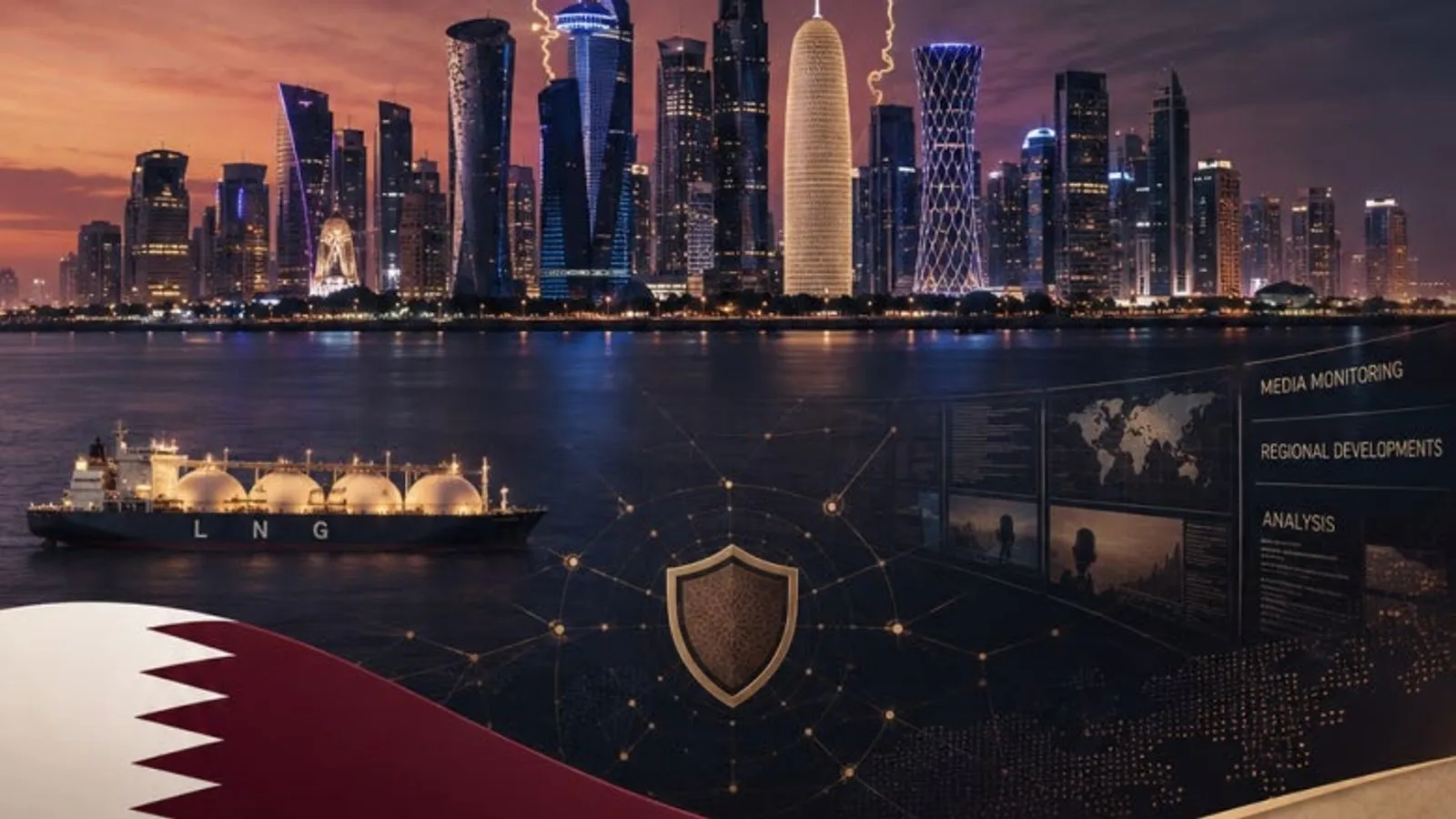
From Shuttle Diplomacy to Talks in Doha
The main change since our October 31 brief is that an Iranian negotiating team is now in Doha. It traveled back with the Qatari mediators after an unusually long Friday session in Tehran. Reuters reported Saturday meetings between Iranian officials and Qatari intermediaries, with the mediators in continuing contact with the White House. Al-Araby Al-Jadeed reported that an Iranian deputy foreign minister remains in Doha to keep these contacts going.
The accounts diverge on what comes next. Al-Araby’s lead story, citing sources close to the Qatari-Pakistani mediation, says Friday’s round produced a breakthrough on preliminary steps covering the nuclear file, navigation in Hormuz, and financial incentives for Iran. The same sources say a U.S. delegation will join the talks in Doha and that China and Russia would act as guarantors. Tasnim, however, confirmed the Iranian delegation’s presence while denying any plan for negotiations with the United States on Qatari soil. The report reads Tasnim’s wording as a deliberate distinction between indirect mediation and a recognized U.S.-Iran negotiation. That distinction protects Tehran politically if the talks fail and keeps room for further indirect bargaining. Al-Araby’s sourcing is anonymous, and no arrival date for a U.S. team has been confirmed.
Araghchi’s interview with Al Jazeera on October 31 sets the ceiling for now. He called the U.S. attempt to open the door to dialogue a positive step and said Iran had studied Vice President JD Vance’s letter at a senior level. He described the Hormuz package as Iran’s own proposal. It would establish a shipping route agreed with Oman, close other routes, and shorten the implementation window from five days to two at Qatar’s request. A second phase would take up the nuclear proposals the mediators have tabled. He dismissed reports of imminent meetings with U.S. officials as media speculation. Al Jazeera’s Tehran correspondent saw no notable flexibility and noted that Tehran still wants the $6 billion held in Qatar released.
The Sequencing Gap
The core dispute is about what happens first. Washington wants nuclear steps at the front of any process. Tehran wants the U.S. naval blockade lifted, frozen assets released (including the funds in Qatar), oil waivers restored, and an Iran-Oman shipping route recognized. Qatar has proposed a seven-day sequence of confidence-building steps that reportedly includes letting international inspectors return to the nuclear sites damaged in the war in exchange for selective easing of U.S. restrictions. Iran has advanced its own sequence, which ties the reopening of Hormuz to the end of the blockade, the release of assets, and approval of the Iran-backed route. The report cautions that the similar seven-day labels conceal very different distributions of concessions and verification duties.
As reported by Al-Araby, Iran’s broader package also includes a reduced U.S. military presence and an end to hostilities on regional fronts, including Lebanon. Each of these terms touches Qatar directly, through its banking exposure, shipping interests, territorial security, and relations with its Gulf neighbors. The report notes that these demands come from Al-Araby’s account of the Al Jazeera interview and have not been checked against a full transcript.
Washington’s position is divided. Secretary of State Marco Rubio said direct and indirect contacts are continuing and that President Trump has not decided on further military action. He expressed a preference for diplomacy while stressing that the United States is ready to use force. According to Axios, Rubio and Defense Secretary Pete Hegseth doubt that a negotiated nuclear deal is achievable, while Vance and the negotiating envoys want to give diplomacy another chance. Axios also reports that Trump leans toward a wide military operation if Republicans suffer a heavy defeat on November 3. The report stresses that the midterm result will shape incentives on both sides, but no future U.S. decision can be inferred from it yet. Our Hormuz-axis daily for November 1 follows the Iranian and U.S. positions in more detail.
A Mediator Within Range
Qatar’s exposure is rising along with its importance. Supreme Leader Mojtaba Khamenei has ordered an immediate response without geographic limits to any new attack on Iran. Al-Araby also carries army commander Amir Hatami’s statement that Iran has drawn up a new list of U.S. and Israeli targets across a wider area. In Al-Sharq, the Kuwaiti political scientist Abdullah Khalifa Al-Shayji, a regular contributor, reports that the Vance letter was addressed to Mohsen Rezaei, the secretary of the Supreme National Security Council. In his account, Washington bypassed the president and the parliament speaker because it believes Rezaei can sell a deal to the Revolutionary Guards. He adds that Rezaei has adopted a posture of no red lines and has threatened undersea internet cables, data centers, and AI facilities in the Gulf. These details are his reporting and have not been confirmed elsewhere.
Doha’s public line has not changed. In an October 31 call with Kuwait’s foreign minister, Prime Minister Sheikh Mohammed bin Abdulrahman Al Thani backed all diplomatic efforts toward a solution that guarantees freedom of navigation and leads to a comprehensive agreement. Al-Watan’s editorial today builds on that call and presents mediation as a basic pillar of Qatari foreign policy. On October 27 the Foreign Ministry called for a regional security arrangement based on sovereign equality and mutual non-aggression, and it pressed Iran to stop threatening its neighbors. The report judges that this formula lets Doha keep its access to Tehran without appearing to endorse Iran’s claim to control shipping routes.
Two opinion pieces on Al Jazeera point in the same direction. Abdullah Baabood, writing in English, builds on an Omani idea for a non-aggression pact among all eight Gulf littoral states, with verifiable commitments against attacks on civilian infrastructure, militia violence, and maritime obstruction. Rashed Mohammed Al-Marri, head of the GCC Emergency Management Centre, argues in Arabic for common early warning, crisis coordination, and joint exercises. The report treats these as signs of a growing Gulf vocabulary of collective protection. They are proposals and opinion, and no government has committed to them.
Israel’s Funding Inquiry Widens
Israel’s investigation of possible foreign influence on its October 27 election has widened in scope while its evidence has grown thinner. At the Shin Bet’s request, the Mossad agreed on October 30 to assist with aspects involving states other than Qatar, a day after saying it had no role. A Central Elections Committee source said the claim under review is that Qatar funded efforts to raise Arab turnout. An Israeli security source described the affair as limited, with far less effect than some accounts suggested. In the separate Ra’am cash case, a senior law-enforcement official said no evidence links the money seized on election day to vote-buying. Turkey’s Center for Countering Disinformation called the allegation of Turkish involvement completely baseless.
The report keeps the two inquiries separate. The committee chair’s formal referral did not name a country, the size of any transfer has not been shown publicly, and no finding suggests that vote totals were altered. Foreign Ministry spokesman Majed Al-Ansari categorically denied any Qatari role on October 29 and has said nothing further since. No financial pathway from Qatar to the Muslim Brotherhood or to Arab campaigns has been established from verifiable records. Official results go to President Isaac Herzog on November 4, and the Knesset is due to be sworn in on November 10. As a result, the funding story will run through the coalition fight.
Qatari-aligned media read the result as a defeat for Netanyahu that the Arab vote made possible. In Al-Araby’s opinion pages, Mustafa Barghouti argues that the Arab lists’ 19 seats leave neither Zionist bloc able to govern without them, and he calls the funding accusation a lie. Hassan Madan asks whether Israel can keep treating a fifth of its citizens as a marginal minority. Fatima Yassin compares a Gadi Eisenkot government backed from outside by Arab parties to Rabin’s minority government of 1993-95 and finds the comparison weak. In Al-Watan, Munir Shafiq blames the Israeli electorate itself. Al Jazeera Arabic republished a Financial Times analysis of Israel’s rightward shift and asked how Eisenkot could reconcile Haredi and Arab parties. Al Jazeera English separately reported a study that attributes, with moderate to high confidence, an $11 million anti-Qatar advertising campaign to an operation run from Israel. Across these outlets the effect is to place the accusation within a longer story of hostile campaigns against Doha. None engages its substance beyond the October 29 denial.
The day’s cartoons carry the same line. Al-Araby shows Netanyahu outweighed by the ballot box, Gulf Times shows him asking Trump for one more push, and Al-Watan draws Eisenkot and Netanyahu as two sides of one coin. A fourth, from Al-Araby on October 31, shows Trump buying a ballot for $5,000. None of them touches the funding allegation against Qatar.
Qatar’s U.S. Presence Becomes a Midterm Issue
Qatar’s activity in Washington is now itself a campaign talking point. On October 31, the pro-Trump activist Laura Loomer called on Secretary Rubio to deport Hamad AlMuftah, Qatar’s deputy chief of mission, accusing him of targeting Jewish Americans. AlMuftah replied on X overnight that the claims had no basis. He described Qatar’s U.S. activity as transparent, legal, and mainly defensive, noted that Qatar receives no U.S. military or financial aid, and advised Loomer to read the FARA requirements in light of her own foreign travel. The report judges that the timing is the point. Two days before the vote, Qatar’s mission is publicly answering deportation calls from the president’s media base.
The record on Semafor is thinner than the online debate. Daniel Lubetzky claimed on October 28 that Semafor received millions from Qatar for journalism training worth about $50,000. Semafor says it has never accepted investment from any government or sovereign wealth fund. Invest Qatar was a launch partner of Semafor Gulf in 2024, and Media City Qatar co-hosted a Semafor-run workshop in December 2025. Neither side has disclosed the amounts. Separately, Judge Tanya Chutkan’s order blocking the Education Department from publishing foreign donor identities under Section 117 runs to November 13, ten days after the vote. The order concerns disclosure rules and does not by itself substantiate claims that Qatar used universities to buy political influence. Our Section 117 special report explains the case.
Al-Araby makes the midterms a front-page story. A feature by its Washington correspondent traces the rise of organized pro-Palestinian advocacy from 2018 to groups that, in the paper’s account, are fielding competitive candidates for the first time this cycle. For the Qatari-funded paper, the vote matters through two lenses: Gaza policy in Congress and the Iran decision in the White House.
Qatar’s broader influence profile was on display in the same week. CNN held its first Global Perspectives forum in Doha on October 29 with more than 600 attendees and Media City Qatar as host partner. QIA chief executive Mohammed Saif Al-Sowaidi used the forum to restate the fund’s $500 billion, ten-year U.S. commitment and to describe plans to expand its New York team and invest in media and AI. On November 1, Al Jazeera marked its 30th anniversary by relaunching its Arabic output as three channels (Al Jazeera Now, Al Jazeera Arabic, and Al Jazeera Mubasher) with more than 30 new programs. The report argues that in Qatar’s system sovereign investment, public diplomacy, sponsorship, and lobbying operate as a single policy instrument. In its view, the useful analytical question is which U.S. decisions each placement is meant to shape. It adds that no available evidence shows the Qatari government directing CNN’s coverage.
The War Economy: A Struck Carrier and a Rated Buffer
QNA reported on November 1 that Nakilat’s LNG carrier Al Mayeda, a 266,000-cubic-meter Q-Max vessel, was hit by unidentified objects in the Gulf on the evening of October 30. The company said the crew was unharmed, the ship remained operational, no environmental damage occurred, and the impact was still being assessed. The official notice identified neither the attacker nor the weapon. The same day, UKMTO logged a tanker struck by explosive devices attached from a small boat near Khasab.
S&P Global Ratings kept Qatar at AA with a stable outlook, citing large fiscal and external assets and QatarEnergy’s institutional strength. It projects a 14.4 percent real contraction in 2026, followed by growth of 15.1 percent in 2027, 8.8 percent in 2028, and 7.9 percent in 2029, with a budget surplus of 4.6 percent of GDP next year. About 12.8 million tonnes a year of export capacity remain offline after strikes damaged two of Qatar’s 14 LNG trains, and repairs are expected to take years. The emir has disclosed a 42 percent fall in government revenue in the first half of 2026. The report notes that the 2027 figure reflects a rebound from a depressed base plus new North Field capacity, and that it depends on shipping conditions and the absence of renewed hostilities.
Oil prices remain high. Brent’s January contract, now the front month, settled at $113.43 on October 30, while the expiring December contract settled at $117.64. WTI settled at $104.12. Brent rose 13.6 percent in October and WTI 15.2 percent. Seven OPEC+ members meet online today and are expected to hold December targets, a decision of limited physical weight because most Gulf producers are pumping below quota. Treasury Secretary Scott Bessent said Hormuz transits are back to prewar levels, excluding Iranian barrels. On the supply side, QatarEnergy agreed on October 29 to buy 3 million tonnes a year of U.S. LNG from Woodside for 20 years. With two trains down, Doha is buying American gas to keep its portfolio whole while it argues its case in Washington. The report concludes that a durable Hormuz arrangement is worth more to Qatar than diplomatic prestige.
The Wider Region and Qatar’s Soft Power
Iran’s reported conditions include an end to fighting in Lebanon, and Israeli strikes in the south continue. The report warns that a Hormuz and nuclear settlement that leaves the Lebanese front open could bring only temporary relief to the Gulf, and the reported proposals do not say how commitments involving Hezbollah would be monitored. In Gaza, Al-Sharq reported eight Palestinians killed in Israeli strikes on Gaza City and Khan Younis on November 1, the kind of ceasefire breach that Qatari media log daily without any new Doha initiative attached. Al-Araby’s Yemen coverage describes clashes near Lahj. The report finds no verifiable evidence for claims that Qatari money is financing the Saudi campaign against the Houthis.
Al-Raya’s editorial celebrates Qatar’s first place in the region for political stability and rule of law in the World Bank’s 2026 governance indicators. Qatar Charity’s Winter Heroes campaign seeks to raise 120 million riyals (about $33 million), though the report notes that a fundraising target is not money disbursed. Amnesty International’s latest assessment records continued weaknesses in protection for migrant and domestic workers and limits on expression and association, which remain part of Qatar’s international reputation.
Key Points
- Doha mediation has produced movement on sequencing but no agreed format, and Tehran publicly declines to meet U.S. officials for now. A renewed U.S. strike after November 3 remains possible (high confidence).
- Qatar’s exposure is rising with its centrality. An LNG carrier has been hit, Khamenei has ordered retaliation without geographic limits, and Rezaei is reported to have threatened Gulf infrastructure. Doha is both host and potential target (high confidence).
- The Israeli allegation against Qatar is widening institutionally with the Mossad’s involvement while weakening on the evidence. Its reputational cost to Doha will persist through the coalition fight to November 10 (moderate confidence).
- Qatari-aligned Arabic media treat the election result as a vindication of Arab turnout and a defeat for Netanyahu, and they do not engage the funding allegation beyond the October 29 denial. This is a narrative indicator and does not show a financing chain (high confidence).
- Qatar’s U.S. influence apparatus is now a midterm talking point, and the pressure will continue after November 3 whatever the result (moderate confidence).
- Qatar’s economic buffer is intact, but its outlook depends on shipping security. A durable Hormuz arrangement matters more to Doha than diplomatic standing (high confidence).
What to Watch
- Whether a U.S. delegation arrives in Doha, and whether Tehran moves from indirect contacts to a meeting.
- Precise terms on nuclear access, sanctions or oil relief, Hormuz routing, and what counts as compliance or breach.
- The November 3 midterm result and any decision in Washington on resuming strikes.
- Further attacks on Qatari or other Gulf shipping, war-risk insurance terms, and repair progress on the two damaged LNG trains.
- Delivery of official Israeli results on November 4 and the swearing-in of the Knesset on November 10, and whether the funding inquiry produces evidence or fades.
- Expiry of the Section 117 restraining order on November 13.
- Whether Qatari media begin to engage the funding allegation on substance or continue to treat it as part of an Israeli information campaign.
This post summarizes the Qatar Watch strategic media and policy review for November 1, 2026, with information as of 12:00 UTC. The report draws on Reuters, Axios, Tasnim, Al Jazeera Arabic and English, QNA, Nakilat, LNG Prime, the Qatari Foreign Ministry, S&P Global Ratings as reported by The National and Al-Watan, the November 1 print editions of Al-Araby Al-Jadeed, Al-Watan, Al-Sharq, Al-Raya, and Gulf Times, Alhurra, Türkiye Today, TheWrap, the CNN press room, the Association of American Universities, Amnesty International, and posts on X. Accounts of a breakthrough and of a U.S. delegation joining the talks rest on anonymous sources and are contradicted by Tasnim. The Israeli funding allegations remain unproven. Oil prices are dated settlements and can change quickly. Signed opinion pieces are attributed commentary and do not set Qatari state policy. The confidence levels in the Key Points are the report’s own and rate source agreement and directness of evidence, not the likelihood of a forecast.