A Hedge Against Hormuz: Doha Buys American Gas and Courts the Global Press as the Israeli Funding Charge Goes Unproven
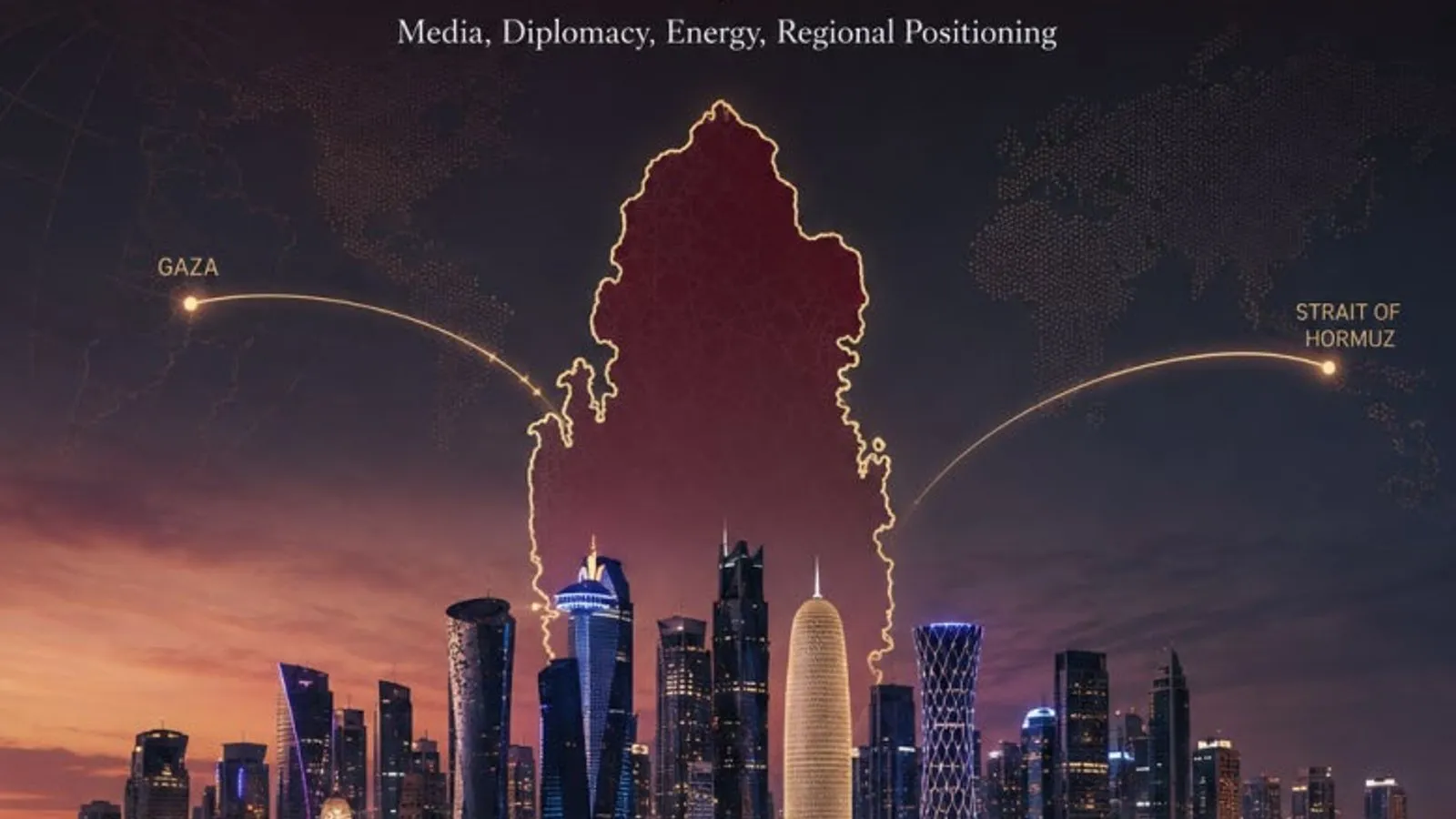
Qatar is managing three agendas at once. It faces accusations that it financed efforts to influence Israel’s October 27 election, it is pressing again to broker a U.S.-Iran settlement before the November 3 midterms, and it is buying American LNG as both a trading asset and insurance against another closure of the Strait of Hormuz. CNN’s Global Perspectives forum in Doha added a fourth element, a public display of the media, investment, and political networks Qatar has cultivated for years. The report finds that these developments show the breadth of Qatar’s influence, while the central claim that it paid to shape the Israeli vote remains unproven in the public record. Doha has denied it categorically, and no independent outlet has yet documented a Qatari payment to an Israeli campaign.
Doha’s Denial and What the Inquiry Has Established
Foreign Ministry spokesman Majed Al-Ansari issued Doha’s most explicit response to the post-election accusations on October 29. He rejected claims of both direct interference and financing meant to affect the result. He also accused some Israeli political and media figures of repeatedly invoking Qatar in a domestic power struggle. Al-Ansari added that any new Israeli government should address Palestinian self-determination and international law, and that Qatar would continue its mediation and humanitarian work. The report attributes the unusually direct language to the stakes. The allegations touch Qatar’s standing as an accepted mediator on both Gaza and Iran.
The independently reported facts remain narrow. The chair of Israel’s Central Elections Committee asked the Shin Bet to examine suspicions of improper foreign funding, as we reported in our October 29 brief. Reuters, AFP, Deutsche Welle, and Australia’s ABC describe allegations involving Qatar and Turkey, along with real uncertainty about who sent any money, who received it, and how it was used. The committee’s leadership and the security service have cautioned against treating the inquiry as an indictment of Arab voters.
Claims of a channel linked to the Muslim Brotherhood have circulated in partisan and television accounts. Quoted Israeli reports say the alleged routes resemble transfer methods used in the past. However, none of the details that would allow independent verification has been published. These include transfer dates, originating accounts, intermediary organizations, beneficiaries, and expenditure records. Separate investigations into vote buying and polling-place conduct are also under way, and the report treats them as distinct cases. As of the report’s cutoff, the public record shows an open inquiry, political allegations, and a clear Qatari denial.
This brief places more weight than yesterday’s on what has not been shown. The report holds that the case for Qatari influence is strongest where access, agenda-setting, and contracts can be documented. It judges that an allegation of hidden political payments must meet the same evidentiary standard.
Qatar-Linked Media and the Arab Vote
The most visible connection between Qatar and the election runs through the press. Al-Araby Al-Jadeed’s October 30 front page put the Arab parties’ 19 seats at the center of its election story, under a headline describing shock on the Israeli right and incitement against Arab citizens. Its pages 4 and 5 argue that Netanyahu’s deadlock has raised the profile of the Arab parties. They add that claims of fraud and foreign interference may narrow the room for any Jewish-led opposition coalition that depends on Arab support. A second report on the spread weighs what the 19 seats can and cannot achieve in the Knesset.
A signed column by Nasser Al-Sahli, titled “Their ballot boxes are full and ours are rusty,” takes the argument further. Al-Sahli contrasts high turnout among Palestinian citizens of Israel with the repeated postponement of Palestinian elections under the Palestinian leadership. In his reading, the Arab vote is a rebuke to both Israel’s exclusionary politics and the paralysis of Palestinian institutions. The report notes that this second target goes beyond the outlet’s usual line against Netanyahu.
Other Qatar-linked outlets used a similar frame. Al-Watan’s page 11 led with five scenarios facing Israel and gave prominent space to the Joint List’s celebration. Al Jazeera Arabic ran the allegations under a story about Israel’s search for a scapegoat, and Al Jazeera English described an anti-Qatar campaign spilling into election politics. Both services emphasized Doha’s denial and the legitimacy of Arab voters. The report judges that editorially separate outlets with Qatari ties are presenting a consistent interpretation. Al-Araby’s October 29 coverage also recorded Israeli criticism of Qatar and of the intellectual Azmi Bishara, including allegations tied to a pre-election interview on Al Araby TV. The report reads this as evidence of substantial political communication aimed at Arabic-speaking audiences. It does not treat this as evidence of financing.
Al-Araby’s opinion pages also looked north. One essay argues that Lebanon will remain exposed to Israeli military and political pressure whether Netanyahu or Gadi Eisenkot leads the next government. Another addresses the Palestinian debate over Eisenkot. The accompanying cartoon shows an Israeli-flagged ballot box mounted on a military platform. Together, these pages express broad skepticism that a change of leadership in Israel would change its conduct.
Qatari Mediators Return to Tehran
Reuters reported on October 30 that a Qatari mediation team had returned to Tehran and was coordinating with Washington. Earlier in the week, a senior Iranian official had called Qatar’s draft plan unacceptable and restated Iran’s nuclear position. The dispute over sequencing is unchanged. The United States wants nuclear negotiations from the outset, and Iran wants the port blockade and oil sanctions lifted first. Tehran continues to press its own seven-day formula. The report judges that the channel remains open, but a quick political breakthrough is unlikely.
Al-Araby’s pages 2 and 3 tied the mediation to the reported message from Vice President Vance to Mohsen Rezaei and to the possibility of a direct negotiating track. The paper cites accounts that a Qatari intermediary carried the message. President Trump later said Vance’s outreach concerned medical supplies, which leaves the public accounts of the channel in conflict. Iranian officials, meanwhile, continue to insist on their seven conditions. The U.S. election calendar and rising tension in the strait leave little time to stabilize the exchange. Our Hormuz-axis daily for October 30 covers the U.S. and Iranian positions in more detail.
For Qatar, the mediation is both a security and an economic priority. Renewed U.S.-Iran fighting would threaten its LNG exports and shipping routes, while the mediator’s role sustains high-level access in both capitals. Saudi Arabia’s military confrontation with the Houthis and regional consultations involving Turkey and Pakistan place Doha between overlapping Gulf and regional alignments. The report reads the October 30 reporting as active diplomacy under pressure, with a shrinking set of terms acceptable to both sides.
A Hedge Against Hormuz: QatarEnergy Buys American Gas
On October 29, QatarEnergy agreed to buy 3 million tonnes per annum (mtpa) from Woodside’s Louisiana LNG project for 20 years, with deliveries expected from 2030 on a free-on-board basis. Energy Minister and QatarEnergy chief executive Saad Al-Kaabi said the deal makes the company the largest buyer of U.S. LNG and strengthens its global trading portfolio. The report calls this the day’s most significant economic development. It extends Qatar’s role from exporting its own gas to buying and trading third-party cargoes sourced outside the Gulf.
In a separate Reuters interview, Al-Kaabi explained the strategy. If Hormuz closes again, Qatari exports stop at exactly the moment world prices spike. U.S.-origin cargoes under contract could still serve QatarEnergy’s customers or be sold into high-priced markets, replacing part of the lost revenue through the company’s existing shipping and commercial network. Reuters puts Qatar’s signed U.S. purchases at about 7 mtpa, including the Cheniere deal, and more may follow. The report concludes that Qatar is moving toward a global LNG merchant model alongside its domestic upstream expansion.
The price gap explains the logic. The Merchant’s News cited Henry Hub near $2.70 per MMBtu on October 27, Dutch TTF near $31.41, and the December Japan-Korea marker near $32.19. The resulting U.S.-Europe spread of about $28.71 reflects the scarcity pricing created by constrained gas logistics. However, the report cautions that the headline spread is not trading profit. Purchase formulas, liquefaction fees, freight, insurance, boil-off, regasification, financing, and destination clauses all reduce the margin. The same scarcity that threatens Qatar’s own production income gives it a reason to secure flexible supply beyond the strait.
The Woodside contract also ties Qatar commercially to U.S. Gulf Coast infrastructure at a time of intense American political attention on the region. Qatar’s role at the Gas Exporting Countries Forum in Moscow is the other side of the strategy. There, Doha coordinates with Russia and other producers on market stability and investment. The forum’s October 27 Moscow Declaration cited severe disruptions and price volatility arising from conditions in the Middle East. Oil remained elevated on October 30 as war-risk premiums and tanker incidents lifted prices. Reuters reported the expiring December Brent contract near $117.15 a barrel and January Brent near $112.99 during the session. The wider costs to Qatar include diverted trade, higher insurance and logistics costs, and extended force majeure on disrupted production.
CNN in Doha and the Influence Debate in Washington
CNN opened the first Middle East edition of its Global Perspectives forum at the Rosewood Doha on October 29, in partnership with Media City Qatar. CNN reported more than 600 attendees. CNN chairman Mark Thompson, Prime Minister Sheikh Mohammed bin Abdulrahman Al Thani, and Media City Qatar chairman Sheikh Abdulla bin Ali Al Thani opened the event. Speakers included Sheikha Al Mayassa, Qatar Investment Authority chief executive Mohammed Saif Al-Sowaidi, former Secretary of State John Kerry, and U.S. envoy Tom Barrack. Christiane Amanpour, Wolf Blitzer, Richard Quest, and Becky Anderson moderated sessions.
The messages fit Doha’s preferred themes. Sheikha Al Mayassa described culture as a form of resilience and presented the continuation of programming after missile strikes as a sign of national confidence. Al-Raya pictured her interview with Amanpour prominently on its page 5. Kerry warned against renewed U.S. strikes on Iran after the midterms. Al-Sowaidi stressed patient capital, preserving wealth for future generations, and planning for higher revenue from LNG expansion. The report observes that the event shows how Qatar links its sovereign wealth fund, cultural establishment, international media, and political relationships in one public narrative. It also notes that hosting the forum demonstrates access and soft power, not control over CNN’s editorial line.
President Trump appears in two roles in Qatar-linked coverage. As a president weighing further strikes on Iran and endorsing Netanyahu, he draws sharp criticism in opinion pages, including an October 29 Al Jazeera commentary by Jeffrey Sachs and Sybil Fares that calls for a regional security architecture independent of U.S. military dominance. At the same time, the Qatari government works closely with his administration on Iran and hosts senior American figures. The report reads this as a separation between official statecraft and the sharper arguments carried by opinion media.
In the U.S. debate, a Semafor article of October 26 by Mohammed Sergie challenged broad claims about Qatari terror financing, university donations, and media influence. The report treats it as an important counterpoint. Critic Eitan Fischberger and Qatari diplomat Hamad Al-Muftah have since carried the dispute onto social media. On university funding, the Association of American Universities reported on October 28 that Judge Tanya Chutkan had extended the restraining order on publishing certain foreign donors’ identities until November 13. The report cautions that claims the ruling shows covert Qatari political control, or reveals Qatar’s preferred midterm candidates, go beyond what the court has done. It also finds no verified new Qatari contribution to a U.S. election committee or candidate in the October 29-30 material. Our Section 117 special report sets out what is at stake in the case.
Gaza, Lebanon, and Syria
Gaza remains the anchor of Doha’s diplomatic legitimacy at home and abroad. Qatar continues to call for adherence to the ceasefire arrangements, humanitarian access, and a Palestinian political outcome, in coordination with Egypt and Turkey. The Qatari-French declaration of October 22 also linked Gaza implementation to opposition to West Bank annexation and settler violence. Al-Araby continues to report deaths and new incidents in Gaza, which keeps implementation before Arab audiences even as the Israeli election dominates the news.
On Lebanon, the Qatari-French statement supported Lebanese sovereignty, the disarmament of Hezbollah under the trilateral framework, and the withdrawal of Israeli forces. Al-Araby’s opinion pages doubt that a government after Netanyahu would change Israeli conduct in Lebanon. The report finds the policy goal and the pessimistic editorial expectation compatible. Syria remains a further area of Qatari engagement through economic recovery and stabilization projects, and Tom Barrack’s presence in Doha keeps the Syrian file prominent in U.S.-Qatar relations.
Key Points
- The public record on the Israeli inquiry shows an open investigation, political allegations naming Qatar and Turkey, and a categorical Qatari denial. No payment trail, Qatari disbursement, or effect on the Arab vote has been documented (high confidence on the state of the record).
- Qatar-linked outlets presented a consistent frame of the Arab vote as Palestinian political agency and a threat to Netanyahu’s coalition. This is agenda-setting communication, and it is not evidence of financing (moderate confidence).
- The Qatari channel to Tehran remains open, but the dispute over sequencing (nuclear terms first versus blockade and sanctions relief first) makes a quick breakthrough unlikely before the midterms (moderate confidence).
- QatarEnergy’s U.S. purchases, about 7 mtpa signed, are a deliberate hedge against another Hormuz closure and a step toward a global LNG merchant model (high confidence on the deals, moderate on the strategy).
- The Henry Hub-TTF spread signals scarcity pricing, but transport, processing, and contract costs mean it cannot be read as net trading profit (high confidence).
- The CNN forum demonstrates Qatar’s access and soft-power reach across media, investment, and diplomacy. It does not establish editorial direction by the host government (moderate confidence).
- The Section 117 extension to November 13 is a timetable marker in the campus-funding dispute. It does not show covert Qatari political control (moderate confidence).
What to Watch
- Any public identification of recipients, transfers, or spending in the Israeli foreign-funding inquiry, and the findings requested within the coming week.
- Certification of Israel’s results, coalition consultations, and the new Knesset, expected to convene on November 10.
- Iran’s response to the Qatari proposal and to the U.S. demand for nuclear terms first, and Washington’s Iran decisions after the November 3 midterms.
- Shipping incidents, insurance, LNG production recovery, and force majeure on Qatari cargoes through Hormuz.
- Implementation terms of the Woodside agreement and any further third-party LNG purchases by QatarEnergy.
- The Section 117 restraining order, which runs until November 13.
- New CNN programming from Doha and the editorial line of Al-Araby and Al Jazeera as Israeli coalition talks develop.
This post summarizes the Qatar Watch daily intelligence monitoring report for October 30, 2026, with information as of 09:30 UTC. The report draws on QNA, Reuters, AFP, AP, Anadolu, Deutsche Welle, ABC, The National, the CNN press room, the October 30 print editions of Al-Araby Al-Jadeed, Al-Watan, Al-Raya, Gulf Times, and Qatar Tribune, The Peninsula, Al Jazeera Arabic and English, Semafor, The Merchant’s News, the GECF, Interfax, the Association of American Universities, and posts on X. Allegations of Qatari election financing rest on Israeli political and press accounts; no transfer, amount, or recipient has been published. Oil and gas prices are dated or intraday observations and can change quickly. Signed opinion pieces are attributed commentary and do not set Qatari state policy. The report does not assign formal confidence levels, so the levels in the Key Points reflect Iran Dossier’s reading of its evidentiary basis.