Leaning Toward Riyadh: Qatar and Pakistan Keep Their Tehran Channels but Look Less Neutral
Qatar and Pakistan remain Washington’s two working channels to Tehran, but both moved closer to Saudi Arabia this week as the Saudi-Houthi war escalated. Doha condemned the Houthi strike on Riyadh’s airport, backed Saudi security measures, and welcomed the Mecca Pact while calling membership premature. Islamabad confirmed that a large Pakistani force is already in the kingdom. Both channels still function, and neither capital has crossed Tehran’s stated red line against offensive action in Yemen. The report judges with moderate confidence that, seen from Tehran, both mediators now look less neutral than they did a month ago. Elsewhere, Qatari media marked one year since the Gaza ceasefire as a record of Israeli violations and American inaction, a deleted post by Health Secretary Robert F. Kennedy Jr. brought open hostility toward Qatar into the U.S. cabinet, and energy risk stayed high.
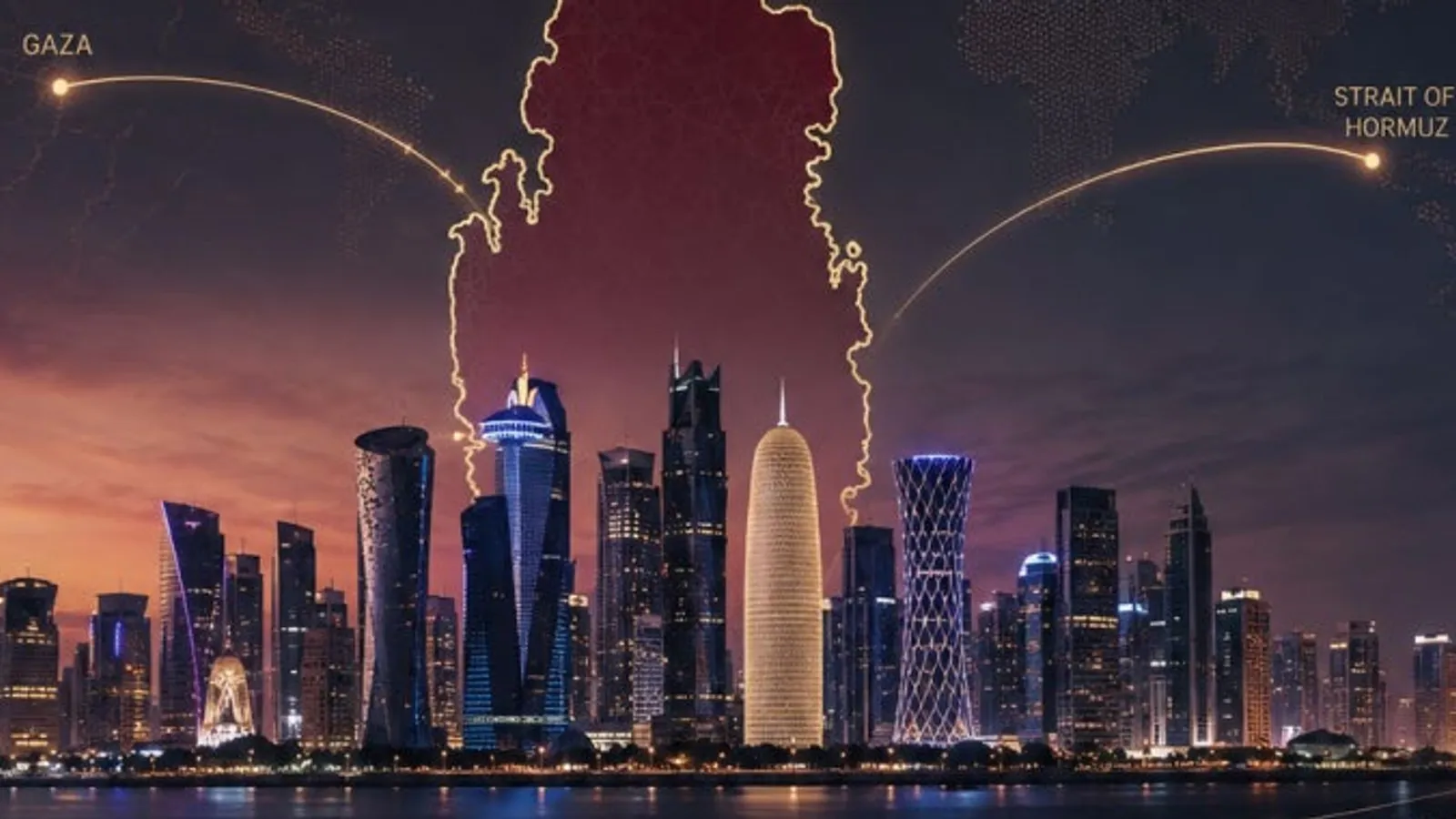
The Mediators Move Closer to Riyadh
Since the spring ceasefire, Qatar and Pakistan have carried most of the traffic between Washington and Tehran. That work includes the Islamabad memorandum of understanding in June, indirect rounds in Doha, and Qatar-brokered contacts on the sidelines of the UN General Assembly in September. At the Foreign Ministry’s weekly briefing on October 6, media director Ibrahim bin Sultan Al Hashmi said talks were ongoing and that Qatar was passing messages between the two governments. The same day, the emir received Iranian Interior Minister Eskandar Momeni in Doha. On October 8, President Trump spoke of productive discussions with Iran and ruled out an attack before the midterm elections.
At the same briefing, however, Doha spoke as a Gulf state under threat. Al Hashmi condemned the Houthis for targeting Saudi Arabia, its holy sites, and its civilian facilities, and said Qatar supports the kingdom’s measures to protect its security. He described the Mecca Pact, the Saudi-Pakistani-Turkish defense agreement in force since August, as a regional initiative that Doha supports. Asked whether Qatar would join, he said it was too early to discuss. On October 9, the ministry condemned the strikes on King Khalid International Airport in the strongest terms as a grave violation of Saudi sovereignty. Qatar’s neutrality already had limits. Iranian strikes on Ras Laffan knocked out about 17 percent of its LNG capacity, and Tehran accused Doha in August of delays over Iranian pilots missing since a March attack. Al Hashmi said the pilots file had been handled and that Doha would host an Iranian delegation to review it.
Pakistan has moved further. On October 9, Foreign Office spokesman Sajjad Haider Khan said Pakistan already has a substantial number of forces and resources in Riyadh. He said they would defend Saudi territory but would not cross into Yemen to attack the Houthis, and that the Mecca Pact would decide their size and location. He also said Washington and Tehran now talk directly, following Pakistan’s mediation, and that Islamabad would be glad to play the role again if needed. The report reads this as the language of a mediator stepping back. Reuters, citing a Pakistani security official, reported that army chief Field Marshal Asim Munir raised Houthi attacks on Saudi Arabia with Foreign Minister Abbas Araghchi in September. A dpa report that Munir warned Tehran it would face Pakistan if the Houthis moved against Red Sea shipping rests on anonymous sources and is unconfirmed.
Tehran has noticed. Iran’s Foreign Ministry spokesman said Tehran hoped reports of a Pakistani deployment for Yemen were untrue and warned that new intervention would complicate the situation. An Iran-based analyst quoted by Al Jazeera said Tehran could tolerate a purely defensive deployment but would treat offensive action against the Houthis as a red line. Another Iranian analyst, Javad Heiran-Nia, said Pakistan’s mediation had moved from neutrality to managing conflicting interests. Meanwhile, President Masoud Pezeshkian dismissed talks with Washington as pointless on October 5. The report assesses that both capitals remain useful postboxes for Tehran but weaker guarantors. The more the Saudi-Houthi war looks like a front of the wider Iran war, the harder it becomes for either to hold both roles. Our October 9 brief traced how Doha began running these two tracks.
Yemen and the Mecca Pact
Al-Araby Al-Jadeed led its October 10 edition with the Yemeni government’s claim to have retaken Bab al-Mandab and Perim (Mayyun) Island with Saudi support. Yemeni military sources credited the Giants Brigades and Nation’s Shield forces. The Houthis said they had repelled an attack from the Lahij approaches. The paper printed both accounts, and no settled battlefield picture can be drawn from them. The same front page reported, citing AFP, that Riyadh rules out any calm with the Houthis until the government recovers the areas it lost.
Houthi strikes killed six people in Saudi Arabia in a week, including three in the October 8 attacks on King Khalid International Airport and a Saudia aircraft. The coalition said it destroyed three Houthi missile launchers, and Houthi health officials reported civilian injuries from Saudi raids near Sanaa. Houthi military spokesman Yahya Saree said humanitarian flights to and from Riyadh would be allowed with a permit from Sanaa, in effect a claim of control over Saudi airspace. The UN refugee agency estimates that more than 200,000 people have been displaced, and European Commission President Ursula von der Leyen declared full EU solidarity with Saudi Arabia and its Gulf partners.
The Mecca Pact adds a regional layer without committing its members to a ground offensive. Pakistani officials describe their role as defensive, and Turkish Foreign Minister Hakan Fidan ruled out offensive operations in Yemen. Qatar has endorsed the pact but has not signed it. Claims that Qatari money underwrites the Turkish and Pakistani deployments, or Saudi operations against the Houthis, are not supported by financial records or corroborated reporting. Qatar’s condemnation of the Houthi attacks is on the record. The alleged secret financing is not.
Gaza: A Year Since the Ceasefire
Al-Araby Al-Jadeed gave its October 10 cover image to Gaza under the line “Gaza: one year since an agreement Israel tore apart.” The photograph shows a man searching the burnt shell of a car hit in an Israeli strike west of Gaza City on September 27. Inside, the paper reports, citing Gaza authorities and aid organizations, 1,471 Palestinians killed, 5,189 injured, and 5,223 field violations since the truce took effect. It adds that Israel now holds about 70 percent of the Strip. Further pages covered the collapse of Gaza’s economy, with unemployment reported above 80 percent, and personal accounts from civil defense crews, medical staff, and displaced families. These figures come from Gaza sources and have not been independently audited.
The package does not name Qatar, Egypt, or Turkey, the mediators and guarantors of the October 2025 agreement. It places responsibility on Israel and on Washington’s unwillingness to press it. The case for Doha’s mediation appears only in opinion writing. In Al-Sharq on October 9, columnist Ahmed al-Qadidi argued that Doha remains the channel for hostage talks, humanitarian access, and de-escalation, even after its own capital was struck in September 2025. The column restates Qatar’s diplomatic identity and reports no new breakthrough. The Gulf Times opinion page ran a headline calling Israel’s conduct in Gaza a pogrom, over a QNA interview with the director of the Gaza Government Media Office. Those figures and characterizations belong to the paper and its source.
Washington: The Deleted Kennedy Post
On October 7, the third anniversary of the Hamas attack, Health and Human Services Secretary Robert F. Kennedy Jr. replied on X to urban-warfare specialist John Spencer. He called the genocide accusation against Israel baseless but effective as a vehicle for antisemitism, and he attributed it to a Muslim Brotherhood propaganda campaign he described as Qatari-funded. He compared the campaign’s effectiveness to that of Joseph Goebbels and called many Westerners who repeat the claim useful idiots. The post drew about 336,000 views before it was deleted. Neither Kennedy nor HHS has explained the removal.
Two explanations compete. Commentator Eitan Fischberger said the deletion followed angry phone calls from Qatar, but he offered no evidence of a call. In a Daily Caller opinion column, John Loftus argued that ordinary online backlash was the likelier cause. Neither establishes why the post came down, and no Qatari official response was found. The phone-call theory draws force from a substantial public record. Qatar runs one of the larger registered lobbying operations in Washington, Foreign Agents Registration Act filings show heavy spending on U.S. firms, and the Foundation for Defense of Democracies (FDD) reported on October 1 a Qatar-aligned network of fake watchdog websites. None of this shows that a call to HHS took place. The report judges with high confidence that the episode places open hostility to Qatar at cabinet level, and with low confidence any claim that Doha forced the deletion.
U.S. scrutiny continued on other tracks without reaching enforcement. Judge Tanya Chutkan’s temporary restraining order in the Section 117 foreign-donor case runs to October 29, with the government’s response due October 13. Our Section 117 special report examines the order. FDD linked its website network to a likely Bangladesh-based operator and assessed it as Qatar-aligned, but did not show that the Qatari government commissioned or funded it. A congressional request that the Commerce Department blacklist three hack-for-hire firms, which allegedly worked at Qatar’s behest among other clients, has produced no listing. The report recommends keeping the website network, the hacking allegations, and registered lobbying in separate files so that circumstantial patterns are not presented as proof.
Pillay’s Nobel and the Al Jazeera Opinion Pages
On October 9, the Norwegian Nobel Committee awarded the 2026 Peace Prize to South African jurist Navi Pillay for a lifetime of work on international law and accountability for mass atrocities. Pillay chaired the UN commission of inquiry whose 2025 report concluded that Israel had committed genocide in Gaza, a finding Israel rejects. The committee cited her whole career. Al Jazeera English nonetheless made Gaza central to the story and noted the same-day U.S. sanctions on the International Criminal Court. Al-Araby Al-Jadeed ran the prize on its front page with Israeli and Trump objections. QNA carried the ICC sanctions close in time to the prize, which gave editors an easy contrast between the laureate and U.S. policy. No formal Qatari congratulation was found, so the enthusiasm documented here is media coverage and not an official position.
Two Al Jazeera Arabic essays showed the range of opinion the network allows. William Lawrence, a former State Department adviser, argued that Israel’s campaign against Qatar and Al Jazeera aims to silence both a mediator and the journalists covering the war. He urged U.S. policymakers to defend Qatar’s intermediary role, which puts the case for Qatar’s value to American security in the voice of a former U.S. official. Mohammad Abdul Basit, a former Pakistani Foreign Office spokesman, doubted that the Mecca Pact’s conventional firepower can defeat the Houthis and called for strengthening the Yemeni government, coordinated air defense, and eventual talks. He hoped Ankara or Islamabad could one day reach the Houthis directly or through Iran. Neither essay is a Qatari government statement.
Energy Risk Stays High
Oil swung on October 9. Prices softened on Trump’s talk of productive Iran discussions and his pledge of no strikes before the November 3 elections, then recovered as Hurricane Isaias shut in U.S. Gulf of Mexico output. U.S. media reported strike planning and three carrier groups due in the region by late October, the first such concentration since 2003. Flows through Hormuz ran about 9.5 million barrels a day this week, roughly 30 percent below prewar levels, with nine tankers attacked in the week to October 8. None of the reported incidents is a confirmed strike on a Qatari LNG carrier. Brent settled at $104.72 a barrel and WTI at $91.85. Our Hormuz-axis update for October 10 covers the shipping picture in detail.
Qatar’s LNG force majeure remains the main channel through which the war reaches its economy. QatarEnergy chief Saad al-Kaabi said two damaged trains could take up to three years to repair, and he put annual lost revenue at about $20 billion. Cancellations run into October for Pakistan and into early November for Italy’s Edison. The first North Field East train is now expected to begin testing in November, with commercial output possibly from early 2027, subject to conditions in the strait. The cancellations to Pakistan link Qatar’s two mediating partners. Both Doha and Islamabad pay directly for a closed Gulf, which gives each a stake in a negotiated outcome and in keeping its channel to Tehran open. The European Union Aviation Safety Agency also widened its Saudi airspace advisory, and insurers are now pricing Hormuz, the Red Sea, and civil aviation risk together.
Key Points
- Qatar and Pakistan remain Washington’s channels to Tehran, but both have tilted toward Riyadh. The shift is gradual, and neither channel has closed (moderate confidence).
- Qatari media coverage of the Gaza anniversary places responsibility on Israel and Washington. Qatar’s own mediating role appears only in opinion writing (high confidence).
- Kennedy’s deleted post shows hostility toward Qatar at cabinet level (high confidence). The claim that Doha forced its removal is unproven (low confidence).
- The Nobel award to Navi Pillay strengthens the legal-accountability frame across Qatari media, though Doha has issued no official statement on the laureate (high confidence).
- Al Jazeera opinion is presenting Qatar’s mediation and its media access as a single strategic argument aimed at U.S. readers (moderate confidence).
- U.S. scrutiny of Qatari influence continues on several tracks, but nothing new reached enforcement in this window (high confidence).
- Hormuz and the Red Sea keep Qatar’s LNG revenue under pressure, with force majeure in place and the North Field East start-up tied to conditions in the strait (high confidence).
What to Watch
- Any Iranian official or press criticism of Qatar or Pakistan over the Mecca Pact, or a shift of U.S.-Iran traffic away from Doha and Islamabad.
- The size, location, and rules of engagement of Pakistani and any Turkish forces in Saudi Arabia, measured against Tehran’s red line on offensive action.
- Any formal Qatari step toward the Mecca Pact beyond political endorsement.
- Any formal Qatari statement on Pillay, or a diplomatic reaction to the U.S. sanctions on the ICC.
- HHS or congressional records that explain Kennedy’s deleted post.
- The October 13 government filing in the Section 117 case, and any new disclosure of Qatar-linked donors or contracts.
- Commerce Department decisions on the hack-for-hire firms, and attribution of the fake watchdog network.
- Independent confirmation of control at Bab al-Mandab and of commercial sailing patterns, especially for Qatar-linked LNG cargoes.
- Any revision to Qatar’s LNG force majeure or the North Field East timetable.
- Verifiable transfers or official acknowledgment before any claim of Qatari financing for the Mecca Pact is treated as fact.
This post summarizes the Qatar Watch daily intelligence report for October 10, 2026, covering October 9 to 10. The report draws on QNA, the Qatar Tribune, and Gulf Times on Qatari statements; the October 10 print edition of Al-Araby Al-Jadeed; Al-Sharq opinion pages; Al Jazeera Arabic and English; the Express Tribune, Arab News, Reuters, dpa, and Bernama on Pakistan and Iran; the Nobel Committee; the Daily Caller and PJ Media on the Kennedy post; FDD, AAU court records, and TechCrunch on U.S. scrutiny; Reuters, the Financial Times, AP, and Trading Economics on energy and shipping; and Amnesty International and Human Rights Watch. Gaza casualty figures come from Gaza authorities and are unaudited. Yemeni battlefield claims come from the belligerents and remain unconfirmed. The claim that Qatar pressured HHS is unverified, and claims of Qatari financing for the Mecca Pact remain unsupported. Signed opinion pieces are attributed commentary and do not set Qatari state policy. Earlier posts in the series are collected on the Qatar Watch hub.