Two Tracks in the Yemen War: Doha Stands With Riyadh and Keeps Its Door Open to Tehran
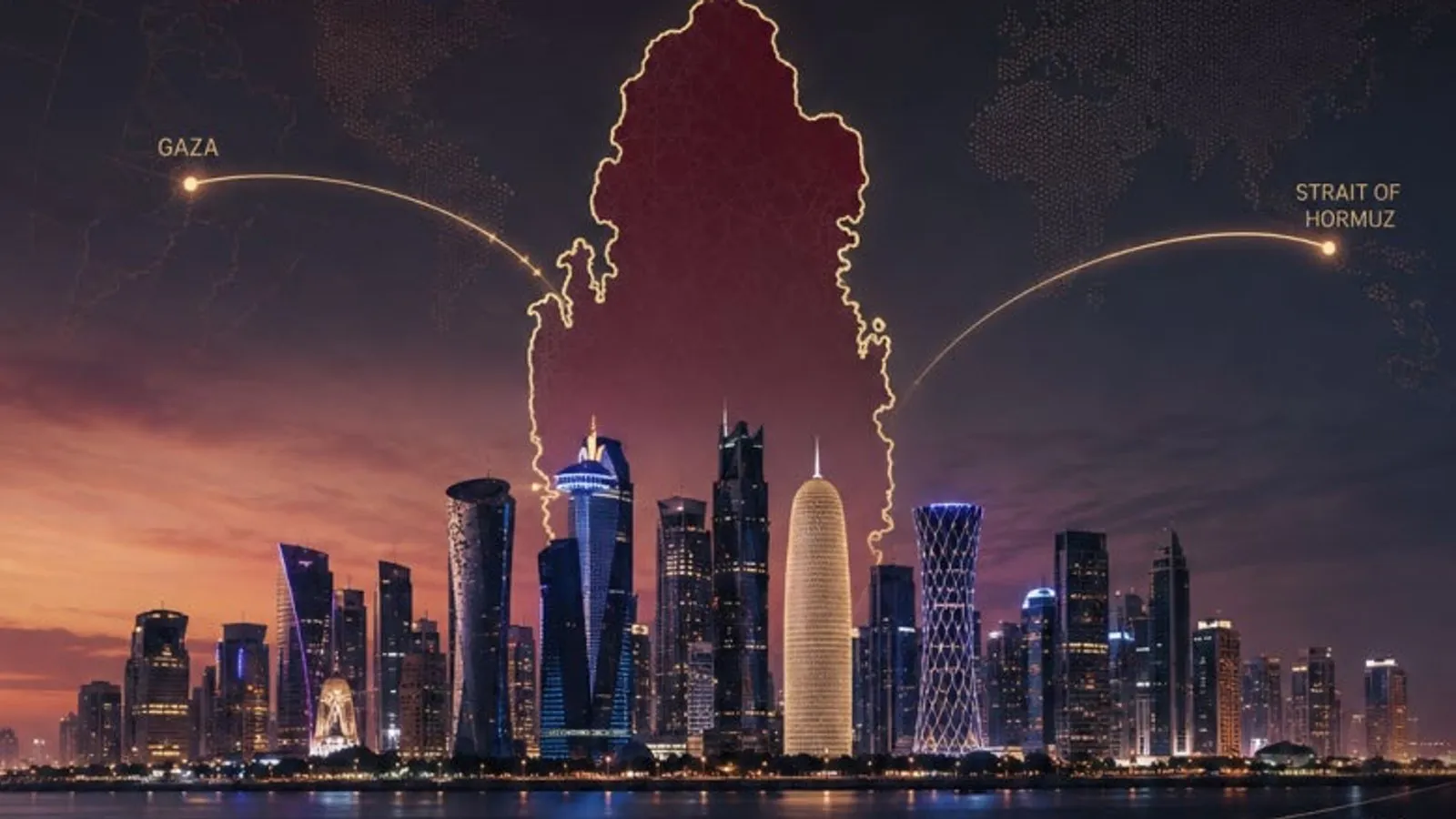
Qatar is running two tracks in the Yemen escalation. On October 8, the Foreign Ministry condemned the Houthi strikes on Abha and King Khalid airports, which killed three foreign residents and wounded 36, and declared Saudi security an integral part of Qatar’s own. Two days earlier, the emir received Iran’s interior minister, who brought messages from President Masoud Pezeshkian, and a ministry spokesman called it too early to discuss joining the Saudi-Turkish-Pakistani Mecca pact. Doha names the Houthis, says nothing about Iran, and keeps its forces and money out of Yemen. The report judges with high confidence that Qatar is giving Riyadh full political backing while staying out of the pact and the campaign, and that this posture is deliberate and probably sustainable for weeks. It becomes costly if the pact asks Gulf states for material support, if Houthi or Iranian fire reaches Qatari assets, or if Washington resumes strikes on Iran.
Solidarity in Words, Distance From the Battlefield
Qatar’s Foreign Ministry denounced the Houthi attacks on Abha International Airport and Riyadh’s King Khalid International Airport on October 8 as a grave violation of Saudi sovereignty and a direct threat to civilians and air navigation. It declared full solidarity with Riyadh and support for all legitimate measures to protect the kingdom. The central line was that Saudi Arabia’s security is “an integral part of the security of Qatar.” Doha offered condolences to the governments of the dead, who were Moroccan, Algerian, and Sudanese nationals. The statement names the Houthi group, does not mention Iran, and commits no Qatari forces.
The ministry had set the boundary two days earlier. At the October 6 briefing, media director Ibrahim bin Sultan Al Hashmi condemned the Houthis’ irresponsible targeting of Saudi Arabia and its holy sites and said Doha supports Saudi measures to protect its sovereignty. He also said it was too early to talk about Qatar joining the Mecca pact. The wording leaves the door open without committing Doha to anything. The report finds no reliable evidence in the October 8 to 9 sources of any Qatari funding for the Saudi-led campaign against the Houthis. Doha’s verified contribution in this period is political, and claims of Qatari military financing remain unsubstantiated.
On the ground, the war is being fought over supply lines. Al-Araby Al-Jadeed reported the fourth day of “Dawn of Yemen,” the Saudi-backed government offensive, and coalition claims of strikes on 82 Houthi targets in four governorates. Control of the roads toward al-Mokha and Bab el-Mandeb would decide whether government forces can cut off Houthi units around Taiz. Interception, casualty, and battlefield figures come from the belligerents and remain unconfirmed. Our October 8 brief covered the cabinet’s earlier solidarity statement after the Houthi strike near Madinah.
The Tehran Channel Stays Open
On October 6, the day after the Mecca pact activated its deterrence measures in Riyadh, Emir Sheikh Tamim bin Hamad Al Thani received Iranian Interior Minister Eskandar Momeni at the Amiri Diwan. The Qatari readout mentioned only regional developments and ongoing de-escalation efforts. Momeni told Iranian media more. He said he delivered several messages from Pezeshkian, carried the emir’s proposals back to Tehran, and praised the mediation role Qatar has played alongside Pakistan. The visit also covered three Iranian pilots that Tehran says Doha has held since the February war. Doha denies holding them and says it recovered the remains of one, and Iran will send a technical delegation to follow up.
Doha is mediating with a government that struck it. Iranian missiles and drones hit Ras Laffan, Mesaieed, and Al Udeid in March, forced QatarEnergy to declare force majeure, and led Doha to expel Iran’s military and security attachés. The pilots are likely crew from the two Iranian Su-24 bombers reported downed by Qatari F-15s on March 2. For a country that has already taken Iranian fire, the report argues, mediation works as insurance. It is also the channel for managing these bilateral grievances.
Qatar’s two leading Arabic dailies divided the message between them on the same morning. Al-Watan’s unsigned October 9 editorial, “Continuing Efforts,” said Qatar has played a central role in U.S.-Iran mediation since the first day of the crisis and set two goals, removing the threat of war for good and restoring freedom of navigation in Hormuz. It presented the Gulf as a victim of wars that are none of its concern. Al-Sharq’s editorial, “Saudi Security Is a Red Line,” treated the airport strikes as an attack on an indivisible Gulf security order. In the report’s reading, mediation was addressed to Tehran and solidarity to Riyadh.
Hormuz is where the Tehran channel matters most to Qatar, and also where Doha has the least control. On October 7, Iran’s Foreign Ministry spokesman Esmaeil Baghaei said Iran and Oman had agreed on the coordinates of safe transit corridors through the strait. Doha’s stated position, set out by spokesman Majed Al-Ansari, is that any arrangement for managing navigation must come through consensus among all affected states. A bilateral Iran-Oman corridor map is the kind of arrangement Doha warned against, and Qatari LNG will have to use it.
The Mecca Pact Thins the Mediator Field
Turkish Foreign Minister Hakan Fidan said on October 8 that Ankara would help defend Saudi Arabia but would not send troops abroad to attack. Reuters described air defense, intelligence, and technical assistance within the pact. Claims that a Turkish-Pakistani expeditionary force is already fighting in Yemen are not supported. Ankara’s line closely matches Doha’s, which offers defensive backing for Riyadh and no offensive role.
Pakistan faces the sharper contradiction. It brokered the Islamabad memorandum between Washington and Tehran and has been one of three facilitators of U.S.-Iran contacts, alongside Qatar and Oman. On October 5, it agreed to deploy military forces and capabilities to Saudi Arabia against an Iranian-aligned movement. Each step Islamabad takes into the Saudi camp leaves Doha and Muscat as the intermediaries with the least baggage in Tehran. The report assesses with moderate confidence that the pact weakens Pakistan’s and Turkey’s standing as neutral intermediaries. However, Oman’s separate corridor deal with Iran is a competing channel that Doha does not control.
In Al-Araby Al-Jadeed, London-based Iraqi writer Faris al-Khattab reported that the pact named retired Pakistani Lieutenant General Nauman Mahmood as its secretary-general. He also wrote that Washington turned down Crown Prince Mohammed bin Salman’s September request for U.S. strikes on the Houthis and offered intelligence and targeting data instead. In his view, the pact widens Riyadh’s set of partners but does not replace the United States. He warned that a large Turkish or Pakistani ground role would let the Houthis recast the war as resistance to foreign armies. His piece does not mention Qatar.
Washington Pauses and Congress Watches
President Trump said on October 8 that talks with Iran were productive and that no attack was planned before the November 3 midterm elections, while keeping the U.S. blockade in force. His comments followed reports that the White House had asked for strike options before the vote and that the Pentagon had told U.S. Central Command (CENTCOM) to complete preparations for renewed operations. Iranian Foreign Minister Abbas Araghchi said Tehran would answer the latest U.S. proposals within days through the mediators. The report judges with moderate confidence that the pledge lowers the immediate risk of renewed fighting without removing it. A pause keeps the mediation track alive but does nothing to stop attacks on tankers or regional installations. Our daily intelligence update for October 9 covers the pause from the Hormuz side.
Senator Chris Murphy’s October 8 account of his Gulf trip combined support for Qatar with scrutiny of the war. He questioned whether the administration was concealing battlefield costs and repeated his charge that the Pentagon blocked his visit to Al Udeid Air Base. In Qatar, he had met the emir, Qatar Foundation Vice Chair Sheikha Hind bint Hamad Al Thani, and QatarEnergy chief Saad al-Kaabi, and his Education City meetings brought U.S. branch campuses into the congressional debate over the war. Three days earlier, he had called Qatar an essential American ally. The report reads his criticism as aimed at the administration’s war policy and oversight, with no change in his view of Qatar as a strategic partner.
The Section 117 litigation did not move. Judge Tanya Chutkan’s October 1 temporary restraining order bars publication of previously undisclosed foreign-donor identities reported by members of the Association of American Universities. It does not exempt universities from reporting or reverse earlier disclosures. The government’s response is due October 13, and the order expires October 29 unless extended. Our Section 117 special report examines the order in detail. Funding figures alone do not establish improper influence. No Commerce Department listing or Justice Department action followed the congressional request to blacklist the hack-for-hire firms BellTroX, CyberRoot, and Sunkissed Organic Farms, and the allegations against them remain unadjudicated.
The Press Debates October 7 and Gulf Autonomy
Qatari and Qatar-linked outlets kept the Gaza anniversary on their pages. Al-Watan ran an Anadolu interview with UN Special Rapporteur Francesca Albanese, who said the genocide in Gaza is still under way three years on and cited Gaza-source casualty figures. Beside it, the paper relayed Israeli estimates of 2,347 Israelis killed since October 7, 2023, and nearly 30,000 wounded soldiers and security personnel in rehabilitation. The pairing presented the war as both a continuing genocide and a mounting cost for Israel.
Al-Araby Al-Jadeed opened a notable internal debate on page 15. Palestinian-American researcher Usama Abu Irshaid asked whether the October 7 attack was a historical necessity or a miscalculated gamble, while affirming the right to resist occupation. Editor-in-chief Ma’an al-Bayari surveyed new writing on the attack, starting with a book by Azmi Bishara, the outlet’s head, that discusses miscalculation. Coming from the paper’s own leadership, the two texts open room to criticize Hamas’s strategic choices without accepting Israel’s account of the war. Emad Hajjaj’s cartoon on the same page rebuilt Munch’s The Scream from burial shrouds and skulls, set in a black tunnel tagged “Gaza.” The front page, meanwhile, accused Britain of yielding to Israeli pressure over its East Jerusalem consulate, a punitive motive London has not confirmed.
The essay most relevant to U.S.-Qatar relations appeared on Al Jazeera Arabic. Saleh al-Khathlan, a Saudi political scientist at King Saud University, urged Gulf states to press Washington to preserve talks with Iran while strengthening air defense, early warning, and infrastructure protection. He argued that American protection may remain selective even after Trump, so Gulf states should build collective arrangements that rely less on U.S. intervention. The essay states no Qatari policy, but it reflects a growing regional debate on strategic autonomy. Elsewhere, an Al Jazeera essay on France’s student protests rejected an Islamist explanation attributed to Trump and gave no evidence of Muslim Brotherhood involvement. Moroccan academic Hassan Aourid defended the network against Netanyahu’s attacks, a piece the report reads as Al Jazeera defending itself.
Shipping Risk Reaches Qatar’s Coastline
Energy remains Qatar’s sharpest exposure. Reuters, citing Kpler, reported that only seven commodity vessels crossed Hormuz on October 6, the lowest count since July 23, before a limited rebound to ten the next day. Crude flows fell to about 10.1 million barrels a day, roughly 74 percent of prewar volumes, and Lloyd’s List counted at least 13 attacks on tankers and gas carriers since September 28. Secretary of State Marco Rubio put shipments through the southern corridor, which he said U.S. forces had cleared of mines, at nearly 80 percent of prewar levels. That figure is higher than the Kpler-based estimate.
On October 7, a tanker about 51 nautical miles off Qatar’s north coast reported hits from multiple projectiles, with an unspecified number of casualties. No party has claimed the attack, and Doha has issued no statement. The strike moves the threat from the strait to the approaches to Ras Laffan. Brent settled about 4 percent higher on October 8, at roughly $104.25 a barrel, then eased to $103.53 early on October 9 after Trump’s comments on Iran. Vitol chief Russell Hardy warned that crude could approach $200 if flows through Hormuz were interrupted, a conditional stress case and not a forecast. Charter costs are also climbing, with a VLCC for a U.S.-to-China cargo costing roughly $80 million, and war-risk premiums and freight absorb part of the gain from high prices.
Qatar’s industrial recovery is selective. Shell has partly restarted its Pearl gas-to-liquids plant at Ras Laffan, but one train remains under repair until early 2027, and partial output should not be confused with restoration of its 140,000 barrels a day of design capacity. A QatarEnergy-Petrobras consortium won seven exploration blocks in Brazil’s Ceará Basin, with QatarEnergy holding 30 percent. These are exploration licenses with no booked reserves, and they do nothing for wartime LNG losses in the near term. Qatari project awards rose 76.1 percent quarter on quarter to $5.2 billion in the third quarter, almost all of it in oil, though still well below last year. The report reads the jump as deferred energy work released as repairs advance, and too early to count as a broad recovery. Central bank reserves edged up to about QAR 262.3 billion, while the Qatar Stock Exchange fell 2.21 percent on October 8.
Key Points
- Qatar is giving Saudi Arabia full political backing against the Houthis while staying out of the Mecca pact and the Yemen campaign. Its support is verbal, with no evidence of Qatari forces or funding in Yemen (high confidence).
- Doha is separating the Houthi file from the Iran file. It condemns the proxy by name and keeps the patron engaged, an approach that holds while the war stays in Yemen and Saudi airspace (moderate to high confidence).
- The Mecca pact weakens Pakistan’s and Turkey’s standing as neutral intermediaries and raises the value of the Qatari and Omani channels. Oman’s corridor deal with Iran is a competing channel Doha does not control (moderate confidence).
- Trump’s pledge of no strike before November 3 lowers the immediate risk of renewed U.S.-Iran fighting but does not remove it. A resumed U.S. campaign would end the mediation track and again expose Al Udeid and Ras Laffan (moderate confidence).
- Congressional scrutiny of Qatar targets the administration’s war policy and oversight. Senior Democrats still treat Qatar as a core partner, though Education City and QatarEnergy now sit inside the war-policy debate (moderate confidence).
- Shipping risk now sits on Qatar’s own coastline. Hormuz transits are at a two-month low, and war-risk premiums and charter costs eat into the gain from high prices (high confidence).
What to Watch
- A Mecca pact or Gulf Cooperation Council request for Gulf contributions of money, basing, or airspace.
- Any Qatari statement that names Iran in connection with Yemen.
- A Houthi or Iranian strike affecting Qatari aviation, shipping, or nationals, including disruption to Qatar Airways routes over Saudi airspace.
- The Iranian technical delegation on the three pilots, and whether Doha hosts Iranian negotiators, as the ministry said on October 6 it was ready to do.
- Whether Washington holds to the pre-election pause, and Iran’s reply to the latest U.S. proposals.
- Further attacks near Qatar’s coast and their effect on war-risk zones and LNG shipping.
- Whether the Pearl restart and North Field repairs turn into deliverable export volume.
- The government’s Section 117 filing due October 13, and any Commerce action on the hack-for-hire request.
- Whether calls for Gulf strategic autonomy grow louder in Qatari-funded media, and whether Doha’s dailies keep dividing the mediation and Saudi-solidarity messages.
This post summarizes the Qatar Watch daily intelligence report for October 9, 2026, with information as of 08:10 UTC. The report draws on QNA, the Qatar Tribune, Gulf Times, and Euronews on Qatari statements; Press TV on the Momeni visit; the October 9 print editions of Al-Watan, Al-Sharq, and Al-Araby Al-Jadeed; Al Jazeera Arabic and English; Reuters, Kpler, Lloyd’s List, and Gulf News on shipping, oil, and the Pearl restart; Senator Murphy’s office; AAU and federal court records on Section 117; Reuters and TechCrunch on the hack-for-hire request; MEED and Kamco Invest data on project awards; and Human Rights Watch and Amnesty International. Battlefield and casualty figures from Yemen come from the belligerents and remain unconfirmed. Gaza and Israeli casualty figures are relayed from their respective sources. The tanker strike is unattributed, and claims of Qatari financing for the Mecca pact remain unsupported. Signed opinion pieces and cartoons are attributed commentary and do not set Qatari state policy. Earlier posts in the series are collected on the Qatar Watch hub.