Iranian Press Monitor - Monday, 27 July 2026 (Day 146)
Monday, 27 July 2026 · 5 Mordad 1405 · 12 Safar 1448 - Ten Persian front pages (nine kiosk scans plus two channel-read dailies) and one English print, with three agency wires read for corroboration; the office-of-the-Leader website and Tehran Times were unavailable at the time
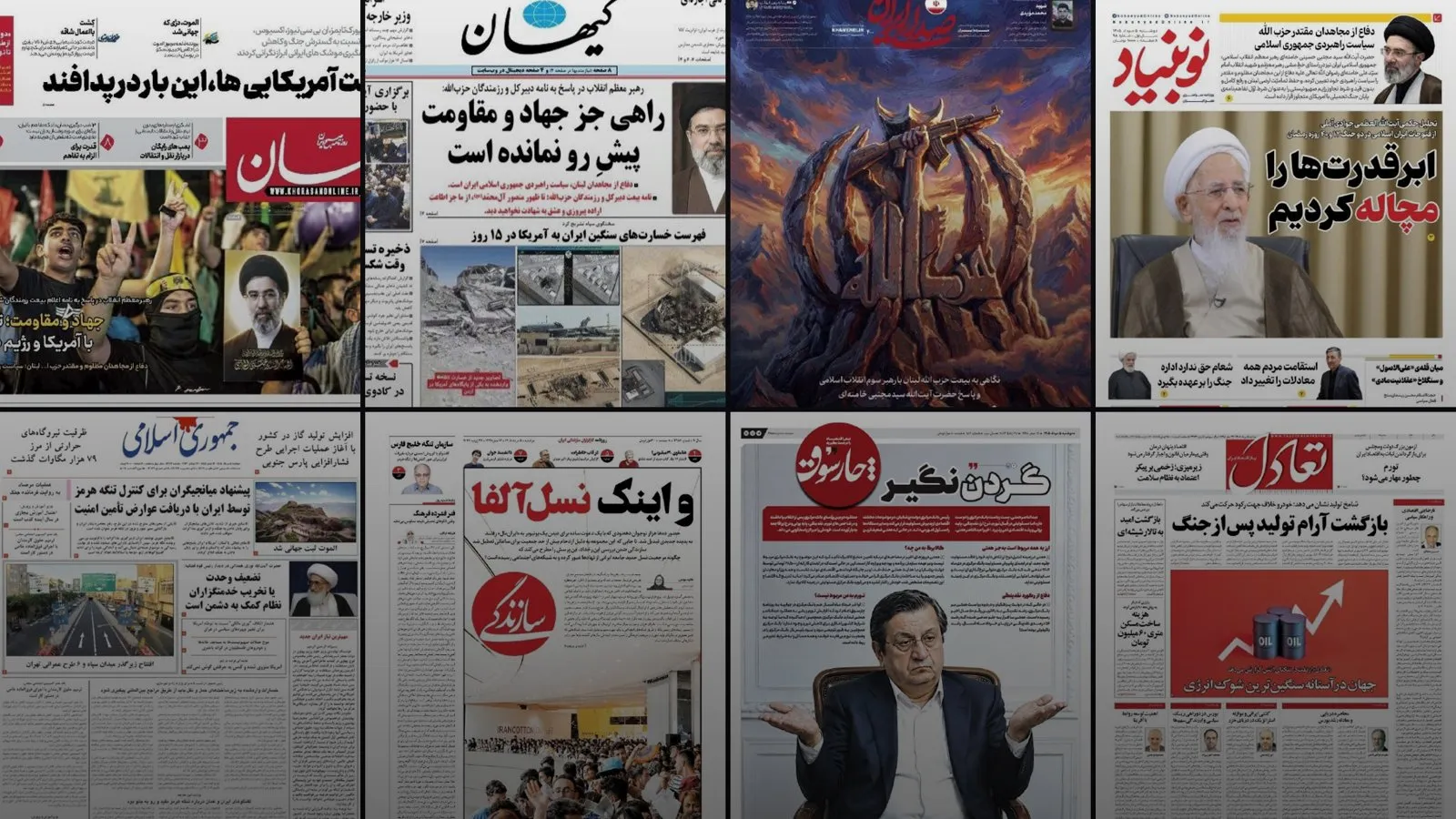
Bottom line: The Iranian front pages converge on a succession-consolidation story: the new Leader, Mojtaba Khamenei, replies to a letter from Hezbollah with ‘no path but jihad and resistance,’ and Lebanese Hezbollah’s declared bay’ah to him as ‘the third Leader’ is treated as a strategic milestone, restoring the direct Leader presence the prior edition found absent; alongside it the war frame moves from unverified base-strike claims to a claimed Iranian governance-and-toll role over the Strait of Hormuz, while the only kinetic reality the state’s own wires corroborate remains the Yemen-on-Saudi oil campaign at Bab al-Mandab.
Executive Summary
Day 146 is a succession-consolidation edition, and its lead judgment is that the dominant move is the decisive front-page return of the Leader’s direct voice: the office-aligned press makes Mojtaba Khamenei’s reply to a letter from Hezbollah’s Secretary-General and fighters the day’s centrally-set line. Kayhan and Khorasan run the banner ‘no path remains but jihad and resistance’; Seda-ye Iran gives the whole page to the Hezbollah emblem carved into a mountain under the headline ‘beyond politics,’ explicitly naming the reply as that of ‘the third Leader of the Islamic Revolution, Ayatollah Seyyed Mojtaba Khamenei,’ and framing Lebanese Hezbollah’s bay’ah (allegiance) to him as a trans-political act of fealty; Nobonyad, Sobh-e No and Vatan-e Emrooz carry the same message with its two conditions attached. The mechanism is centrally-guided message discipline binding the succession to the war doctrine, and the significance is direct: this is the most prominent direct Leader presence in several editions and reverses the negative-evidence finding the prior edition filed on the Leader’s front-page absence.
The second organising theme is a qualitative escalation of the standing Hormuz thread, from a threat to close the strait to a claim of governance over it. Jomhouri Eslami leads on a mediators’ proposal that Iran formally control the Strait of Hormuz and levy ‘security-provision tolls,’ naming India among the interlocutors; the English Iran Daily leads with the foreign-ministry spokesman reporting ‘progress in Oman talks on Strait of Hormuz governance’; the state’s own wires (Nour News, Fars News, Kayhan’s channel) report Iran redirecting six vessels attempting ‘unauthorised’ passage through the southern strait and asserting that ‘the transit route is designated by Iran’; and Sobh-e No cites an Israeli security institute conceding that ‘Iran now controls the rules of engagement’ there. Read together, these convert chokepoint leverage into a claimed institutional and revenue role, the sharpest new turn in the dual-chokepoint coercion thread since it began, though the ‘governance’ and ‘toll’ claims remain Iranian and mediator-sourced assertions, not demonstrated arrangements.
Beneath the narrative, the edition again separates loud claims from wire-corroborated events. The multi-country US-base strike claim persists and consolidates, Kayhan’s centre-page ‘list of Iran’s heavy damages to America in 15 days’ with satellite-style base imagery, and Vatan-e Emrooz’s IRGC-spokesman ‘Victory Report,’ yet neither is echoed by the operational content of the state’s own defence wires, which document only Yemeni (Ansarallah) operations against Saudi Arabia: three Saudi tankers targeted within 48 hours, sixteen vessels turned back, strikes on Aramco facilities at Jizan and Yanbu, and a claimed complete closure of Bab al-Mandab to Saudi shipping. The American-weakness narrative sharpens in parallel: Khorasan headlines ‘the Americans’ defeat, this time in air defence,’ citing the New York Times, BBC, CNN, Axios and Reuters on depleted interceptor stocks, and Kayhan’s channel amplifies US-politician criticism (Representative Thomas Massie, Senator Chris Murphy) and the New York Times ‘quagmire’ framing, against Trump’s own reported denial that Washington has retreated.
The internal argument over war and settlement continues, now fought over how to read the fragile US memorandum. Sobh-e No uses the Leader’s Hezbollah reply to recast the MoU as a resistance victory, making ‘Lebanese territorial integrity and complete Israeli withdrawal the first clause’ of the understanding and rebutting the charge that it was a capitulation, exactly the charge the rejectionist wing pressed in the prior edition. Nobonyad supplies the doctrinal escalation from the other direction: a marja’, Grand Ayatollah Javadi-Amoli, certifies that ‘we crushed the superpowers,’ while a front-page column argues openly that ‘war strengthens the advocates of atomic deterrence,’ the most escalatory editorial signal of the day. The reformist press holds apart from both: Etemad leads on ‘the domino of war,’ warning that a broad conflict would drag in the whole region and beyond, and reduces the Ghalibaf-Trump exchange to online theatre, while Sazandegi declines the war frame entirely, leading on a Generation Alpha consumer phenomenon.
The economic titles keep the war’s home-front price on the page in a register the triumphalist fronts avoid. Ta’adol pairs a cautious ‘slow return of production after the war’ with a warning that ‘the world is on the threshold of its heaviest energy shock,’ converting the same Hormuz and Bab al-Mandab disruption into a global-price story that also constrains Iran’s own growth; Chahar Sough runs an inflation-and-liquidity blame dispute personalised around Abdolnaser Hemmati, with exchange-rate and money-supply charts as evidence. The government’s English-facing edition, meanwhile, is markedly more diplomatic than its Persian counterparts: Iran Daily foregrounds Hormuz ‘governance’ diplomacy, a UNESCO listing for Alamut Castle, President Pezeshkian’s grievance over US strikes on civilian infrastructure, a Pakistani-restraint interview, and a rebuttal of Ukrainian accusations over Iran-Russia cooperation and the Caspian-vessel incident that Etemad also keeps alive.
Net assessment: this is a consolidation-and-governance edition. The verifiable developments are a decisive front-page return of the Leader’s voice paired with Hezbollah’s declared bay’ah, a diplomatic push to institutionalise Iran’s Hormuz leverage, a corroborated Yemen-on-Saudi oil campaign, and a quantified economic strain; the unverifiable content is again the cluster of Iranian strikes on US bases, now consolidated into a ‘Victory Report’ but no better corroborated. The highest-significance finding is the succession consolidation itself: the new Leader’s authority is being publicly underwritten by a foreign militia’s allegiance and welded to the war doctrine, reversing the low-Leader-visibility pattern of recent editions. The sharpest new escalation is the move from threatening Hormuz to claiming to govern it, and the signal most worth watching is Nobonyad’s open front-page advocacy of atomic deterrence, the first time in recent editions that a weapons option has been argued on a front page rather than implied.
Prepared for analysis and early warning. Hostile content documented for defensive assessment only.
Key Points
- KJ-1 [HIGH] The succession-era Leader has returned decisively to the front page, his authority publicly underwritten by Hezbollah’s declared allegiance. Seda-ye Iran names Mojtaba Khamenei ‘the third Leader of the Islamic Revolution’ and elevates Lebanese Hezbollah’s bay’ah to him to a strategic milestone (‘beyond politics’); Kayhan, Khorasan, Nobonyad, Sobh-e No and Vatan-e Emrooz all run his reply to Hezbollah (‘no path but jihad and resistance’) as the day’s centrally-set line. Significance: this is the most prominent direct Leader presence in several editions and directly reverses the prior edition’s negative-evidence finding on his front-page absence; the use of a foreign militia’s fealty to consolidate a domestic succession is the cycle’s highest-significance development, and the barometer to watch is whether less office-aligned titles reproduce the ‘third Leader’ formulation or hedge it.
- KJ-2 [MODERATE-HIGH] Iran’s Hormuz posture has escalated in kind, from threatening closure to claiming a governance-and-toll role. Jomhouri Eslami reports a mediators’ proposal for Iran to control the strait and levy ‘security-provision tolls’ (India named among interlocutors), Iran Daily leads on ‘progress in Oman talks on Hormuz governance,’ the wires report Iran redirecting six vessels and ‘designating’ the transit route, and Sobh-e No cites an Israeli institute conceding Iranian control of the rules of engagement. Significance: converting chokepoint leverage into a claimed institutional and revenue arrangement is the sharpest new turn in the standing dual-chokepoint thread; the claims are Iranian and mediator-sourced assertions, not demonstrated arrangements, and the tracking cue is whether any external party confirms a toll or governance mechanism or whether it stays a one-sided narrative.
- KJ-3 [HIGH] The one kinetic reality corroborated on the state’s own wires remains the Yemen-on-Saudi oil campaign, not any Iranian strike on US bases. Defa Press reports three Saudi tankers targeted within 48 hours, sixteen vessels turned back, a claimed complete closure of Bab al-Mandab, and Ansarallah strikes on Aramco facilities at Jizan and Yanbu; the press repackages this as a global energy shock. Significance: the corroborated Saudi disruptions should be tracked separately from the uncorroborated Iranian base-strike and Hormuz-closure claims that ride on them; the evidentiary base of the coercion narrative is Yemeni operations, not a demonstrated Iranian capability.
- KJ-4 [MODERATE-HIGH] The multi-country US-base strike claims persist and consolidate but remain uncorroborated. Kayhan’s centre-page ‘list of Iran’s heavy damages to America in 15 days,’ with satellite-style base imagery, and Vatan-e Emrooz’s IRGC-spokesman ‘Victory Report’ present a consolidated tally, yet neither is supported by the operational content of the state’s own defence wires, which report only Yemeni operations against Saudi Arabia. Significance: consolidation into a single ‘Victory Report’ adds presentation, not corroboration; every base-strike claim should be treated as attacker-sourced messaging to be confirmed outside this monitor, and the negative evidence (the wires’ silence on Iranian base strikes) is itself the finding.
- KJ-5 [HIGH] The American-weakness narrative has sharpened onto a specific, testable claim of air-defence depletion. Khorasan headlines ‘the Americans’ defeat, this time in air defence,’ naming five Western outlets as reporting depleted interceptor stocks, and Kayhan’s channel amplifies US-politician criticism (Massie, Murphy) and the NYT ‘quagmire’ framing against Trump’s denial of any retreat. Significance: the discipline is real (near-identical carriage indicates central guidance) but the underlying event is Western reporting of caution, not a demonstrated Iranian gain; the item to watch is whether any operational fact is ever offered to substantiate the air-defence-collapse claim or whether it remains a rhetorical posture built on amplified foreign reporting.
- KJ-6 [MODERATE] Open advocacy of a nuclear-deterrence option has reached a front page. Nobonyad runs a marja’s certification that ‘we crushed the superpowers’ alongside a front-page column arguing that ‘war strengthens the advocates of atomic deterrence.’ Significance: prior editions carried the weapons question only by implication; a front-page column making the affirmative case is a discrete escalation in the domestic discourse and warrants tracking for any migration from fringe op-ed to mainstream demand, especially if it recurs or is echoed by the office-aligned press.
- KJ-7 [MODERATE] The intra-regime settlement-versus-rejection split continues, now fought over the meaning of the US memorandum, while the reformist press holds apart from the war frame. Sobh-e No reframes the MoU as a resistance-commitment document (‘first clause: Lebanon and Israeli withdrawal’), rebutting the ‘capitulation’ charge that the rejectionist wing (Nobonyad) presses; Etemad warns of an escalation ‘domino’ and treats the Ghalibaf-Trump exchange as theatre, and Sazandegi declines the war frame entirely for a Generation Alpha social lead. Significance: the fracture documented across recent editions persists, now mapped onto how the settlement is read; the sustained reformist distance from the mobilisation narrative is logged as its own finding, a proxy for elite reservations about the centrally-set line.
Macro Trends
- The succession is publicly consolidated through allegiance, not just office. The office-aligned press does not merely report the Leader; it stages his authority. Seda-ye Iran names Mojtaba Khamenei ‘the third Leader of the Islamic Revolution’ and treats Lebanese Hezbollah’s bay’ah to him as a trans-political act (‘beyond politics’); Kayhan, Khorasan, Nobonyad, Sobh-e No and Vatan-e Emrooz all carry his reply to Hezbollah as the day’s line. The mechanism is a foreign militia’s declared fealty being used to underwrite a domestic succession, and the near-identical carriage across ideological titles indicates central guidance rather than organic convergence. This reverses the prior edition’s finding that the Leader’s direct voice was absent from the fronts.
- Hormuz leverage is recast from closure-threat to a governance-and-toll claim. The chokepoint thread takes a qualitative step: Jomhouri Eslami reports a mediators’ proposal that Iran formally control Hormuz and collect ‘security-provision tolls’ (with India named among interlocutors), Iran Daily leads on ‘progress in Oman talks on Hormuz governance,’ the wires report Iran redirecting six vessels and ‘designating’ the transit route, and Sobh-e No cites an Israeli institute conceding Iranian control of the rules of engagement. The move is from denial-of-passage to a claimed institutional and revenue role, the sharpest turn in the dual-chokepoint coercion thread to date; the claims remain Iranian and mediator-sourced assertions, not demonstrated arrangements.
- American restraint is sharpened into an air-defence ‘defeat’. The standing ‘America blinked’ thread hardens onto a specific claim: depleted air defences. Khorasan headlines ‘the Americans’ defeat, this time in air defence,’ naming five Western outlets (NYT, BBC, CNN, Axios, Reuters) as reporting a shortage of interceptor munitions; Kayhan’s channel amplifies Representative Massie’s and Senator Murphy’s criticism of the war and the NYT ‘quagmire’ framing, with Trump’s denial that the US retreated as the lone dissonant note. The convergence is centrally-guided amplification of Western reporting of caution into a claim of demonstrated US weakness, asserted rhetorically rather than shown on the battlefield.
- The corroborated kinetic reality remains Yemen-on-Saudi at Bab al-Mandab. As in recent editions, the one wire-supported kinetic activity is Ansarallah’s campaign against Saudi shipping and oil: Defa Press reports three Saudi tankers targeted within 48 hours, sixteen vessels turned back, and a claimed complete closure of Bab al-Mandab, alongside strikes on Aramco facilities at Jizan and Yanbu. The Iranian press packages this as an energy shock on the West (Ta’adol’s ‘heaviest energy shock,’ Vatan-e Emrooz’s Saudi-export-choke analysis), but the operational base is Yemeni operations, not a demonstrated Iranian closure of Hormuz or the claimed strikes on US bases.
- The war-versus-settlement argument moves onto the meaning of the MoU, and a nuclear option reaches a front page. The intra-regime split now runs through how to read the fragile US understanding. Sobh-e No uses the Leader’s Hezbollah reply to reframe the MoU as a resistance-commitment document (‘first clause: Lebanon and Israeli withdrawal’), pre-empting the ‘capitulation’ charge; Nobonyad escalates from the other side, with a marja’ certifying ‘we crushed the superpowers’ and a front-page column arguing that ‘war strengthens the advocates of atomic deterrence.’ The reformist titles hold apart: Etemad warns of an escalation ‘domino,’ and Sazandegi declines the war frame altogether. The front-page nuclear-deterrence advocacy is the most escalatory single editorial signal of the cycle.
Front-Page Snapshot
- Seda-ye Iran - “Beyond politics” (Hardline / revolutionary (Leader’s-office-aligned)) - Hezbollah’s bay’ah to Mojtaba Khamenei as the ‘third Leader’ [MODERATE-HIGH]
- Kayhan - “No path remains before us but jihad and resistance” (Hardline flagship (Leader’s office / IRGC)) - Leader’s Hezbollah message fused with a ‘break the naval blockade’ editorial and base-damage list [HIGH]
- Khorasan - “The Americans’ defeat, this time in air defence” (Conservative (Mashhad)) - American air-defence-depletion narrative plus the Leader’s resistance message [HIGH]
- Nobonyad - “We crushed the superpowers” (Conservative / principlist) - Marja’-certified triumph and open nuclear-deterrence advocacy [HIGH]
- Sobh-e No - “Emphasis on the MoU’s first clause as a document of commitment to Hezbollah” (Principlist (channel read)) - Reframing the US understanding as a resistance-commitment document [MODERATE-HIGH]
- Vatan-e Emrooz - “Victory Report” (Hardline / principlist (channel read)) - Consolidated IRGC ‘Victory Report’ base-strike tally and energy coercion [HIGH]
- Jomhouri Eslami - “Mediators propose Iran control the Strait of Hormuz for security tolls” (Traditional / establishment) - Hormuz recast as a control-and-toll governance claim [MODERATE-HIGH]
- Iran Daily (English) - “FM spox: Progress made in Oman talks on Strait of Hormuz governance” (State English daily (government)) - Hormuz-governance diplomacy and international legitimacy messaging [MODERATE]
- Ta’adol - “The slow return of production after the war” (Economic) - Cautious recovery signal against a ‘heaviest energy shock’ warning [MODERATE]
- Chahar Sough - “Don’t take the blame” (Economic / business) - Inflation and liquidity blame dispute (Hemmati) [LOW-MODERATE]
- Etemad - “The domino of war” (Reformist) - Escalation-risk caution and the Ghalibaf-Trump spat [MODERATE]
- Sazandegi - “And now, Generation Alpha” (Reformist (Kargozaran)) - Youth-consumer social lead; war frame absent [LOW]
Full report
The complete edition - per-paper front-page analysis and full translation appendices - is available as a PDF: Download the full report.
Compiled from Iranian front pages and outlet channels via open-source monitoring. Translations are editorial; named-figure attributions are verified against the source pages where possible.