Iranian Press Monitor - Wednesday, 22 July 2026 (Day 141)
Wednesday, 22 July 2026 · 31 Tir 1405 · 7 Safar 1448 - Nine Persian front-page scans, one English print (Iran Daily) and the Kayhan channel, plus three agency wires; Tehran Times was unavailable at the time
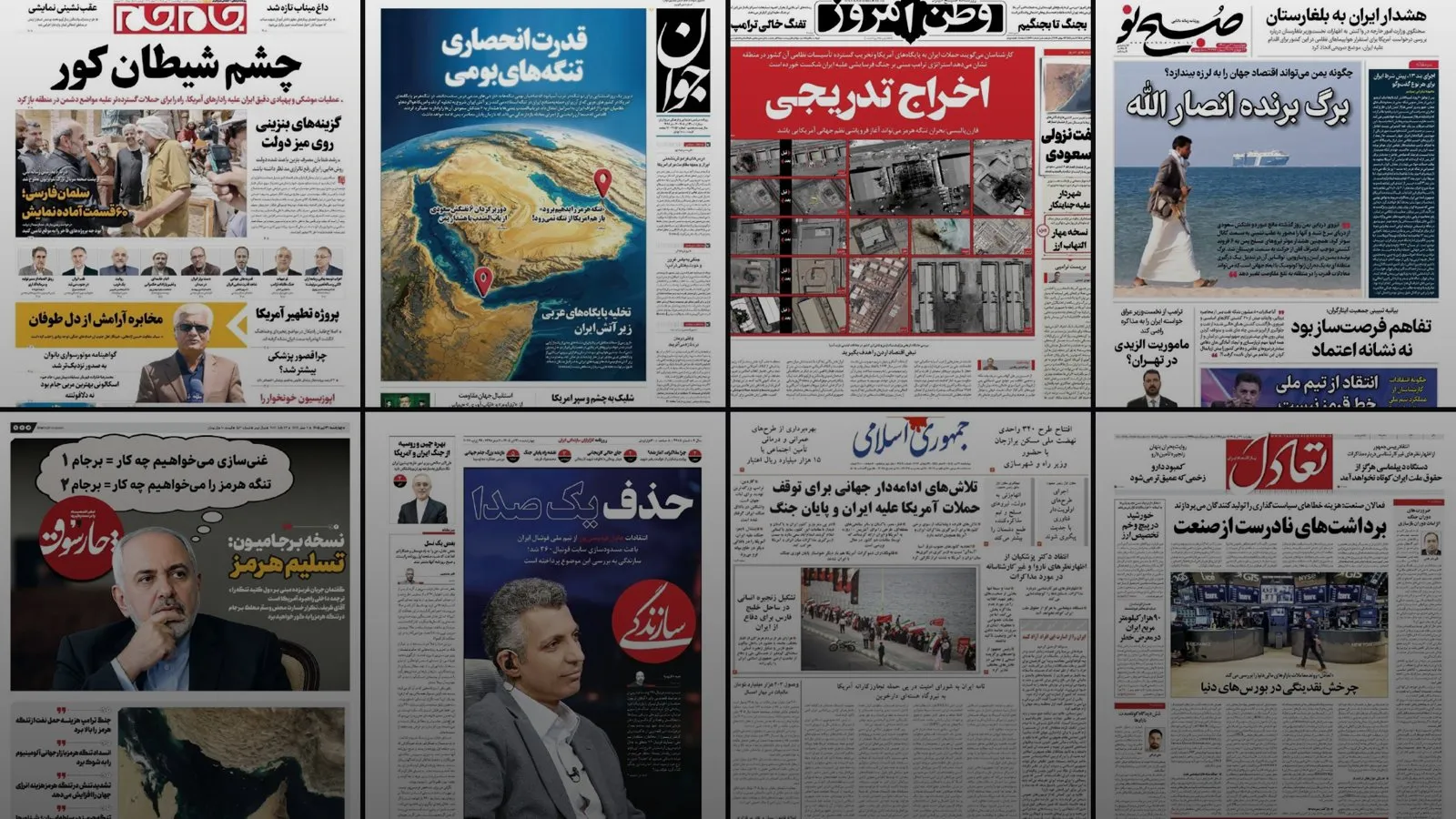
Bottom line: After a cycle in which mediators returned to the front pages, the hardline press swings back to a strike-triumph and ‘gradual expulsion of America’ frame and hardens the Strait of Hormuz into an explicit demand to keep it closed 60 more days, while the government keeps a ceasefire channel visibly alive (Pakistan as mediator, Gulf-coalition guarantees) under a leadership ceiling reported through Pezeshkian that defines the goal as ending the state of war but not peace, so the contest on the page has moved from whether to talk to how far a truce may go, with normalization ruled out from the top.
Executive Summary
Day 141 is a ceasefire-without-peace edition: the single most consequential line is not a battle claim but a reported leadership boundary. Carried on the reformist Etemad and relayed by President Pezeshkian at an Industry-Day ceremony, the Leader (Mojtaba Khamenei) is said to have stressed that the objective is ‘the end of the state of war, not peace.’ The distinction is deliberate - a cessation of hostilities is permissible, reconciliation or normalization is not - and it functions as a ceiling on the very mediation track the government titles are promoting. It resolves the tension logged on Day 140, when mediators returned to the front pages: Tehran will pursue a truce, but the top has pre-defined it as something short of peace, insulating any deal from the ‘surrender’ charge at home while denying the West a normalization narrative.
Around that ceiling, the hardline press swings the frame back toward triumph and expulsion after a cycle spent recoding the diplomacy opening. Kayhan leads with ‘after Iran’s hard blow, America is fleeing the region to the occupied territories,’ merging a claimed US drawdown from Arab host states with the Israel-as-final-redoubt motif; Vatan-e Emrooz runs ‘Gradual Expulsion’ over a before/after satellite grid asserting Trump’s war of attrition has failed; Jam-e Jam claims precise missile-and-drone strikes that ‘blinded’ US radars and ‘open the way for wider attacks’; and Javan theorizes a dual-chokepoint deterrent - Hormuz plus Bab al-Mandeb - under ‘the exclusive power of the native straits.’ The agency wires supply the operational branding: ‘Operation Saaeqeh Phase 21’ against a base in Kuwait and ‘Operation Nasr 2, Wave 24’ against a CENTCOM-linked data center in Bahrain. Every base-by-base target and casualty figure here is attacker-sourced, internally inconsistent (the Kuwait base is named ‘Al-Doha’ by Kayhan and ‘Al-Dhafra’ by Fars; casualty tallies diverge from a few confirmed deaths to a claimed 500-plus wounded), and is logged as claim, not fact.
The Strait of Hormuz, established cross-factionally as a red line on Day 140, hardens this cycle into an explicit operational demand. The economic title Chaharsu turns its front into a principlist manifesto: over a photograph of Mohammad-Javad Zarif it brands the ‘Barjamiyoun’ (JCPOA camp) prescription ‘the surrender of Hormuz,’ equates any Strait diplomacy with a repeat JCPOA capitulation (‘what do we want Hormuz for = JCPOA 2’), and prints a standalone demand to ‘keep the Strait closed for at least another 60 days.’ This is the single most concrete escalation ask on any page and the sharpest naming of a domestic faction, rather than the foreign adversary, as the security risk. Sobh-e No and Javan extend the chokepoint logic outward, promoting the Yemeni Ansarullah naval blockade of Saudi shipping at Bab al-Mandeb to a second front billed as a ‘winning card’ capable of shaking the world economy.
The government and establishment bloc holds the off-ramp open but recasts it as pressure on America rather than Iranian concession. Jomhouri-ye Eslami leads on ‘continuing global efforts to stop America’s attacks and end the war’ and files an Iranian complaint to the UN Security Council; the English Iran Daily shows Pakistan’s prime minister (Shehbaz Sharif) calling for restraint and carries an interview sketching actual ceasefire mechanics - Persian Gulf coalition guarantees and a Qatar-linked temporary arrangement with a managed reopening of the Strait. The gap between that English-facing ‘guaranteed, phased reopening’ and Chaharsu’s Persian-facing ‘keep it closed 60 more days’ is the negotiating space itself, addressed to two different audiences. A coordinated presidential message runs beneath all of it - carried nearly verbatim on Iran Daily, Ta’adol and Jomhouri-ye Eslami - that ‘diplomacy will never fall short of the nation’s rights,’ paired with Pezeshkian’s public rebuke of ‘non-expert commentary’ on the talks, an open push-back against the Kayhan-Chaharsu campaign against the negotiators.
Two domestic threads and one soft-power motif run beneath the war. A censorship episode becomes a genuine cross-title story: the blocking of the Football-360 site after broadcaster Adel Ferdosipour criticized the national team leads the reformist Sazandegi (‘silencing a voice’), forces the judiciary into a public denial on Etemad, and draws a ‘criticism is not a red line’ line from Sobh-e No - the state policing sports commentary while it manages a war narrative. The Minab school casualties from an earlier US strike on Iranian soil reopen on Jam-e Jam and the wires (further remains identified), anchoring the outbound strike claims to a domestic grievance and the revenge (خونخواهی) motif for the assassinated predecessor, which persists even on the reformist page via Elias Hazrati. And the 2026 World Cup continues as an anti-Israel symbol (Kayhan: Spanish fans trampling the Zionist flag) that Sazandegi alone declines, reading it as censorship rather than resistance victory.
Net assessment: this is a reassertion-and-ceiling edition, not a fresh-escalation one. The verifiable shift is directional rather than kinetic - the hardline frame reclaimed the top of the page after a cycle of diplomacy-first coverage, and the leadership publicly bounded the mediation track at a truce-without-peace. The battlefield claims outrun corroboration and contradict each other on both base names and casualties; the Yemen-Saudi blockade is kept visibly active as an escalation hedge; Hormuz has moved from red line to a concrete closure demand pitched against the government’s own quiet talk of a guaranteed reopening; and Israel and Lebanon remain absent as active fronts, surfacing only as symbol and as the ‘occupied territories’ the US is said to be retreating into. The highest-significance finding is the ceiling itself: that the diplomatic opening is real enough to require the top to define, in advance, how far it may go.
Key Points
- KJ-1 [HIGH] A leadership ceiling has been set on the mediation track: end the state of war, but not peace. Relayed by President Pezeshkian at an Industry-Day ceremony and carried on Etemad, the Leader (Mojtaba Khamenei) is reported to have drawn the line between halting the fighting and ‘peace,’ i.e. reconciliation or normalization. Significance: this is the cycle’s most consequential development because it pre-defines how far any deal may go - a truce is sanctioned from the top, a settled peace is not - which simultaneously protects the government from the domestic ‘surrender’ charge and forecloses a Western normalization narrative; that the boundary needed to be set publicly is itself evidence the diplomatic opening is real. It is a relayed paraphrase, not a retrieved verbatim text, and is judged on the consistency of the front-page renderings rather than a primary source.
- KJ-2 [HIGH] The hardline press has reasserted a strike-triumph and expulsion frame over the diplomacy-first coverage of the prior cycle. Kayhan (‘America is fleeing to the occupied territories’), Vatan-e Emrooz (‘Gradual Expulsion’ with a before/after satellite grid), Jam-e Jam (radar-blinding missile strikes) and Javan (dual-chokepoint doctrine) together reclaim the top of the page. Significance: the swing is directional evidence of an ongoing message contest, not of new battlefield facts - the frame moved, the war did not visibly escalate - and the specific ‘US driven back into Israel’ construction keeps the axis-victory narrative alive as cover for a negotiation the same camp distrusts; read the reassertion as narrative management timed against the ceasefire track, and every base-strike claim as attacker-sourced.
- KJ-3 [MODERATE-HIGH] The Strait of Hormuz has hardened from a cross-factional red line into an explicit operational demand to keep it closed. Chaharsu, an economic title, prints ‘keep the Strait closed for at least another 60 days’ and brands any Strait diplomacy ‘the surrender of Hormuz,’ naming Zarif and the ‘Barjamiyoun.’ Significance: this is the most concrete escalation ask on any front page and the sharpest identification of a domestic faction as the security risk, and it stands in direct tension with the government’s own English-facing talk (Iran Daily) of a guaranteed, phased reopening under Gulf-coalition guarantees; the ‘60 more days’ demand is the barometer to track for hardline pressure on the ceasefire, and the government-hardline gap over Hormuz is the clearest fault line in the elite.
- KJ-4 [MODERATE] The Yemen-Saudi naval blockade has been promoted from sidebar to a second chokepoint front. Sobh-e No leads with ‘Ansarullah’s winning card’ theorized as a world-economy lever, and Javan’s map fuses Bab al-Mandeb with Hormuz into a single ‘native straits’ deterrent. Significance: the resistance axis is being kept visibly active precisely as the US-Iran track leans toward de-escalation, preserving escalation capacity on a front Tehran does not directly own; treat the blockade, the reported turning-back of Saudi vessels and any economic effects as attributed claims, and watch whether the thread sustains across cycles or fades as the Hormuz-and-diplomacy contest absorbs the coverage.
- KJ-5 [MODERATE-HIGH] The strike campaign against US regional bases continues as attacker-sourced claim and is internally inconsistent on its own facts. The wires brand ‘Operation Saaeqeh Phase 21’ (a base in Kuwait) and ‘Operation Nasr 2, Wave 24’ (a CENTCOM-linked data center in Bahrain), while the Kuwait target is named ‘Al-Doha’ by Kayhan and ‘Al-Dhafra’ by Fars, and US casualty figures range from a few confirmed deaths to a claimed 500-plus wounded on Nour News. Significance: treat the continuing exchange as probable but every base identity and casualty tally as messaging to be confirmed outside this monitor; the unreconciled base names and casualty counts are themselves the caution against reproducing any single claim as fact, and the Vatan-e Emrooz before/after imagery is outlet-curated illustration, not confirmation.
- KJ-6 [MODERATE] A coordinated presidential message is disciplining the hardline campaign against the negotiators. The near-verbatim line ‘diplomacy will never fall short of the nation’s rights,’ with Pezeshkian’s rebuke of ‘non-expert commentary,’ runs across Iran Daily, Ta’adol and Jomhouri-ye Eslami, while Chaharsu names Zarif and the JCPOA camp as the internal risk. Significance: this is an open intra-elite front over who controls the diplomacy narrative - the presidency publicly pushing back on the flagship’s line at the same moment the flagship’s allies escalate against the negotiators - and the coordination of the presidential wording across three titles indicates a deliberate message rather than convergence; track whether the pushback holds or the hardline framing prevails as the mediation track develops.
- KJ-7 [MODERATE] Negative-evidence judgment: Israel and Lebanon remain absent as active military fronts and surface only as symbol and as the ‘occupied territories’ the US is said to be retreating into. No monitored front page leads on an Israeli or Lebanese military development; Israel appears via the World Cup flag-trampling motif and via Kayhan’s ‘fleeing to the occupied territories’ construction, and Gaza only through the attributed Hamas-succession item. Significance: the confrontation on the page has consolidated around the US-Iran contest, the Hormuz-and-Yemen chokepoints and the internal diplomacy fight; the continued Israel-Lebanon quiet should be logged as a finding in its own right, since a return to either would be a signal, and read against the ceasefire-ceiling lead rather than as evidence that either front has closed.
Macro Trends
- The hardline frame reasserts triumph-and-expulsion over the diplomacy track. After a cycle in which the mediation track led the front pages, the hardline titles swing the frame back: Kayhan’s ‘America is fleeing the region to the occupied territories,’ Vatan-e Emrooz’s ‘Gradual Expulsion’ over a before/after strike grid, Jam-e Jam’s radar-blinding missile claim, and Javan’s ‘native chokepoints’ doctrine together reclaim the top of the page for a strike-triumph and US-in-retreat narrative. The argument is no longer that talks reflect US weakness but that America is being physically expelled and driven back into Israel; treat every base-strike and expulsion claim as attacker-sourced.
- A leadership ceiling: end the war, but not peace. The cycle’s defining new signal is a reported leadership boundary, relayed by Pezeshkian on Etemad: the goal is ‘the end of the state of war, not peace.’ It permits a ceasefire while withholding normalization, capping the mediation track from the top. The line resolves the elite tension over negotiation by pre-defining any deal as a truce short of reconciliation - insulating it from the ‘surrender’ charge at home and denying the West a normalization reading.
- Hormuz hardens from red line to a closure demand. The cross-factional Hormuz red line of Day 140 sharpens into an operational demand. Chaharsu, over a photo of Zarif, brands Strait diplomacy ‘the surrender of Hormuz,’ equates it with a repeat JCPOA capitulation, and prints an explicit call to ‘keep the Strait closed for at least another 60 days.’ That Persian-facing demand sits directly against the English Iran Daily’s talk of a guaranteed, phased reopening under Gulf-coalition guarantees - the gap between the two is the negotiating space, pitched to two different audiences.
- The Yemen-Saudi blockade elevated to a second chokepoint front. The Ansarullah naval campaign against Saudi shipping at Bab al-Mandeb, a sidebar in the prior cycle, is promoted to a lead: Sobh-e No’s ‘Ansarullah’s winning card’ and Javan’s dual-strait map fold Yemen into a two-lock grip on global energy passage. The resistance axis is kept visibly active precisely as the US-Iran track leans toward de-escalation, an escalation hedge; treat the blockade and its interdiction figures as attributed claims and watch whether the thread hardens or fades.
- A coordinated presidential message disciplines the hardline critics. A near-verbatim line - ‘the diplomatic apparatus will never fall short of the nation’s rights,’ paired with Pezeshkian’s rebuke of ‘non-expert commentary’ on the talks - runs across Iran Daily, Ta’adol and Jomhouri-ye Eslami, indicating a centrally-set message rather than organic convergence. It marks an open intra-elite front: the presidency publicly pushing back on the Kayhan-Chaharsu campaign against the negotiators, at the same moment Chaharsu names Zarif and the JCPOA camp as the internal risk.
- Domestic control surfaces as a cross-title censorship story. The blocking of the Football-360 site after Adel Ferdosipour criticized the national team becomes a multi-title thread: Sazandegi leads on it as ‘silencing a voice,’ the judiciary is forced to disown it on Etemad, and Sobh-e No insists ‘criticism is not a red line.’ The state policing sports commentary while it manages a war narrative is a genuine domestic-control signal; paired with the World Cup’s use as an anti-Israel symbol, it shows the information space being actively curated on both the sports and the war fronts.
Front-Page Snapshot
- Kayhan - “After Iran’s Hard Blow, America Is Fleeing the Region to the Occupied Territories” (Hardline flagship (Leader’s office / IRGC)) - US expelled from the region and driven back into Israel; strike-triumph and legal subordination of the ceasefire [SEVERE]
- Vatan-e Emrooz - “Gradual Expulsion” (Hardline / principlist) - Trump’s attrition strategy ‘failed’; before/after strike imagery; Hormuz as system-breaker [HIGH]
- Jam-e Jam - “The Devil’s Eye Blinded” (State broadcaster daily (IRIB)) - Radar-blinding missile/drone claim ‘opening the way for wider attacks’; distrust of any US withdrawal [HIGH]
- Javan - “The Exclusive Power of the Native Chokepoints” (Hardline (IRGC-affiliated)) - Hormuz-plus-Bab-al-Mandeb deterrent doctrine; Arab bases ‘evacuated under Iran’s fire’ [HIGH]
- Chaharsu - “The Barjamiyoun Prescription: Surrender of Hormuz” (Economic, running a principlist front) - Anti-JCPOA internal front; explicit demand to keep the Strait closed 60 more days [HIGH]
- Sobh-e No - “Ansarullah’s Winning Card” (Principlist) - Yemen naval blockade as a world-economy lever; mediation framed as US supplication; Bulgaria friction [HIGH]
- Iran Daily (English) - “Pezeshkian Reaffirms Support for Production, Urges National Unity” (State English daily (government)) - Ceasefire needs Gulf-coalition guarantees; Pakistan as mediator; legal deterrence; ‘diplomacy won’t concede rights’ [MODERATE]
- Jomhouri-ye Eslami - “Continuing Global Efforts to Halt America’s Attacks and End the War” (Traditional / establishment) - International effort to end the war; UN complaint; presidential discipline of hardline critics [LOW-MODERATE]
- Etemad - “Licenses Ready for Women Motorcyclists” (Reformist) - Leader’s ‘end the war, not peace’ ceiling (top banner); domestic normalization; war’s industrial cost; censorship [MODERATE-HIGH]
- Sazandegi - “Silencing a Voice” (Reformist (Kargozaran)) - Football-360/Ferdosipour censorship; war’s costs; skepticism of the triumph frame [LOW-MODERATE]
- Ta’adol - “Mistaken Readings of Industry” (Economic) - Industrial-policy critique; world-market liquidity; coordinated ‘diplomacy won’t surrender rights’ line [LOW]
Full report
The complete edition - per-paper front-page analysis and full translation appendices - is available as a PDF: Download the full report.
Compiled from Iranian front pages and outlet channels via open-source monitoring. Translations are editorial; named-figure attributions are verified against the source pages where possible.