Credited but Not in the Room: Qatar Keeps Its Mediation Role as the Mecca Pact Drafts Its Own Formula With Tehran
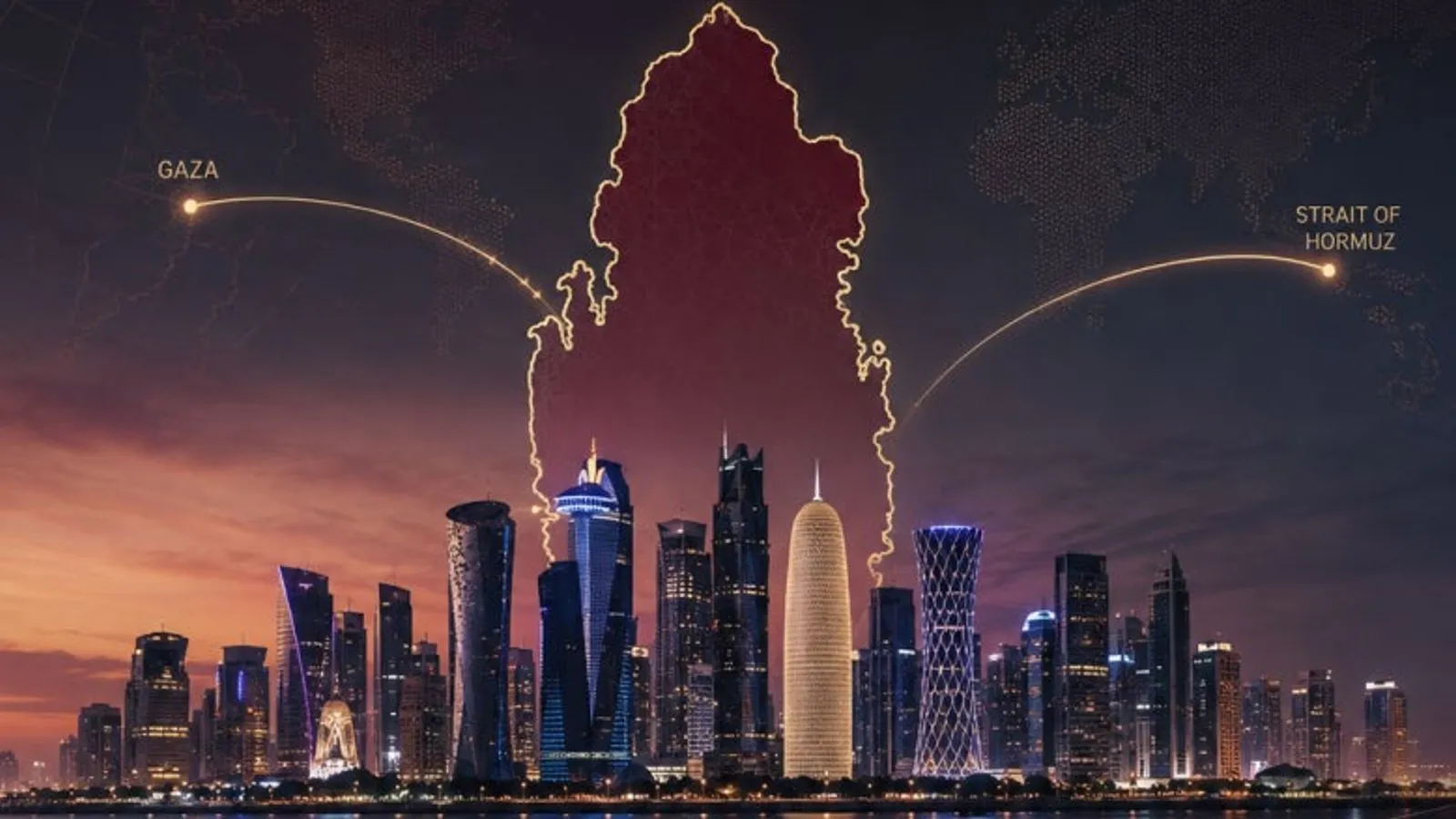
Qatar’s mediation still carries Saudi Arabia’s public endorsement, but the first regional security understanding with Tehran was drafted without it. After Saudi, Pakistani, and Turkish envoys met Iran’s leadership in Tehran on October 26, Iranian official Mohsen Rezaei said the four states had agreed to build security through the states of the region themselves and to prevent foreign interference. Riyadh credited Qatari and Pakistani mediation for the second day running, and Doha’s prime minister described Saudi security as an integral part of Qatar’s own. The report judges that Doha keeps a named role but has lost authorship of the regional formula. The Amir now carries the same balancing act to the gas summit in Moscow, where President Pezeshkian is also present, while Washington signals that it is losing patience with the truce.
What the Mecca Pact Meeting Produced
A Qatari delegation held talks in Tehran on October 25, and Iran’s Foreign Ministry described the visit as both bilateral and part of Qatar’s mediating role. The next day, Saudi Defense Minister Prince Khalid bin Salman, Pakistan’s army chief Field Marshal Asim Munir, and Turkish intelligence chief Ibrahim Kalin met President Masoud Pezeshkian and Rezaei. A joint statement said the four states would continue dialogue and consultation to strengthen regional peace and security. Rezaei told Al Jazeera that the understanding aims to secure the region through its own states and to keep foreign powers out. Reuters quoted a senior Iranian official as saying Tehran would not discuss its nuclear program and that Washington must first meet Iran’s conditions for ending the war.
The Saudi Foreign Ministry presented the visit as part of the Mecca pact states’ effort to reduce escalation and to support the mediation of Qatar and Pakistan. Al-Araby Al-Jadeed, which led its October 27 edition with the meeting, ran an inside headline saying that Doha supports the effort. Pezeshkian told his visitors that Israeli attacks on Iran require a collective response from the Islamic world. Meanwhile, armed forces chief of staff Major General Ali Abdollahi, touring the Gulf islands, said the Strait of Hormuz is closed to shipping and rejected U.S. claims of free navigation.
Washington sounded less patient. President Trump said he was not convinced by the truce with Iran and considered it a waste of time. A U.S. official told Al Jazeera that the United States would finish the mission soon. Citing CNN, Al-Araby reported that U.S. forces in the region could launch new, possibly large-scale operations within 96 hours of an order. UN Secretary-General Antonio Guterres warned in Cairo against a cycle of a major U.S. attack on Iran and a major Iranian attack on the Gulf states, and China said it will send a special envoy to the region. Our Hormuz-axis daily for October 27 covers the military picture in more detail.
The report judges with high confidence that the Mecca pact produced its own security understanding with Tehran and that Qatar was not in the room. Saudi Arabia has now credited Qatari mediation twice in two days, which protects Doha’s standing. However, the substance moved elsewhere. The language on regional security without foreign interference also targets the U.S. presence that Qatar hosts at Al Udeid Air Base. Writing as a guest contributor for Al Jazeera, Turkish journalist Kamal Ozturk predicted that the states of the Badr agreement signed in Doha will eventually line up behind the Mecca pact. If that view becomes Turkish policy, Doha will face pressure to fold Badr into a binding alliance with Riyadh, which would weaken its claim to neutrality in Tehran. We traced the start of this shift in our October 26 brief.
Inside a Widening Gulf Camp
In his October 26 call with Saudi Foreign Minister Prince Faisal bin Farhan, Prime Minister and Foreign Minister Sheikh Mohammed bin Abdulrahman Al Thani affirmed Qatar’s full solidarity with the kingdom. The Houthi campaign against Saudi Arabia continued. The coalition reported intercepting a ballistic missile aimed at Riyadh and three drones, and said it destroyed five missile-storage tunnels and four launch platforms in Houthi-held areas. Citing the aviation data firm Cirium, Al-Araby reported that about 86 percent of scheduled flights at Riyadh’s airport have been canceled.
Egypt has now joined the alignment. On October 26, Egypt’s House of Representatives voted by a two-thirds majority to authorize President Abdel Fattah el-Sisi to take the necessary steps, in coordination with Saudi Arabia, to defend Egyptian territory. The head of the Houthis’ Supreme Political Council, Mahdi al-Mashat, replied that the group will treat any state standing with Saudi Arabia as hostile. Jordan, for its part, said its operation in southern Syria followed repeated threats from terrorist groups. In Al-Sharq, columnist Mohammed Al-Muhannadi urged the Gulf states to put their own interests first and to use their hydrocarbon wealth to build a trained army and a layered missile defense for the whole Gulf.
The report assesses that Qatar’s public solidarity places it inside a widening coalition against the Houthis, even as Doha continues to mediate with Iran, their patron. Egypt, Türkiye, and Pakistan are now formally behind Riyadh. No source shows Qatari money behind their support. The Houthi threat against states that side with Riyadh is general, but Qatar fits its terms, and Qatar Airways’ mid-October suspension of flights to Riyadh and Dammam shows how far the war already reaches into Qatari interests. Because Qatar has no coastline outside the Gulf, the war in Yemen bears directly on its export routes.
Moscow: Energy Diplomacy on the Same Stage as Tehran
Sheikh Tamim met Uzbek President Shavkat Mirziyoyev in Tashkent on October 26 and then flew to Moscow for the eighth summit of the Gas Exporting Countries Forum, with the prime minister in his delegation. Kremlin aide Yuri Ushakov said President Putin will hold separate talks with the Amir and with Pezeshkian after the summit. At the forum’s ministerial meeting, QatarEnergy chief executive Saad Sherida Al-Kaabi said Qatar’s energy facilities had been attacked several times, that production stopped, and that its LNG carriers could not move through regional shipping lanes. He called for joint action to protect energy infrastructure and maritime corridors in wartime and presented Qatar as a reliable supplier. He did not quantify the lost output.
The report judges with moderate confidence that Moscow has become a third venue for Gulf-Iran diplomacy. The Amir and the Iranian president are in the same city on the same day, one day after the Qatari delegation’s visit to Tehran. That creates an opening for direct contact, although no Qatari-Iranian meeting in Moscow has been announced. The report also judges with high confidence that Qatar is using the forum to present itself as both a victim of the war and a dependable supplier. Al-Kaabi made the case in a body where Iran is a member, without naming the attacker. The summit declaration’s language on protecting energy facilities and shipping lanes will show whether the argument landed.
Markets Price Diplomacy, Companies Show the Cost
Investors read the diplomacy as good news. Reuters reported that the Qatar Exchange index gained 2.8 percent on October 26, with QNB up about 3.9 percent, and the index opened 0.71 percent higher on October 27 at 8,915. Brent traded at $114.81 a barrel and WTI at $100.88 that morning, down about 0.9 percent, after Brent touched $117 last week. European gas prices passed $108 per megawatt-hour on October 26 for the first time since 2022, which raises the strategic value of reliable LNG supply.
Company results tell a harder story. Mesaieed Petrochemical Holding reported a nine-month net loss of QR427.85 million (about $117.5 million), compared with a profit of QR519.68 million a year earlier. United Development Company’s nine-month profit fell 35.9 percent to QR156.5 million (about $43.0 million). Al-Araby’s economy pages described how the shipping disruption redrew the Gulf’s food supply map, with Saudi Arabia, Oman, and the UAE shifting imports to ports outside the Gulf, an option Qatar, Kuwait, and Bahrain lack. At the World Investment Forum, the communications minister announced a QR6 billion (about $1.65 billion) incentive package for technology firms and start-ups, part of a wider effort to reduce exposure to gas-price cycles.
Al Jazeera English carried a U.S. Central Command account that U.S.-supported arrangements have helped Gulf states export about 1.5 billion barrels of oil through Hormuz since June. These are U.S. military figures, not independent measurements, and they stand against General Abdollahi’s claim that the strait is closed. The report notes that higher gas prices do not translate directly into faster growth while shipment volumes, imported inputs, and project timelines remain uncertain.
Two Elections Read Through Trump
The Qatari press treated Israel’s October 27 vote and Brazil’s presidential runoff as verdicts on President Trump. Al-Araby’s front page ran a photograph of Luiz Inácio Lula da Silva under a headline saying he had defeated both Bolsonaro and Trump. Al Jazeera reported Lula’s 51.8 to 48.2 percent win over Flavio Bolsonaro and Trump’s response that it looked like another rigged election. The Amir had already sent Lula a congratulatory cable on the morning of October 26. In Al Jazeera’s blogs, a guest contributor argued that the Iran war is the Republicans’ main liability before the November 3 midterms.
On Israel, Al-Araby’s Haifa correspondent headlined his report with a question about whether the vote would end the era of Netanyahu, whom the paper called a war criminal. Al-Watan gave the election two pages, including a voting map that cited Pew Research data showing the share of Israelis who believe Israel and a Palestinian state can coexist falling from 50 percent in 2013 to 17 percent in 2026. Al-Araby also reported Trump’s renewed endorsement of Netanyahu. Across outlets, the papers agreed that a Netanyahu defeat would be welcome but would not change Israel’s policy toward the Palestinians.
The report judges with high confidence that Qatari-linked media cast Trump as the loser of two elections in two days. No item in the Qatari or Qatar-funded outlets reviewed presents Trump or U.S. policy favorably. Al Jazeera English covered the same stories in a more factual register and gave space to CENTCOM’s account of Gulf oil exports, while the Arabic services and Al-Araby read events through Trump. The Amir’s cable to Lula was routine protocol, but it fits Doha’s practice of keeping official relations with Washington separate from its media’s hostility to the president, a split we also noted in our October 25 brief. The election result will set the frame for the second phase of the Gaza ceasefire, in which Qatar is a guarantor.
The Influence Debate Turns on the Messengers
The U.S. argument over Qatari influence has shifted from Qatar’s conduct to the credibility of those who describe it. In Semafor’s Gulf newsletter, editor Mohammed Sergie wrote that accusations of Qatari terror funding and influence “have always been short on evidence.” He cited a former U.S. ambassador to Qatar, whom Semafor did not name, who noted that 97 percent of the $6.25 billion Qatar has given U.S. universities since 2001 went to six institutions with campuses in Doha. Researcher Eitan Fischberger accused the piece of lying by omission and alleged that Semafor has financial ties to Doha. In The Hill, former Education Secretary William Bennett, who discloses that he consults for Qatar’s embassy, defended Qatar Foundation International’s Arabic-language grants to U.S. schools. QFI ended its U.S. operations in June.
The report judges with moderate confidence that the debate has moved to the media that report on it. Semafor faces charges of a conflict of interest, Bennett is criticized as a paid consultant, and Bennett in turn accuses the Middle East Media Research Institute of bias. The 97 percent figure and Bennett’s case both rest on the same point, that most reported Qatari money pays for branch campuses in Doha. No new official U.S. statement on Qatar appeared in the window.
The next hard fact is the court calendar. Judge Tanya Chutkan’s temporary restraining order, which bars the Education Department from publishing the names of foreign donors to member universities of the Association of American Universities, expires on October 29 unless it is extended or replaced. Our Section 117 special report explains what is at stake. The same day, CNN opens its “Global Perspectives” forum in Doha with Media City Qatar as host partner and the prime minister among the speakers. Al Jazeera marks its 30th anniversary on November 1 with three channels, including the new Al Jazeera Now, and an AI tool that lets audiences search its archive of about 1.2 million reports. The report assesses that Doha wants to own the platforms and the archive as well as the news output, at a time when U.S. critics question its media influence.
On the Palestinian file, Qatar’s Foreign Ministry condemned the entry of Israel’s national security minister and settlers into Al-Aqsa as a flagrant violation of international law. The report judges with high confidence that no new Qatari step on the Gaza ceasefire is visible. Decisions on its second phase and on the international force remain frozen until a government forms in Israel. In Hebron, the municipality reports that 3,171 people have been displaced. In Lebanon, Qatar’s energy and electricity offer still awaits cabinet approval, and no new report on labor or human rights violations in Qatar appeared in the window.
Key Points
- The Mecca pact states reached their own security understanding with Tehran, and Qatar was not in the room. Riyadh still credits Qatari and Pakistani mediation, so Doha keeps a named role but loses authorship of the regional formula (high confidence).
- Moscow is now a third venue for Gulf-Iran diplomacy, with the Amir and Pezeshkian in the city on the same day; no Qatari-Iranian meeting there has been announced (moderate confidence).
- Qatar is using the gas forum to present itself as a war victim and a reliable supplier. Markets have priced in diplomacy, while petrochemical and property results show the cost of the war (high confidence).
- Qatari-linked media cast Trump as the loser of two elections in two days, while official Doha keeps its distance from his line (high confidence).
- The U.S. argument over Qatari influence has moved to the credibility of the media and experts who report on it; no new official U.S. statement on Qatar appeared (moderate confidence).
- No new Qatari step on the Gaza ceasefire is visible beyond the Al-Aqsa condemnation (high confidence).
What to Watch
- Readouts of Putin’s separate meetings with the Amir and Pezeshkian, and any Qatari-Iranian contact in Moscow.
- The GECF summit declaration, especially any language on protecting energy infrastructure, shipping lanes, and Hormuz.
- Follow-up to the Iran-Mecca pact understanding, and whether Qatar is drawn into it or kept on a separate channel.
- New incidents in Hormuz and Bab al-Mandab, LNG departures from Ras Laffan, and freight and insurance quotes.
- Any order on the U.S. strike options reported by CNN, and Trump’s statements on the truce around the November 3 midterms.
- Israel’s exit polls and coalition arithmetic, and Qatar’s official reaction.
- The Section 117 restraining order and CNN’s Doha forum on October 29, and Al Jazeera’s relaunch on November 1.
- Brent, European gas, LNG availability, petrochemical utilization, and listed-company earnings on the Qatar Exchange.
This post summarizes the Qatar Watch daily intelligence monitoring report for October 27, 2026, with information as of 12:00 Doha time. The report draws on the October 27 editions of Al-Araby Al-Jadeed, Al-Watan, Al-Sharq, Al-Raya, and The Peninsula, Al Jazeera Arabic and English, QNA, Qatar’s foreign ministry, Reuters, Semafor, The Hill, CNN, and posts on X. The understanding reached in Tehran rests on Rezaei’s account and the joint statement, the 96-hour strike readiness on Al-Araby’s account of CNN, the Hormuz export figures on U.S. military data, and Fischberger’s media figures on his own coding. Signed opinion pieces are attributed commentary and do not set Qatari state policy. Confidence levels in the Key Points are the report’s own.