Building at Home: Qatar Signs the Gulf's Case Against Iran and Plans Its Own Defense Industry
Qatar is pairing a firmer Gulf alignment with plans to reduce its own vulnerabilities. On October 18 it signed a GCC ministerial communiqué that holds Iran “fully responsible” for missile and drone attacks on member states and demands reparations. A day later, Sheikh Saoud bin Abdulrahman Al Thani, the deputy prime minister and minister of state for defense affairs, told the Global Security Forum in Doha that Qatar will soon announce a domestic defense-production initiative with regional and Western partners. He also warned that the global economic damage from disrupted Gulf energy supplies has yet to peak. The report judges with high confidence that Qatar’s next security phase combines closer Gulf alignment, domestic defense capacity, and continued diplomacy. However, a mediator that has signed a demand for reparations will struggle to look neutral in Tehran.
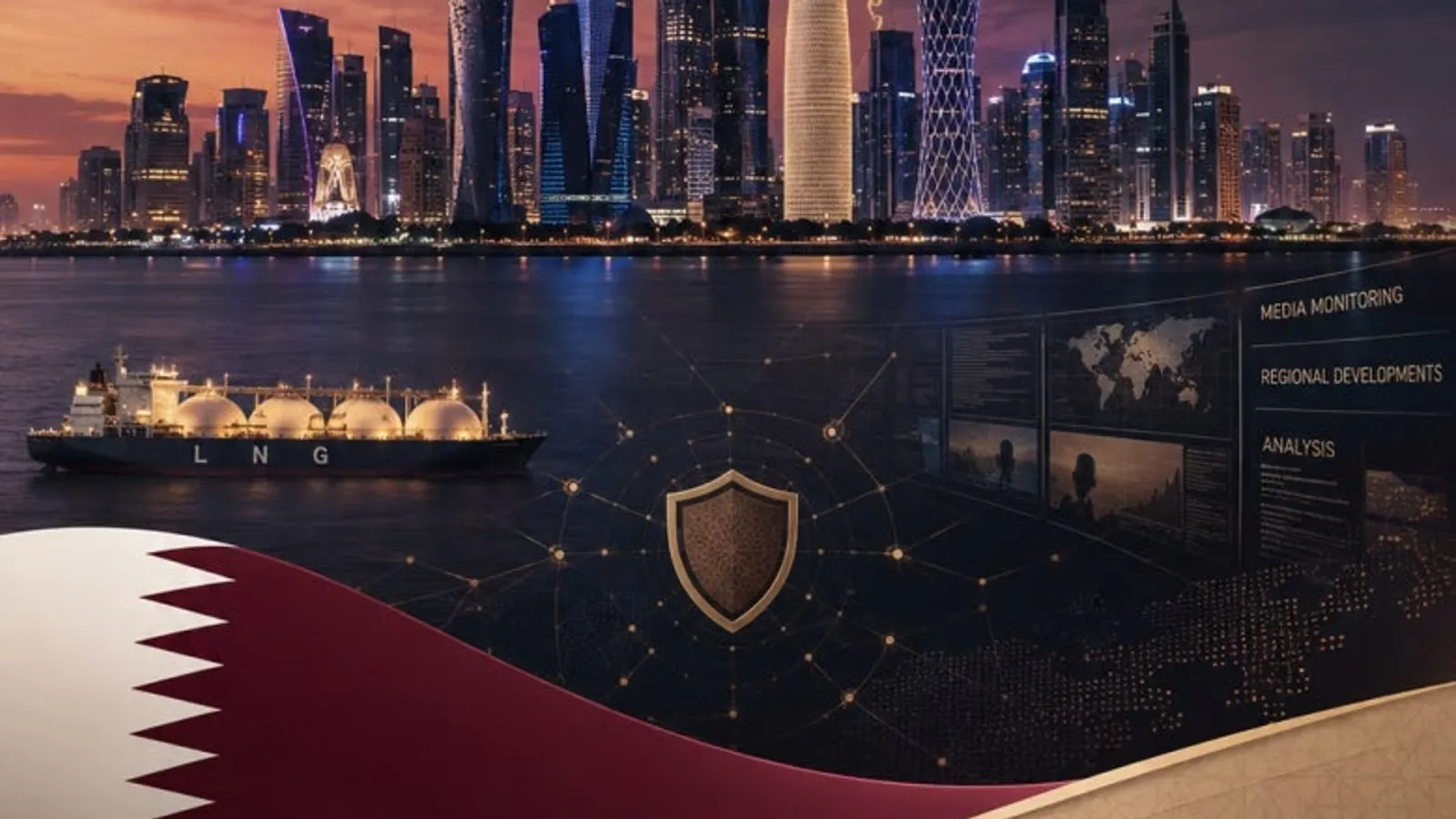
The GCC Communiqué Puts Qatar’s Name to a Harder Line
The 168th GCC Ministerial Council, meeting in Manama on October 18, described an attack on one member as a threat to all. Its communiqué demands an end to Houthi attacks on Saudi civilian, transport, and energy infrastructure, calls for enforcement of the arms embargo, and seeks limits on transfers of missile and drone capabilities. It insists on free navigation through Hormuz, Bab al-Mandeb, and the Red Sea, and it explicitly rejects prior authorization, imposed shipping routes, and transit charges. The ministers hold Iran fully responsible for attacks on member states and Jordan, whether direct or through proxies. They demand reparations under Security Council Resolution 2817 and call for the Houthis to be designated a terrorist group.
The text still backs mediation by “regional and friendly countries,” on condition that GCC states take part in any talks on Iran’s nuclear, missile, and drone programs and its proxies. Bahrain’s foreign minister spoke in favor of continued Omani and Qatari mediation. At the GCC-Russia strategic dialogue held in Manama the same day, Secretary-General Jasem Albudaiwi said the attacks on member states include the Houthi campaign against Saudi Arabia as well as direct Iranian strikes.
Our October 18 brief asked whether Qatar would endorse the harder Gulf line in writing. It has. Spokesman Majed Al Ansari’s interview of the same day set out the two tracks: Iran’s attacks changed the Gulf’s view of the threat, and Qatar’s mediation continues. Doha has not declared a break with Iran or closed its channels. The report assesses that the communiqué shows Gulf partners accept diplomacy as an added instrument of security for now. Tehran is the open question, because proposals carried by a mediator that has signed a demand for reparations may meet more suspicion there.
A Domestic Defense Industry
On the forum’s opening day, Sheikh Saoud said Qatar would soon announce a local defense-production center. He referred to cooperation with an unnamed regional partner as well as the United States, Britain, and France. The initiative appears tied to priorities in air defense, counter-drone systems, and cybersecurity. Partners, funding, and timelines have not been published. The eighth Global Security Forum runs October 19 to 21 under the theme “The Future of Alliances,” and the Milipol Qatar exhibition opens October 20 with more than 270 companies.
The report reads the plan as part of a wider portfolio. Qatar treats U.S. cooperation as one element alongside European and regional partners, and the forum gives Doha direct access to Western defense and intelligence communities while it keeps its identity as a venue for negotiations. No new statement by a U.S. official on Qatar surfaced in the reporting window.
Yemen, Egypt, and the Money Question
The Saudi-Yemeni front continues to worsen. Al-Araby Al-Jadeed reported on October 19 that the Houthis destroyed a bridge on the Hayjat al-Abd road, further cutting Taiz off from Lahj and the roads to the south. Yemeni government forces reported advances around Jabal Sabir. The Saudi-led coalition said a reconnaissance helicopter crashed because of a technical fault, while the Houthis claimed to have shot down an aircraft. The two accounts conflict, and neither has been confirmed.
Egypt’s defense council has pledged possible support for Saudi Arabia, but parliamentary approval is still pending. Parliament moved its final vote to an emergency session on October 19. An Egyptian source told the paper that Egyptian military experts are already in Jeddah training Saudi crews on the Amun air-defense system. This claim rests on a single anonymous source.
Turkey and Pakistan agreed on October 5 to deploy forces to Saudi Arabia under the Mecca pact, and Egypt is moving to join them. No source in the reporting window shows Qatari funding for any of these deployments (moderate confidence). Qatar’s support for Riyadh is political and diplomatic, expressed through the GCC text. The cost falls on mediation, because each step Doha takes into the Saudi-led front narrows its standing as a broker with the Houthis and with Tehran. Iran’s side of the day is covered in our October 19 Hormuz-axis update.
Qatari-Funded Media: Skeptical of Tehran, Negative on Trump
Qatar’s official line and the media it funds continue to move toward the Gulf camp and away from Tehran (moderate confidence). Al-Araby Al-Jadeed’s report on Iran leads with the first threats of the new defense minister, Mehrdad Akhlaghi Ketabchi, who warned of heavy damage to the United States and its allies if the campaign resumes. It sets beside them Mohsen Rezaei’s claim of a more destructive operational plan and Vice President JD Vance’s admission on CBS of military failures in the war. Editor-in-chief Ma’an al-Bayari, writing on the riots in France, mocked Iran’s foreign ministry for summoning the French ambassador to protest police abuses.
Trump’s endorsement of Prime Minister Benjamin Netanyahu led the paper’s front page. The box set Netanyahu’s admission that he is not confident of winning the October 27 election against Trump’s Truth Social post backing him in full. In that post, Trump warned that if Israel chose anyone else, the United States would have to finish the job against Iran alone. The paper ran the story as wire copy without comment, so the framing comes from the headline. The rest of the issue treats Trump negatively on immigration after the French riots, on Ukraine and the suspension of Russia sanctions, on Gaza, and on Israeli incursions in Syria. Republican critics such as Senator Thom Tillis appear as credible voices, and the paper does not question the U.S. military presence in the Gulf. The report judges with high confidence that the criticism targets the president and his policies, not U.S. institutions.
Al Jazeera’s coverage differs by language. An October 18 analysis on the Arabic site, based on an Al Jazeera Centre for Studies assessment, calls the conflict a U.S.-Israeli “war of choice” that Netanyahu persuaded Trump to launch. It describes Iran’s economic crisis as one of the worst in the Islamic Republic’s history and judges negotiation under blockade the most viable path. Al Jazeera English instead paired a MAGA dissident with a Republican strategist who defended the White House. In a guest essay, Mahjoob Zweiri of Qatar University argued that the substantive gap between Washington and Tehran has narrowed, but that sequencing and guarantees remain unresolved and require a credible third-party mechanism. That argument fits Doha’s preference for a mediation role. The report finds the difference between the Arabic and English outlets to be one of emphasis, with no sign of a single coordinated editorial instruction. Criticism of Washington in these outlets does not translate into sympathy for Tehran.
Soft Power: CNN in Doha and Al Jazeera at 30
Qatar will host two high-visibility platforms within ten days, one for hard security and one for soft power (high confidence). CNN’s October 19 announcement adds Prime Minister and Foreign Minister Sheikh Mohammed bin Abdulrahman Al Thani as distinguished guest at its October 29 Global Perspectives summit, alongside Sheikha Al Mayassa bint Hamad Al Thani, chair of Qatar Museums. Media City Qatar is the host partner. With Qatar’s head of government at the top of the bill, the event is a state platform as well as a commercial one. The program does not show that Qatar shapes CNN’s news output. The test on October 29 is how clearly CNN separates event content from its journalism.
Al Jazeera has launched a promotional campaign ahead of its thirtieth anniversary, signaling a visual refresh and new programming. QatarDebate, a Qatar Foundation center, signed an agreement with Boğaziçi University in Istanbul on October 18 covering debate training, academic exchange, and possible fellowships. The agreement extends the foundation’s educational network but does not by itself show influence over university teaching. On Section 117, no new filing or ruling has appeared since October 16. The Association of American Universities’ reply is due October 20, and the restraining order expires October 29 unless extended. Our Section 117 special report explains the order.
Lebanon, Syria, and Gaza
Qatar is widening its development and institutional track in the region (moderate to high confidence). After the prime minister’s October 16 visit to Beirut, an Al-Sharq editorial presented Qatari support for the Lebanese army, state institutions, electricity, education, and health as a lasting policy commitment. The security file now moves to the U.S.-hosted talks in Tampa on October 20. Lebanese officials told Al-Araby Al-Jadeed they see Washington as the decisive player, including on the future of UNIFIL, whose mandate ends on December 31. In Syria, Finance Minister Mohammad Yusr Barnieh told Al-Sharq that Qatar is a central partner in fiscal reform and reconstruction. Project values and timetables have not been published in either case.
In Gaza, no new Qatari statement on the ceasefire appeared in the reporting window. The pressure point is now the Board of Peace. Citing Israeli press reports, Al-Araby Al-Jadeed says High Representative Nickolay Mladenov asked Israel to admit the Palestinian technocratic committee and the International Stabilization Force immediately, starting with a pilot zone in Rafah, after Israel suspended private-sector goods deliveries. Gaza’s health ministry reports 1,517 people killed since the October 2025 ceasefire. In the West Bank, a Palestinian monitoring body counts about 400 settler attacks on olive pickers since the start of October.
The War Economy
The economic cost of the war is broadening for Qatar (high confidence). The Qatar Stock Exchange fell 2.0 percent on October 18 to close at 8,633.57, and the IMF’s October outlook projects a 15.6 percent contraction in Qatar’s real GDP in 2026. That figure is a forecast and does not measure final output. On October 18, CBS’s 60 Minutes described damage to Ras Laffan and the squeeze on helium, a gas critical to semiconductor manufacturing and medical equipment. CBS reported that spot helium prices have tripled since the war began and that a full return of Ras Laffan could take at least three years. The program said the extent of damage to helium capacity has not been established.
Brent traded near $107.57 a barrel early on October 19, down from $109.86 on October 16, as the prospect of more Russian fuel supply eased prices. Gulf tanker and LNG trade still faces high insurance costs and constrained access through Hormuz. Real estate sales rose 15.6 percent week over week to QR 696.5 million but were down 12.3 percent from a year earlier. Taken together, the indicators show that Qatar’s exposure extends beyond LNG revenue to shipping, insurance, inward investment, and its reputation as a reliable hub. Human Rights Watch’s 2026 chapter on Qatar, which describes continued wage abuses against migrant workers, remains a reputational risk while global attention is focused on Doha.
Key Points
- Qatar’s next security phase combines closer Gulf alignment with domestic defense capacity and continued multilateral diplomacy, and the channel to Tehran stays open (high confidence).
- Qatar’s official line and Qatari-funded media continue to move away from Tehran. The GCC text holds Iran fully responsible and demands reparations, while Al Jazeera’s criticism of the war does not become sympathy for Tehran (moderate confidence).
- Qatari-funded media treated Trump’s endorsement of Netanyahu as front-page news and kept a negative line on Trump across France, Ukraine, Syria, and Iran (high confidence).
- The Doha security forum and CNN’s coming summit give Qatar two high-visibility platforms in ten days, spanning hard security and soft power (high confidence).
- Lebanon and Syria show an expanding development and institutional track in Qatari policy, though project values and timetables are not yet public (moderate to high confidence).
- No evidence links Qatari money to Turkish, Pakistani, or Egyptian support for Saudi Arabia. Qatar’s backing for Riyadh is political, and each step narrows its room as a broker (moderate confidence).
- Al Jazeera’s Arabic and English outlets differ in emphasis. The Arabic analysis questions the war’s premise, while the English site pairs critics and defenders of the administration (moderate confidence).
- Weak markets, constrained gas and helium exports, and transport risk remain the central threats to Qatar’s near-term economic outlook (high confidence).
What to Watch
- The defense-industry announcement: the regional partner, ownership structure, technology priorities, and timetable.
- Tehran’s response to the GCC communiqué and to Qatar’s signature on it, and any change in how Iran refers to Qatari mediation.
- Whether the GCC’s harder maritime demands can be reconciled with negotiations involving Tehran.
- Egypt’s parliamentary vote and any sign of Gulf financing for Egyptian, Turkish, or Pakistani deployments.
- The October 20 Tampa talks and the future of UNIFIL, plus signed Qatari project commitments in Lebanon and Syria.
- The CNN summit on October 29: final participants, sponsorship, and the substance of its interviews.
- Ras Laffan and helium recovery, LNG shipping access, and a stabilizing stock market.
- Israel’s October 27 election and Qatari-funded commentary on the result.
- The AAU filing on October 20 and the October 29 expiry of the Section 117 restraining order.
This post summarizes the Qatar Watch daily intelligence brief for October 19, 2026, with information current to 11:30 UTC. The report draws on the Qatar News Agency, the GCC Secretariat, the Qatari foreign ministry, Al-Sharq, The Peninsula, the Qatar Tribune, the October 19 print edition of Al-Araby Al-Jadeed, Al Jazeera Arabic and English, Reuters, The National, CNN, CBS, the IMF, and Human Rights Watch. Yemeni battlefield claims are unverified, the report of Egyptian trainers in Jeddah rests on one anonymous source, and newspaper figures on freight and insurance are not official QatarEnergy terms. Signed opinion pieces are attributed commentary and do not set Qatari state policy. Earlier posts in the series are collected on the Qatar Watch hub.