A Hub for Gulf Security: Doha Courts Defense Partners as It Waits on a U.S.-Iran Breakthrough
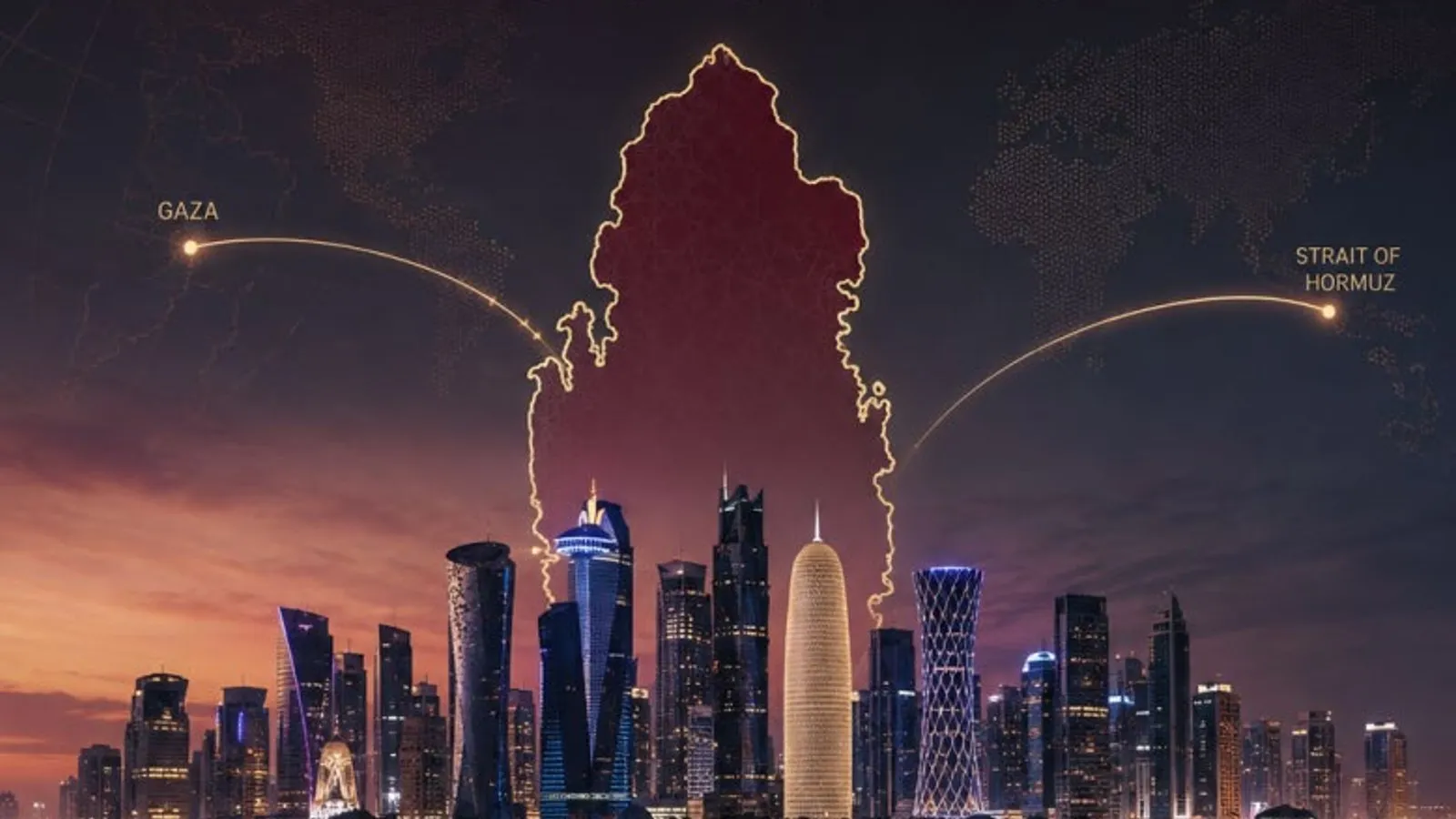
Qatar is opening its defense system to more foreign partners and positioning itself as the convening point for Gulf security. At the Global Security Forum in Doha on October 19, Sheikh Saoud bin Abdulrahman Al Thani, the deputy prime minister and minister of state for defense affairs, announced a forthcoming regional defense partnership and a domestic defense-industries center. He also called for a regional dialogue among the GCC states, Pakistan, and Turkey. On the same day, Qatar’s energy minister received Iran’s acting oil minister, and Al-Araby Al-Jadeed led its October 20 edition with sources who expect a U.S.-Iran breakthrough to be announced this week through Qatari and Pakistani mediation. Neither Washington nor Tehran has confirmed that report. The report judges that Doha’s dual role as a Gulf defense partner and a mediator holds only while Tehran accepts that mediation does not mean acquiescence to Iranian coercion.
Mediation Returns to the Front Page
Al-Araby Al-Jadeed gave the mediation story its strongest placement. The main banner of its October 20 front page reads, in translation, “Mediation advances between America and Iran.” Its correspondents in Doha and Tehran cite informed sources who expect an announcement this week, after Qatari and Pakistani contacts aimed at narrowing differences and securing reciprocal concessions. The same sources play down the risk of immediate military escalation but acknowledge concern about renewed conflict after the November 3 U.S. midterm elections. They name no negotiators, no draft text, and no binding date. The report treats the story as a strong media signal and nothing more until either government confirms it.
The paper set the story in a crowded diplomatic calendar. Pakistan’s army chief, Asim Munir, may visit Tehran, and Foreign Minister Abbas Araghchi met Sergei Lavrov on October 19. Lavrov proposed a Gulf security mechanism that would bring together Iran and the six Arab littoral states, with possible roles for Turkey, Pakistan, international organizations, and the permanent members of the Security Council. His call to reduce foreign bases sits uneasily with Qatar’s public commitment to Al Udeid.
Sheikh Saoud supplied the official Qatari framing. He said the mediation efforts of Qatar, Pakistan, and Oman complement one another but need coordination to deliver results, and he expressed hope for an agreement among the United States, Iran, and Israel. Winning the trust of all parties is the first condition of success, he said, and new attacks on a mediating state would undermine mediation in the future. In effect, Doha presents itself as one part of a three-mediator system and makes its own security a condition of staying in the role. Iran’s side of the day is covered in our October 20 Hormuz-axis update.
From Security Consumer to Regional Defense Hub
Sheikh Saoud’s forum speech went further than the version carried by the Qatar News Agency. According to Al-Araby’s Arabic account, Doha is working with regional partners and with the United States, Britain, and France to build capacity in munitions, air defense, counter-drone systems, and cybersecurity, and it is weighing local production or investment in some defense sectors. He described Al Udeid as a Qatari base that allies use for partnership, training, and joint exercises, and he said the recent crisis showed the value of the U.S. relationship. QNA’s English account describes the base as hosting U.S. forces and personnel from more than 20 countries. It also records his rejection of any new transit fees through Hormuz as inconsistent with international law.
The Arabic account is also more candid about the cost of keeping channels to Tehran open. The minister recalled Iranian missile strikes on Ras Laffan and an attack on a Qatari tanker that surprised Doha after understandings had been reached. He credited Qatari air defenses and allied cooperation with intercepting more than 90 percent of incoming attacks, a figure that is his own. He called Iran a neighbor and said relations rested on trust and partnership until June 2025, when Iran fired missiles at Qatar. A lasting peace between Iran and the Gulf, he argued, requires confidence building, a non-aggression agreement, and attention to each side’s security concerns.
Read together, the speech describes more foreign partners inside Qatar’s defense system, a domestic industrial base over time, and Doha as the venue where Gulf security is negotiated. The forum itself, opened by Prime Minister and Foreign Minister Sheikh Mohammed bin Abdulrahman Al Thani with delegations from more than 100 countries, gives that ambition a stage. French President Emmanuel Macron began a Gulf tour in Kuwait on October 19 that will also take him to Doha. France is one of the three Western partners the minister named. Our October 19 brief covered the first announcement of the defense-industry plan.
The Energy Channel to Tehran Stays Open
Minister of State for Energy Affairs Saad Sherida Al-Kaabi received Iran’s acting minister of petroleum, Hamid Bovard, in Doha on October 19. The Qatar Tribune put the meeting at the top of its business front page, and Iranian state media covered it as well. Bovard took charge of the ministry on October 3, after President Masoud Pezeshkian accepted Mohsen Paknejad’s resignation. The two countries share the North Field and South Pars reservoir, the world’s largest gas field. Neither side published details of the talks.
The meeting took place on the same day the defense minister recalled the Iranian strikes on Ras Laffan. Doha is therefore running the shared-field file with Tehran as a separate working channel alongside a defense build-up aimed largely at Iranian threats. The optics are sensitive in Washington. In June, Qatar’s International Media Office rejected a Washington Post report that Qatari energy-production decisions were coordinated with Iran.
Yemen and the Limits of Qatar’s Balancing
Yemen is the hardest test of Qatar’s position between the Saudi-led camp and its role as a mediator. Al-Araby’s lower front-page lead reported a Houthi strike on a training facility in Shabwa province that killed at least 53 people and wounded more than 200, mostly security recruits. Yemen’s government calls the site a training facility for domestic security personnel, while the Houthis claim they struck Saudi-led forces. These figures and claims remain attributed to their sources. Al-Watan’s lead cartoon showed a Yemeni dagger with “Breaking” written on a bloodied blade and a spattered dove of peace standing on it. The image blames no named party, which fits Doha’s caution about taking sides inside Yemen.
Egypt’s parliament has delayed until October 26 a vote on authorizing President Abdel Fattah el-Sisi to deploy forces in support of Saudi Arabia. In an Al Jazeera opinion essay, Egyptian MP Emad El-Din Hussein argued that any mission would be essentially defensive and would not be an invasion of Yemen. Turkey and Pakistan are already bound to Riyadh through a defense framework. Doha condemned Houthi attacks on Saudi civilian sites in mid-September, but no Qatari statement on the Shabwa strike had appeared by mid-morning on October 20.
The report finds no independently verified evidence of Qatari money funding Turkish, Pakistani, or Egyptian military operations, and it holds that such a claim needs a documented appropriation, contract, or financial trail before it enters the record. The structural problem remains. Each step Doha and Islamabad take toward the Saudi camp makes it harder for Tehran to see them as neutral. The minister’s proposed dialogue of the GCC, Pakistan, and Turkey suggests Doha wants to fold the Saudi defense camp into a wider format that includes Iran. That would ease the mediation problem, and it would also give Doha the convening role. Separately, the postponement of Saudi Arabia’s Future Investment Initiative to 2027 shows how far the war has disrupted Gulf investment and diversification plans.
A Levant Energy Route Outside the Gulf Choke Points
Lebanon and Syria are converging into a single Qatari energy-led track. Reuters obtained an October proposal, drafted with Qatari and Lebanese input, for two 825-megawatt combined-cycle plants at Deir Ammar and Zahrani, a 20-year QatarEnergy LNG supply agreement, and gas deliveries partly through the Arab Gas Pipeline across Syria. The wider design adds solar, wind, and battery capacity and seeks private financing without an upfront contribution from Lebanon’s budget. Guarantees and payments are still under negotiation, and neither government has finalized the plan. The proposal is also tied to the Lebanese-Israeli security track. Lebanese military sources told Al-Araby they oppose direct coordination with the Israeli army ahead of the October 20 military talks in Tampa and prefer an extended UNIFIL mission or another UN framework.
On October 20, QNA published the case made by Syrian economists for Syria as a regional energy corridor that bypasses Hormuz and Bab al-Mandab. Their arguments center on rehabilitating the Kirkuk-Baniyas pipeline, which Syrian and Iraqi state firms agreed in July to study with an international consortium, and on a proposed gas line from the Gulf through Saudi Arabia, Jordan, and Syria to Turkey. The same experts warned against confusing memoranda with funded projects. Syrian oil output remains below 80,000 barrels per day, and design capacity does not guarantee throughput. Reuters also notes that the Qatari conglomerate Power International Holding holds contracts for roughly 5,000 megawatts of generating capacity in Syria.
Taken together, Qatari capital and Qatari state media point toward a coordinated interest in a Levant energy route outside the Gulf choke points. The obstacles are security and financing. In Al-Watan, Syrian writer Ahmed Mazhar Saado argued that Israeli military pressure is now Syrians’ main concern and that the most Damascus can expect after the Israeli and U.S. elections is a temporary security understanding. For Doha, his column is a reminder that its Syrian energy bets depend on an Israeli-Syrian security arrangement that does not yet exist.
Doha-Linked Media Turn Sharply on Trump
Al-Araby’s October 20 issue carries no item that treats President Trump favorably. Its opinion pages criticize his endorsement of Prime Minister Benjamin Netanyahu ahead of Israel’s October 27 election. Columnist Mohammed Abu Rumman maps competing factions around the president, a reading that is his own. The economy page argues that Trump’s cost-of-living promises have not been met, the international page has him pressing Kyiv to accommodate Moscow, and the culture page runs a report on a French author’s study of the far right under the line “From Goebbels to Donald Trump.” Al Jazeera adds a critical essay on Steve Bannon and reports that Vice President JD Vance declined to follow Trump’s endorsement. That coverage shows a guarded vice president, but it does not show a formal split in the administration.
Official Qatari statements, by contrast, keep the U.S. defense partnership at the center of Doha’s security message. The report reads the gap as one of selection and tone across outlets, with no sign of a single editorial instruction. Al-Watan’s opinion page stays away from the U.S.-Iran mediation entirely and limits its commentary to Yemen, Syria, and the Israeli election, where Qatari policy and Arab public opinion point in the same direction. The more important question for the coming week is whether Washington treats Trump’s endorsement as a political preference or as a commitment to sustain an Israeli military option against Iran. That uncertainty cuts directly against Qatar’s interest in a negotiated U.S.-Iran pause.
Gaza, Markets, and Soft Power
Al-Araby’s cover paired the mediation headline with a photograph of a Gaza boy holding an empty vessel under the banner “Gaza: a ruling of food execution.” The paper reports that a World Food Programme funding shortfall has cut monthly assistance to roughly half a million Palestinians. For Qatar, the political test is whether its role in Gaza diplomacy can deliver workable relief and a second-phase political framework.
On markets, Reuters put Brent at $110.07 a barrel and front-month WTI at $104.03 at 06:28 GMT on October 20. Higher oil prices are not a net gain for Qatar, because LNG production, shipping availability, freight costs, and contract performance weigh at least as heavily on its fiscal position. The IRGC’s account of another tanker explosion near Hormuz, which it attributes to a vessel using an unauthorized route, is unconfirmed by any independent source. Qatar and Singapore agreed to work toward a strategic partnership and renewed a QatarEnergy memorandum on LNG and low-carbon technology, and their joint statement calls for free and secure passage through Hormuz.
On the U.S. front, the Section 117 restraining order still bars publication of some newly disclosed foreign donor identities. The Association of American Universities’ reply was due October 20, and the order expires October 29 unless extended. It establishes no wrongdoing by Qatar or any university. Our Section 117 special report explains the order. A statement by former U.S. ambassador Patrick Theros, circulated by a senior Qatari embassy official, disputes claims of Qatari-directed antisemitism at Georgetown. It is personal testimony from a figure with long business ties to Qatar and carries no investigative weight. CNN’s Global Perspectives series makes its Middle East debut in Doha on October 29, with the prime minister as a distinguished guest.
Key Points
- Qatar is widening foreign participation in its defense system and building toward a domestic defense-industrial base, with air defense, counter-drone systems, electronic warfare, and cybersecurity as the priorities (high confidence).
- A U.S.-Iran breakthrough this week rests on unnamed sources in a single Doha-linked outlet. Neither government has confirmed it, and no negotiators, text, or date have been identified (moderate confidence that the mediation track is active; the breakthrough itself is unconfirmed).
- Doha presents its mediation as one part of a coordinated Qatari, Pakistani, and Omani effort and makes its own security a condition of staying in the role (high confidence).
- Qatar is running its shared-gas-field channel with Tehran separately from its defense build-up against Iranian threats, and neither side has disclosed what was discussed (moderate confidence).
- Closer Pakistani and Gulf alignment with Riyadh makes it harder for Tehran to view Qatari and Pakistani mediation as neutral. No evidence shows Qatari funding for Turkish, Pakistani, or Egyptian deployments (moderate confidence).
- Qatari capital and state media are converging on a Levant energy route that avoids Hormuz and Bab al-Mandab, but the Lebanon power plan is still a proposal and the Syrian corridor projects are unfunded (moderate confidence).
- Doha-linked Arabic media are uniformly hostile to Trump, while official Qatari statements keep the U.S. defense partnership at the center. The difference reflects selection and tone across outlets, with no evidence of a single editorial order (moderate confidence).
What to Watch
- Confirmation or denial of the claimed U.S.-Iran breakthrough, and any word on Asim Munir’s possible visit to Tehran.
- The partners and scope of Qatar’s new regional defense partnership and defense-industries center.
- Any read-out of the Al-Kaabi-Bovard talks on the shared gas field.
- Any maritime incident near Hormuz with an independently identified vessel and location.
- Egypt’s October 26 parliamentary vote on deploying forces in support of Saudi Arabia, and any Qatari statement on the Shabwa strike.
- Binding progress on the Lebanon power plan and the outcome of the Tampa military talks.
- Israel’s October 27 election and how Washington handles its aftermath.
- The October 29 CNN event in Doha and the expiry or extension of the Section 117 restraining order.
- Any verifiable Commerce Department or Justice Department action on the hack-for-hire designation request.
- Macron’s stop in Doha and any defense announcement tied to it.
This post summarizes the Qatar Watch daily intelligence brief for October 20, 2026, with information current to 09:40 UTC. The report draws on the Qatar News Agency, Gulf Times, Al-Sharq, Al-Watan, the Qatar Tribune, The Peninsula, the October 20 print edition of Al-Araby Al-Jadeed, Al Jazeera Arabic, Reuters, Iranian state media, and court filings in the Section 117 litigation. The U.S.-Iran breakthrough claim rests on unnamed sources and is unconfirmed, the Shabwa casualty figures and the IRGC’s tanker account are attributed and unverified, and the 90 percent interception rate is the defense minister’s own figure. Signed opinion pieces are attributed commentary and do not set Qatari state policy. Earlier posts in the series are collected on the Qatar Watch hub.