Iranian Press Monitor - Saturday, 3 October 2026 (Day 214)
Saturday, 3 October 2026 · شنبه ۱۱ مهر ۱۴۰۵ · 21 Rabi’ al-Thani 1448 - Nine Persian front pages and one English front page of 11 Mehr 1405, read alongside six outlet channels and three agency wires; Kayhan is reconstructed from its own channel, and Tehran Times was available again this cycle.
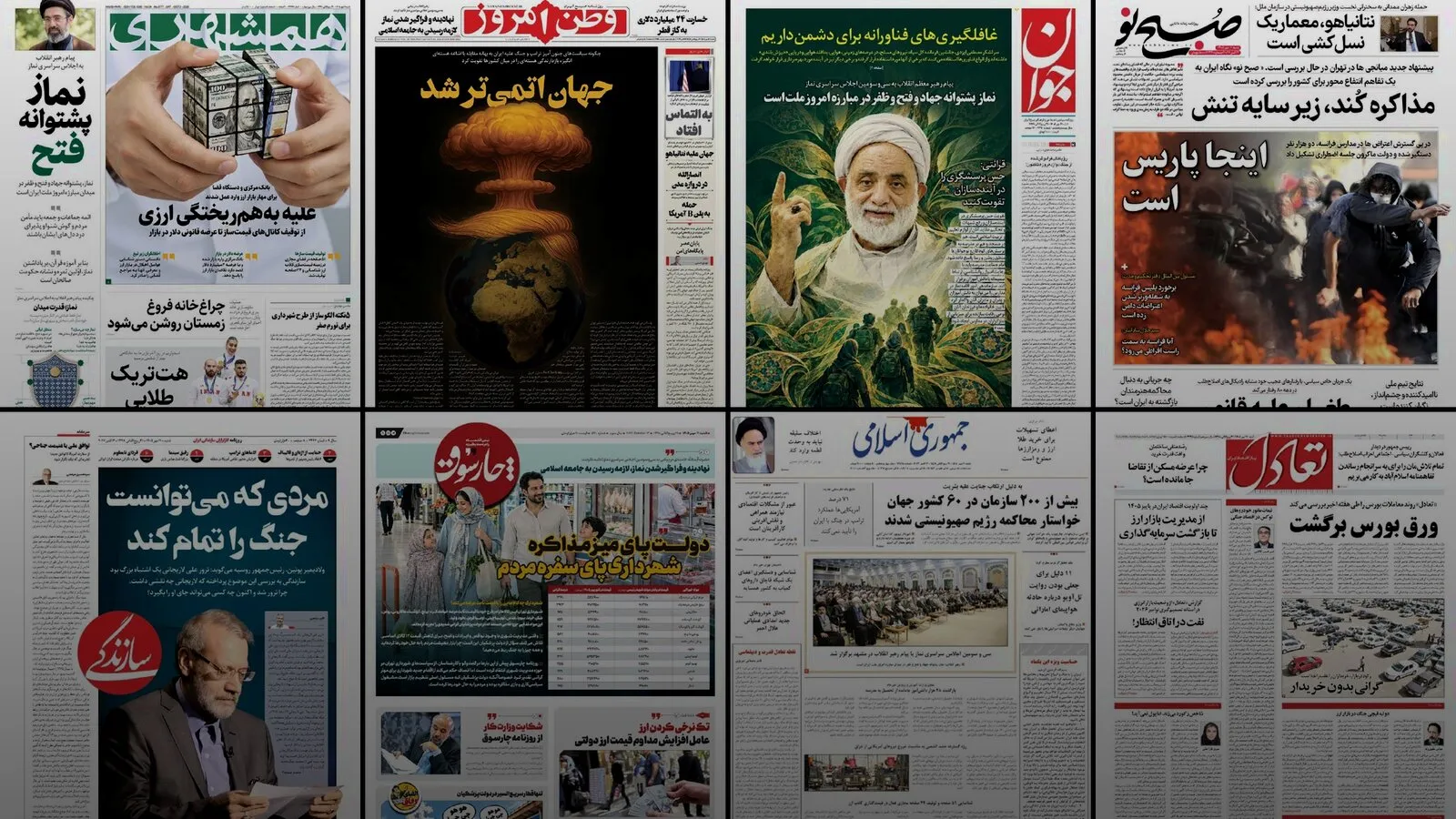
Bottom line: On the morning President Pezeshkian publicly recommitted to concluding the Islamabad memorandum, the Leader’s newspaper dropped the subject and the principlist Sobh-e No narrowed the remaining dispute from the order of obligations to the calendar for entering final talks, while the day’s only verified kinetic event in the Strait of Hormuz, a tanker struck off Oman, reached four outlet channels and not one front page.
Executive Summary
The lead judgment of this edition is that the domestic veto this file identified on 1 October did not hold for a second cycle. Twenty-four hours ago Kayhan, published under the Leader’s office, attacked the president by name over the Islamabad memorandum on the morning the American answer reached his desk. This morning the president answers in public, and Kayhan does not. Ta’adol carries the reply as a banner over its market lead: «رئیس جمهور در دیدار فعالان و کنشگران سیاسی - اجتماعی احزاب اصلاحطلب: تمام تلاشمان را برای به سرانجام رساندن تفاهمنامه اسلامآباد به کار میبریم», we will put all our effort into bringing the Islamabad memorandum to a conclusion. Etemad gives the same meeting its whole front page under «در جمع اصلاحطلبان». Kayhan’s cover, meanwhile, carries no memorandum, no American answer and no sequencing dispute: it leads on «تقلای ترامپ برای فرار از بحران و شکست همزمان با ناتوانی از بازگشایی تنگه هرمز», Trump’s floundering to escape crisis and defeat alongside his inability to reopen the Strait, and its signed editorial spends the day’s argument on hijab enforcement, addressed collectively to the heads of the three branches rather than to the president. The attack is not withdrawn and it is not repeated.
The second finding is that the dispute itself narrowed again, and that the narrowing was published by a principlist title rather than a reformist one. Sobh-e No’s cover analysis states that Qatari mediation has again referred the new American proposal to Iran, that the proposal is built on the foundation of «تفاهم اسلامآباد» but arrives this time with a road map for the final negotiations attached, and that «تفاوت بنیادین دو نگاه دو طرف به زمانبندی ورود به «مذاکرات نهایی» است», the fundamental difference between the two sides is the timing of entry into the final negotiations. On 30 September this file was tracking enforcement; on 1 October it narrowed that to the sequencing of obligations; today the same thread resolves to a calendar. The English-language estate supplies the Iranian ask in one voice: Iran Daily banners “Iran says seeks US concrete guarantees to end war” across the top of its page, and Tehran Times attributes the same line to the deputy foreign minister Saeed Khatibzadeh. The slot that carried Hormuz reassurance to the Gulf on 1 October is now carrying a demand to Washington.
The third finding is an absence with a precise shape. The day’s one verified kinetic event anywhere in the Iranian theatre is a crude oil tanker struck by an unknown projectile on its port side about four nautical miles east of the Omani coast on 2 October, reported by UK Maritime Trade Operations with all crew safe. It reached the Etemad Online, Jam-e Jam, Kayhan and Defa Press channels, the last of which filed it as «وقوع یک حادثه دریایی دیگر در سواحل عمان», another maritime incident off the coast of Oman. It reached no front page in this batch. Separately, Fars News claimed at 03:50 that seven tankers had been set ablaze in the Strait in five days, Kuwaiti and Emirati vessels among them; that claim, reproduced here only as a claim, also reached no front page. What the front pages carry instead is Kayhan’s assertion that the American president cannot reopen the waterway. The Strait is being worked on the covers as a political fact and kept off them as a theatre of operations, and the two treatments are in the same cycle.
The fourth finding is Russian. Putin spoke at the 23rd Valdai Discussion Club plenary in Moscow on 2 October and three Iranian outlets took him to their front pages, which is unusual reach for a foreign leader in this file. Javan carries «پوتین: جهان تابآوری ملت ایران را میستاید»; Tehran Times builds its lead on the same material; and Sazandegi devotes its entire cover to the half nobody else printed, Putin’s judgment that the assassination of Ali Larijani was a tremendous mistake, under the headline «مردی که میتوانست جنگ را تمام کند», the man who could have ended the war, and the closing question of who can now take his place. What no Iranian front page printed is the operative sentence: that Putin said there would be no cause to restrict passage through Hormuz or Bab el-Mandeb once sanctions are lifted, and that Russia supports that. An ally’s public conditional endorsement of reopening the Strait is the single most consequential third-party statement of the cycle and it is the one part of his remarks that did not reach print.
Fifth, the hardline covers argue from stock rather than from flow, which is what a press does when a week produces no battlefield. Javan leads on Major General Mostafa Izadi, deputy commander-in-chief of the IRGC, claiming «غافلگیریهای فناورانه برای دشمن داریم», technological surprises held for the enemy, some already used and others reserved for the future, with no operation attached. Vatan-e Emrooz leads on «جهان اتمیتر شد», the world became more nuclear, arguing that American conduct has made nuclear deterrence rational for states in general; the same paper’s channel carried, the same cycle, the report of an underground explosive test in Nevada, which is on the public record as a non-nuclear chemical experiment conducted to improve detection of low-yield blasts. Kayhan claims the closure as achieved. Three hardline covers, three claims of standing advantage, no reported engagement on any of them.
Sixth, the economy remains the denominator and the arithmetic is now on the page. Hamshahri prints the currency crackdown with its numbers: 152 online pages identified for false currency pricing and 24 seized, a central bank intervention of three billion dollars, and a prosecutor’s order to refer market disruptors to the courts. Charsoogh prints the other side of the same ledger as a cartoon, a bullet train built from a hundred-dollar bill racing past trackside markers at 230 and 250 thousand tomans toward a question mark, captioned «تنها قطار سریعالسیر در دولت پزشکیان», the only high-speed train in the Pezeshkian government. The same paper carries the labour ministry’s legal complaint against itself on its own cover, in the cycle the Kayhan channel records the labour minister’s impeachment file reaching the parliamentary presiding board.
Net assessment: this is a batch about terms, timing and prices, and it is the first in several cycles with no front at all on any front page. Taken together the covers describe a system that has moved from arguing whether to settle to arguing when, with the institutional opposition declining to re-engage on the same morning the executive pressed its case, and with the one waterway that could collapse the whole thing being managed as a claim rather than reported as an event. The risk this edition carries forward is not that the argument was lost by one side; it is that the actual activity in the Strait is now invisible to the readership whose consent the settlement will require.
Key Judgments
- KJ-1 [HIGH] The domestic veto on the Islamabad memorandum was not re-asserted in this cycle, and the executive used the opening to press its case in public. This is the edition’s highest-significance finding. The evidence is a pairing. On the executive side, Ta’adol banners the president telling reformist party activists «تمام تلاشمان را برای به سرانجام رساندن تفاهمنامه اسلامآباد به کار میبریم», and Etemad gives the meeting its whole cover with three named supporters arguing the case, Mohammad-Ali Abtahi calling the memorandum the best route to a dignified and realistic end to the war, Gholamreza Zarifian calling it one of the most remarkable documents in post-revolutionary Iranian diplomacy, and Ahmad Zeidabadi naming the asymmetry directly, that the figures who support it are many but silent while the opponents are few and loud. On the other side, Kayhan’s cover carries no memorandum, no American answer and no negotiation, and its signed editorial, verified as Hossein Shariatmadari’s, spends the argument on hijab enforcement addressed collectively to the heads of the three branches. The significance is that the obstacle this file rated as the principal constraint on 1 October is quieter today than it was, with no retraction and no repetition. Calibration runs both ways: reading a single quiet cycle as a retreat would overstate it, and reading a sustained front-page attack into a cover that does not mention the subject would be simply wrong.
- KJ-2 [HIGH] The gap between the two sides has narrowed from the sequencing of obligations to the timing of entry into final negotiations, and the narrowing was published by a principlist outlet. The evidence is Sobh-e No’s own front-page analysis, which states that Qatari mediation has again referred the new American proposal to Iran, that the proposal is built on the foundation of «تفاهم اسلامآباد» but arrives this time with a road map for the final talks attached, and that «تفاوت بنیادین دو نگاه دو طرف به زمانبندی ورود به «مذاکرات نهایی» است». This is corroborated in direction by the English-language estate, where Iran Daily’s banner and Tehran Times both carry the Iranian ask as concrete American guarantees to end the war, attributed to deputy foreign minister Saeed Khatibzadeh. The significance is twofold. The thread this file has tracked since 29 September has now resolved to its narrowest form, a date rather than a principle, which is the most tractable version of the dispute it has recorded. And the narrowing comes from the faction with the least incentive to make the gap look small, which raises confidence that it is a real convergence rather than an advocacy frame.
- KJ-3 [HIGH] Kinetic activity in the Strait of Hormuz is being kept off the Iranian front pages while the closure is maintained on them as a political fact, and the divergence is deliberate rather than accidental. The evidence is a clean split. Independently established: UK Maritime Trade Operations reported a crude oil tanker struck by an unknown projectile on its port side approximately four nautical miles east of the Omani coast on 2 October, with all crew safe and no pollution reported. Carried on four Iranian channels, including Defa Press at 01:37 as «وقوع یک حادثه دریایی دیگر در سواحل عمان», another maritime incident, which concedes a series. Separately, Fars News claimed at 03:50 that seven tankers had been set ablaze in the Strait in five days including Kuwaiti and Emirati vessels, a claim reproduced here as a claim and uncorroborated in this batch. On the front pages: none of it, in eleven covers. What the covers carry is Kayhan’s lead that Trump cannot reopen the waterway. The significance is that the Iranian reading public is being given the chokepoint as a settled achievement and not as an ongoing campaign with Gulf Arab shipping among its targets, which matters because a sequenced reopening will have to be sold to that same readership. Confidence is high on the divergence itself, which is documentary, and is not extended to any inference about who struck the tanker.
- KJ-4 [MODERATE-HIGH] Negative evidence, filed as the edition’s second most consequential finding: Russia publicly tied the reopening of the Strait of Hormuz to sanctions relief and endorsed it, and that sentence reached no Iranian front page while the rest of the same speech reached three. The evidence is the speech and the selection. At the 23rd Valdai Discussion Club plenary in Moscow on 2 October, Putin said the world is amazed at the courage and resilience of the Iranian nation, called the assassination of Ali Larijani a tremendous mistake and described him as a man ready to seek mutually acceptable compromises who would be needed now to bring peace to the Persian Gulf, and said there would be no cause for restricting passage through Hormuz or Bab el-Mandeb once sanctions are lifted, adding that Russia supports that. Javan printed the praise; Sazandegi built its entire cover on the Larijani verdict; Tehran Times built its lead on the resilience theme. The Hormuz sentence is absent from every cover in the batch. The significance is that the one third party with standing in Tehran has now stated a reopening formula in public, and the Iranian press is printing the parts of his remarks that flatter and withholding the part that commits. Confidence is held below high because a single cycle of absence can be a print-deadline artefact, and this file has now twice confirmed a one-cycle lag in this batch; the discriminating test is whether the Hormuz clause appears on a cover in the next edition.
- KJ-5 [MODERATE-HIGH] The three-lock total-tanker-denial doctrine this file rated SEVERE on 30 September should now be moved from active tracking toward retirement, because its sponsoring title has spent the intervening cycles arguing the opposite case. The evidence is specific to one outlet. Sobh-e No published «قفل مقرراتی», «قفل نظامی» and «قفل انرژی» on its 8 Mehr cover with a signed editorial whose stated objective was that in practice no tanker should pass. It published no front-page material on 1 October. Today its cover analyses a benefit-centred understanding for the country, names the remaining dispute as a calendar, and does not restate the formula. No other title in the batch has adopted the three locks in three cycles. The significance is that a published terminal objective for the waterway that does not propagate beyond one cover, and that the sponsoring cover then declines to repeat while arguing terms, is better explained as one outlet’s maximal bargaining position than as a coordinated doctrine. Calibration: a doctrine that is not restated is not thereby withdrawn, and the item stays on the tracker at reduced weight rather than being struck; the discriminating test is whether the formula returns if the timing dispute hardens.
- KJ-6 [MODERATE-HIGH] Hardline front-page content in this cycle consists entirely of claims of standing advantage, with no reported engagement on any Iranian cover, and this is the first batch in several in which no front page carries a front. The evidence is the set. Javan leads on the IRGC deputy commander-in-chief Mostafa Izadi claiming technological surprises held in reserve, with the deck conceding that some have been used and others are for the future, which is a capability claim unattached to an operation. Vatan-e Emrooz leads on a general proliferation argument rather than on an Iranian capability. Kayhan leads on what the American president cannot do. Across eleven covers there is no strike, no casualty figure, no front and no communiqué. The significance is that a wartime press with nothing kinetic to print falls back on inventory, and that this condition is itself an indicator: it is consistent with a quiet period in which the parties are negotiating, and it is also the condition in which a single incident would have outsized narrative effect. Confidence is moderate-high on the characterisation, which is a direct reading of eleven covers, and the inference about what the quiet means is held open.
- KJ-7 [MODERATE-HIGH] The Iranian conservative press has completed its conversion of a verified civil-aviation incident into a denial product, and the one-cycle lag this file identified on 1 October is now confirmed by a second case. The evidence is a movement in a single title. On 1 October Jomhouri Eslami was the only cover in the batch carrying the cockpit assault aboard the Dubai to Tel Aviv service straight, as new details, while Qods printed it as «پرچم دروغین» and Kayhan welcomed it as proof that hatred of Israel had made the sky unsafe for Zionists. Today the same paper prints «۱۱ دلیل برای جعلی بودن روایت تلآویو درباره حادثه هواپیمای اماراتی», eleven reasons the Israeli account is fabricated, attributed to an Arab analyst, and relabels the aircraft Emirati. The significance is that the conservative press did not have an unsettled line, as this file considered possible, but a propagation delay; and that the lag is now established twice, here and on the Iraq withdrawal, which gives this file a calibrated allowance of roughly one cycle before an absence can be read as a decision rather than a deadline. Confidence is moderate-high: the two cases are documentary, and generalising a two-case lag to all future absences would overreach.
- KJ-8 [MODERATE] Sazandegi has opened a succession argument at the Supreme National Security Council, framed as a retrospective and sourced to a foreign head of state, and no principlist title answered it. The evidence is the cover. «مردی که میتوانست جنگ را تمام کند» runs over a full-page photograph of Ali Larijani, with the deck placing Putin’s verdict on the record and then asking what role Larijani played, why he was assassinated, and who can now take his place. Larijani, SNSC secretary, was killed on 17 March 2026, which is independently confirmed. The paper’s own editorial the same morning asks «توافق ملی یا غنیمت جناحی؟», national accord or factional spoils. The significance is the construction rather than the content: a reformist party daily is arguing that the removal of a compromiser prolonged the war, which is simultaneously a case for the memorandum and a question about the competence of whoever now holds the file, and it is argued in a Russian president’s voice so that rebutting it means rebutting Moscow. Confidence is moderate because this is one cover’s framing and this file cannot establish from it that a succession contest is actually under way at the council.
- KJ-9 [MODERATE] Vatan-e Emrooz’s proliferation lead is constructed in part from a technical event that does not support it, and the conversion mechanism is the usable finding rather than the claim. The evidence is the pairing. The front page reads «جهان اتمیتر شد», the world became more nuclear, with the deck holding that Trump’s policies and the war against Iran, waged under the pretext of countering proliferation, strengthened the motive for nuclear deterrence among states. On the same cycle the paper’s own channel carried, at 18:05, the report that the United States conducted an underground explosive test in Nevada. The public record establishes that event as a subsurface non-nuclear chemical high-explosive experiment at the Nevada National Security Site, conducted to improve detection of low-yield nuclear explosions, with no nuclear device involved. A separate channel item the same window reports Japan stating that North Korea fired a ballistic missile. The significance is that a literally accurate wire item and an unrelated missile launch are being assembled into a thesis that the world is rearming because of American conduct, which is a documented instance of how this outlet builds a front page, and is applicable to future Iranian claims of Western nuclear activity. Confidence is moderate: the front page does not itself cite the Nevada item, and the assembly is this file’s inference from the pairing in one cycle.
- KJ-10 [MODERATE] The currency enforcement announced across four covers is being published at a scale the market is not pricing, and the gap is visible in the same batch. The evidence sits on two pages. Hamshahri supplies the state’s arithmetic: 152 online pages identified for false currency pricing with 24 seized, a three billion dollar central bank supply, and a prosecutor’s order referring disruptors to the courts, under «علیه بههمریختگی ارزی». Charsoogh supplies the market’s: a cartoon of a dollar bullet train passing markers at 230 and 250 thousand tomans toward a question mark, captioned «تنها قطار سریعالسیر در دولت پزشکیان», and a price table setting municipal declared prices against market prices. Ta’adol reports a car market where asking prices rise without transactions and asks why housing supply has fallen behind demand. The significance is that the enforcement measures are real, announced and modest relative to the move they are meant to arrest, which is the same reading this file filed on 1 October and which is now supported by published figures rather than inferred. Confidence is moderate: the cartoon’s numbers are an editorial depiction and are not a quoted market rate.
- KJ-11 [MODERATE] Negative evidence: Lebanon is effectively absent from the Persian front pages for a second consecutive cycle, and what reporting exists has moved into the English-language estate. The evidence is the distribution. Across nine Persian covers the northern front appears once, as Kayhan’s sub-item «شیخ نعیم قاسم: ما فرزندان خمینی و خامنهای هستیم», an allegiance formula the Hezbollah secretary-general has used before and which carries no operational content. The substantive item is in English: Tehran Times reports southern Lebanese residents saying Israel is razing their lives before their eyes during the ceasefire period. The Fars News channel carries casualty and humanitarian commentary and rings given by the Leader to the families of Lebanese martyrs, which is commemorative rather than operational. The significance is that a front this file rated a live flashpoint is being handled domestically as loyalty content and externally as humanitarian reporting, with no claims of engagement in either register, which is consistent with the quiet batch described above and inconsistent with an active northern campaign. Confidence is moderate and this is filed as a tracker: two cycles of thin coverage is not an establishable trend, and Khorasan, which led on the Israel front on 1 October, is not in today’s batch.
Macro Trends
- The attack on the president was not renewed, and the executive pressed its case in public. On 1 October Kayhan attacked Pezeshkian by name over the Islamabad memorandum and Seda-ye Iran supplied the argument that Iran need not negotiate. This morning the president answers reformist party figures that «تمام تلاشمان را برای به سرانجام رساندن تفاهمنامه اسلامآباد به کار میبریم», carried as a banner by the economic daily Ta’adol, and the meeting itself leads Etemad under «در جمع اصلاحطلبان». Kayhan’s cover does not mention the memorandum, the American answer or the negotiation at all; its editorial is on hijab enforcement and is addressed to the heads of the three branches collectively. This file does not read that as a concession: the attack stands unretracted. It reads it as a refusal to fight the same battle twice in public, which is a different and more durable posture, and it means the constraint on Iranian acceptance is quieter today than it was a cycle ago without being weaker.
- The dispute narrowed from sequencing to a calendar, and a principlist title published the narrowing. Sobh-e No’s front-page analysis states that Qatari mediation has again referred the new American proposal to Iran, that the proposal rests on «تفاهم اسلامآباد» but now carries a road map for the final negotiations, and that the fundamental gap between the two sides is «زمانبندی ورود به «مذاکرات نهایی»», the timing of entry into the final talks. Three cycles ago this file was tracking enforcement; two cycles ago, the sequencing of obligations; today, a date. Each narrowing has been published by a different part of the press, and today’s comes from the principlist side, which is the part of the spectrum with the least incentive to make the gap look small.
- The English-language estate is running a single message, and it is a demand. Iran Daily banners “Iran says seeks US concrete guarantees to end war” across the full width of its front page, and Tehran Times attributes the same formula to deputy foreign minister Saeed Khatibzadeh. On 1 October the equivalent slot carried the president promising that Iranian policy preserves the security and interests of regional states; two cycles before that it carried the parliament speaker’s threat that no regional infrastructure would be safe. The register has moved from threat to reassurance to demand in three editions, and the demand is addressed to Washington rather than to the Gulf capitals. Tehran Times pairs it with “Era of cost-free threats against Iran is over: IRGC”, so the English reader gets the ask and the deterrent in the same edition.
- The Strait is a claim on the front pages and an event only on the wires. UK Maritime Trade Operations reported a crude oil tanker struck by an unknown projectile on its port side roughly four nautical miles east of Oman on 2 October, crew safe, no pollution reported. Four outlet and agency channels carried it, Defa Press as «وقوع یک حادثه دریایی دیگر در سواحل عمان», another maritime incident off Oman, which is itself an admission of a series. Fars News claimed seven tankers set ablaze in the Strait in five days, Kuwaiti and Emirati vessels among them, reproduced here only as a claim. Not one of the eleven front pages in this batch carries either. What they carry is Kayhan’s lead that the American president cannot reopen the waterway. A front page that prints the closure as settled and omits the strikes that enforce it is not reporting a chokepoint; it is maintaining one.
- Putin reached three Iranian front pages, and the half of his remarks that mattered most reached none. At the 23rd Valdai plenary in Moscow on 2 October the Russian president said the world is amazed at the courage and resilience of the Iranian nation, called the assassination of Ali Larijani a tremendous mistake and described him as ready to seek mutually acceptable compromises, and said there would be no cause to restrict passage through Hormuz or Bab el-Mandeb once sanctions are lifted, adding that Russia supports that. Javan printed the praise. Sazandegi printed the Larijani verdict and built its whole cover on it. Tehran Times built its lead on the resilience theme. The Hormuz sentence, in which Iran’s most important remaining partner publicly ties the reopening of the Strait to sanctions relief and endorses it, is on no Iranian front page in this batch.
- Sazandegi turned a foreign leader’s words into a domestic succession argument. «مردی که میتوانست جنگ را تمام کند», the man who could have ended the war, fills the reformist party daily’s cover over a photograph of Ali Larijani, with the deck putting Putin’s verdict on the record and then asking three questions: what role Larijani played, why he was assassinated, and who can now take his place. Larijani, secretary of the Supreme National Security Council, was killed on 17 March 2026. The headline is a counterfactual about a dead official and its target is the living security establishment that holds the file today. Making the case for compromise in a Russian president’s voice rather than an Iranian one is a way of putting it beyond the reach of the usual rebuttal, and no principlist title answered it in this batch.
- The hardline covers argue from stock, not from flow. Javan leads on Mostafa Izadi, deputy commander-in-chief of the IRGC, claiming «غافلگیریهای فناورانه برای دشمن داریم», technological surprises for the enemy, with a long leap across the ground, air, air-defence and naval domains and technologies some of which «در آینده مورد بهرهبرداری قرار خواهد گرفت», will be exploited in future. Vatan-e Emrooz leads on «جهان اتمیتر شد», arguing that Trump’s policies and the war have strengthened the case for nuclear deterrence among states generally, a proliferation argument made in the inverse so the paper keeps the moral position while normalising the capability. Kayhan claims the closure as achieved. Three titles, three claims of standing advantage, no engagement reported on any of them.
- A verified aviation incident completed its conversion, and the holdout title flipped. On 1 October Jomhouri Eslami was the one cover in the batch that carried the cockpit assault on a Dubai to Tel Aviv flight straight, as new details, while Qods called it «پرچم دروغین», a false flag, and Kayhan welcomed it. Today Jomhouri Eslami prints «۱۱ دلیل برای جعلی بودن روایت تلآویو درباره حادثه هواپیمای اماراتی», an Arab analyst’s eleven reasons the Tel Aviv account of the Emirati aircraft incident is fabricated, and relabels the aircraft. The open question this file left on whether the conservative press had an unsettled line is answered: it had a one-cycle lag, not a disagreement. The same lag now has two independent confirmations, the Iraq withdrawal and this, and should be applied to future negative-evidence findings.
- The accountability campaign against Israel is the batch’s one multilateral item. Jomhouri Eslami leads on «بیش از ۲۰۰ سازمان در ۶۰ کشور جهان خواستار محاکمه رژیم صهیونیستی شدند», more than 200 organizations in 60 countries demanding the Zionist regime be tried for crimes against humanity, pressing to halt its armament and hold it accountable under international law. Vatan-e Emrooz runs the same material in its rail as «جهان علیه نتانیاهو». Sobh-e No banners Zohran Mamdani calling Netanyahu «معمار یک نسلکشی», the architect of a genocide, remarks he made in an American podcast interview on 1 October answering Netanyahu’s United Nations criticism of him. This is the one subject on which the Iranian covers and the international record overlap rather than diverge, and it is the one place the Iranian press is content to let foreign voices carry the argument.
- The currency crackdown now has arithmetic, and the street has a different number. Hamshahri prints the enforcement with its figures: 152 online pages identified for false currency pricing and 24 actually seized, a three billion dollar central bank intervention, and a prosecutor’s order referring market disruptors to the courts. Charsoogh answers with a price table setting municipal declared prices against market prices, and with a cartoon of a dollar-bill bullet train racing past markers at 230 and 250 thousand tomans toward a question mark. Ta’adol asks why housing supply has fallen behind demand and reports a car market where asking prices rise without transactions. Four covers, one conclusion: the instruments are being announced at a scale the market is not pricing.
- American war-weariness is being printed by the reformist and the clerical press alike. Etemad banners «۷۱ درصد امریکاییان ناراضیاند» from an interview with Gholamreza Karimi on Trump’s handling of the Iran file, under the line that American opinion on the eve of the midterm elections is severely weary of the war. Jomhouri Eslami carries the same 71 percent as a new poll finding on Trump’s conduct of the war. Vatan-e Emrooz’s rail converts the same material into «به التماس افتاد», he has been reduced to pleading, tying Trump’s exertions to fear of defeat in the midterms. The figure is doing different work in each venue: for the reformists it is evidence that the other side also wants out; for the hardliners it is evidence that the other side can be outlasted. These two readings are not independent of one another and are not treated as such here.
Front-Page Snapshot
- Sobh-e No - “Negotiation slowed, under the shadow of tension” (Principlist) - The dispute narrowed again, from the order of obligations to the timing of entry into final talks [MODERATE]
- Ta’adol - “The bourse turned the page” (Economic daily) - The president’s banner recommitment to concluding the Islamabad memorandum, carried over a market lead [LOW-MODERATE]
- Etemad - “Among the reformists” (Reformist) - The reformist case for the memorandum, with the silent-majority problem named in print [LOW-MODERATE]
- Iran Daily - “Iran says seeks US concrete guarantees to end war” (State English-language daily) - The guarantees demand given the full width of the English front page [MODERATE]
- Tehran Times - “How Iran surprised the world?” (English-language state daily) - Resilience claimed and guarantees demanded in one edition, with the Iraq withdrawal kept in the repertoire [MODERATE-HIGH]
- Kayhan - “Trump’s floundering to escape crisis and defeat, coinciding with his inability to reopen the Strait of Hormuz” (Hardline, published under the Leader’s office) - The closure held as achieved and the memorandum left off the page entirely [HIGH]
- Javan - “We have technological surprises in store for the enemy” (Hardline, IRGC-affiliated) - Withheld capability claimed by the IRGC deputy commander, with no operation attached [MODERATE-HIGH]
- Vatan-e Emrooz - “The world became more nuclear” (Hardline principlist) - The war argued as the cause of global nuclear rearmament, built partly from a non-nuclear test report [HIGH]
- Sazandegi - “The man who could have ended the war” (Reformist, Kargozaran party daily) - Putin’s verdict on the Larijani assassination turned into a succession question at the security council [LOW-MODERATE]
- Jomhouri Eslami - “More than 200 organizations in 60 countries have demanded the Zionist regime be put on trial” (Traditional clerical establishment) - International-law pressure on Israel, and the airliner incident recoded as fabrication [MODERATE]
- Hamshahri - “Against the currency disarray” (Tehran municipality, centrist) - The currency crackdown given its arithmetic: 152 pages identified, 24 seized, three billion dollars offered [LOW]
- Charsoogh - “The government at the negotiating table, the municipality at the people’s table” (Economic daily) - The exchange rate charted past 250 thousand tomans, with the labour ministry’s complaint against the paper on its own cover [LOW]
Full report
The complete edition - per-paper front-page analysis and full translation appendices - is available as a PDF: Download the full report.
Compiled from Iranian front pages and outlet channels via open-source monitoring. Translations are editorial; named-figure attributions are verified against the source pages where possible.