A Probe Points to Doha: Israel's Election-Funding Inquiry Tests Qatar as Tehran Weighs Its Draft
Qatar now faces scrutiny from Israel as well as from Washington. On October 28, the chair of Israel’s Central Elections Committee asked the Shin Bet to investigate suspected foreign funding and vote buying aimed at raising Arab turnout. His letter names no country, but Israeli broadcasters and Likud point to Qatar and Turkey, and police have arrested seven men in the Negev over cash envelopes found with Ra’am ballot slips. The report judges that the evidence now public makes Qatar the most likely state source, while stressing that no transfer, recipient, or charge has yet been published. At the same time, Doha’s seven-day draft for a U.S.-Iran settlement awaits Tehran’s answer, which is expected by the end of this week. Qatar is therefore defending its reputation in Israel and the United States in the same week it most needs credibility as a mediator.
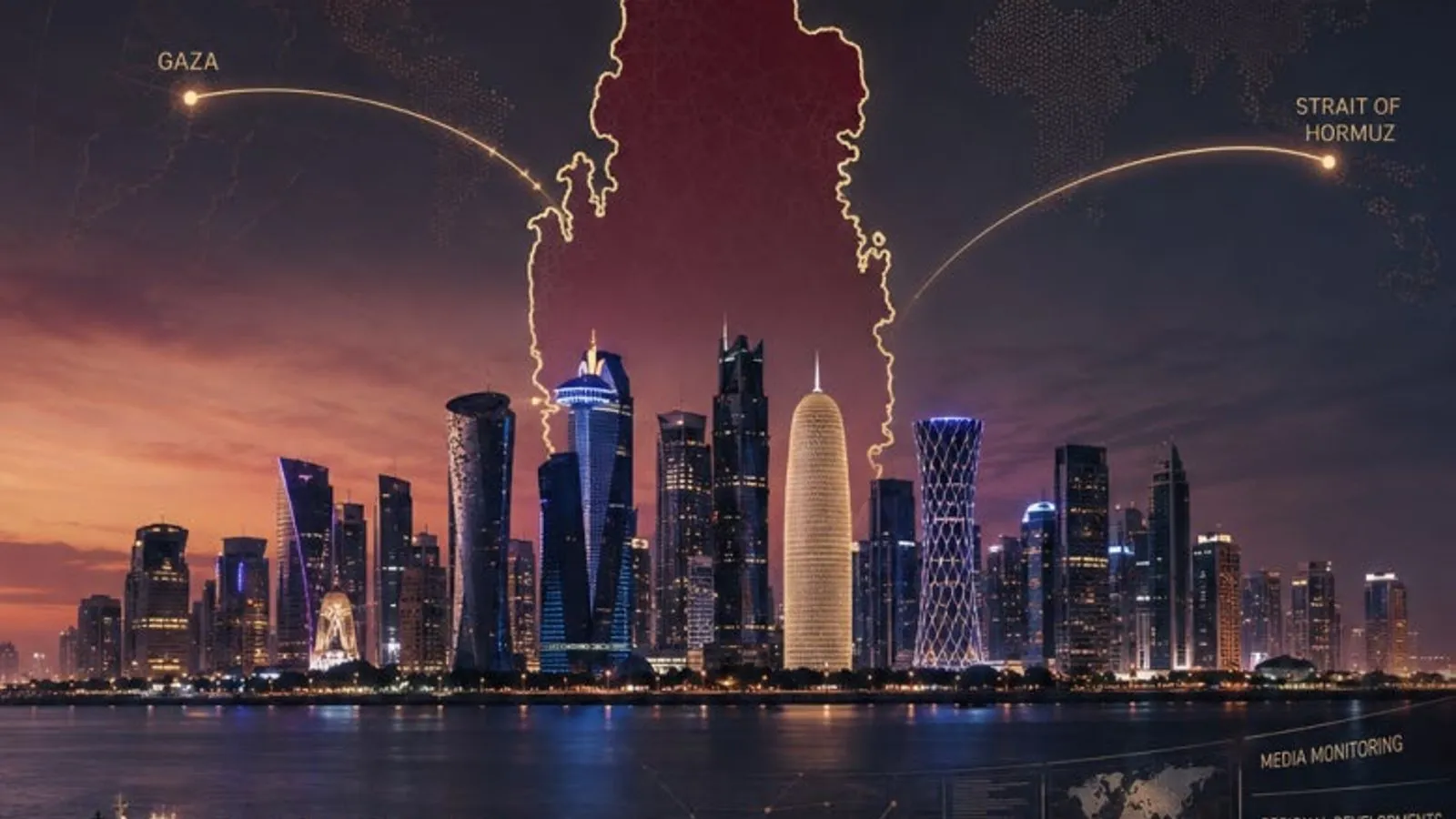
The Seven-Day Draft Meets Iran’s Red Lines
Reuters reported on October 28 that the draft Qatari mediators delivered in Tehran on October 25 sets out a seven-day calendar of reciprocal confidence-building steps. Several states would act as guarantors, the process could begin early next week, and an official briefed on the talks expected Iran’s answer by the end of this week. We covered the draft’s delivery in our October 28 brief. A senior Iranian official told Reuters the same day that Qatar had presented “unacceptable ideas and not an offer,” and that Iran’s nuclear position was unchanged. Foreign Minister Abbas Araghchi wrote that Iran is discussing with the mediators how to implement its own seven-day plan. That plan, conveyed through Qatar in September, would reopen Hormuz within seven days of a region-wide ceasefire in exchange for unfrozen assets, the lifting of oil sanctions, and an end to the U.S. naval blockade.
Other channels are running in parallel. Reuters reported on October 27 that Pakistan’s army chief, Field Marshal Asim Munir, brought Tehran a proposal with President Trump’s approval, and a Pakistani official named Pakistan, Turkey, Saudi Arabia, and Qatar as possible guarantors. Early on October 29, Trump said oil was again flowing through Hormuz and that Iran would never have a nuclear weapon. Asked about a reported letter from Vice President Vance to Supreme National Security Council secretary Mohsen Rezaei, he described it as being about getting supplies to people who are unwell. The report notes that this is the first public U.S. acknowledgment of direct written contact since the Qatari draft was delivered. Our Hormuz-axis daily for October 29 covers the U.S. and Iranian side in more detail.
The report judges with moderate to high confidence that the draft keeps the U.S.-Iran channel alive but has not narrowed the dispute over sequencing. Washington wants nuclear commitments first, and Tehran wants the blockade and sanctions lifted first. Both capitals gain from appearing reasonable while holding on to their leverage. As a result, the report treats any movement as procedural until a text appears with verification terms and named guarantors. An Iranian reply that restates the September conditions would point to continued contact with little real convergence.
Moscow: Gas Diplomacy and the War Economy
The Amir used the Gas Exporting Countries Forum summit in Moscow to meet President Putin, President Masoud Pezeshkian, and Rosneft chief executive Igor Sechin. QNA reported that the Amir and Pezeshkian discussed the negotiations, the Strait of Hormuz, and energy supplies. After meeting Putin, the Amir said Qatar and Russia want to expand their bilateral partnership. QatarEnergy’s Saad Sherida Al-Kaabi met Iran’s acting oil minister, Hamid Bovard, and urged forum members to protect energy infrastructure and shipping lanes in wartime. On October 28, the cabinet presented the trip as a contribution to global energy stability.
The report reads the order of the readouts as deliberate. The Iranian meeting put the negotiations first and energy second, while the Russian meeting led with partnership. In the report’s view, Doha is telling Tehran that the energy relationship runs through the talks and telling Moscow that its ties do not depend on them. The report judges with moderate confidence that Moscow gave Qatar simultaneous access to Russia and Iran without committing it to either side. None of the Moscow readouts records Russian or Iranian acceptance of the Qatari draft.
The war’s cost to the Gulf is now visible in the Qatari-owned press. Al-Araby Al-Jadeed’s economy pages describe Hormuz disruption forcing a contraction in Gulf petrochemicals, helium, and tourism, and a regional fiscal deficit widening toward 2.3 percent of GDP. Its Jerusalem desk reported the shekel at 3.08 to the dollar and Tel Aviv equities down 2.6 percent on the day after the vote. Brent traded near $114 a barrel on October 29, down about 1.1 percent, with WTI near $101. Pentagon data cited by Reuters put U.S. war spending above $47 billion. The report assesses with moderate confidence that energy-price relief is tentative and leaves Qatar’s structural exposure unchanged, since freight, insurance, and route risk remain the direct cost to its LNG trade.
Israel’s Election and the Arab Vote
Qatari-owned outlets treated the Arab vote as the story of the election. Al Jazeera Arabic reported overall turnout of 77.7 percent, the highest since 1999, and Arab turnout at about 80 percent, with the two Arab lists on a provisional 19 seats. Al-Araby Al-Jadeed ran the result on its front page and devoted a full feature from its Doha newsroom to the “historic achievement.” Al Jazeera English presented the Arab parties as potential kingmakers. None of these pieces described who organized or paid for the get-out-the-vote effort.
The arithmetic is harder than the celebration suggests. Gadi Eisenkot’s camp has said it will not form a government that rests on Arab parties, and Netanyahu’s camp rejects them as partners. A 19-seat result gives the Arab lists leverage only if the opposition changes its terms or the lists coordinate around clear demands. The report identifies the practical test as whether the lists can jointly influence the Knesset speakership or the mandate to form a government. The options in play include defections, a national-unity arrangement, or a long caretaker period followed by another election.
Cartoons in the Qatari press shared a skeptical view of Netanyahu’s prospects. Al-Watan drew a dove in a keffiyeh pierced by a blade in Israel’s colors. Gulf Times placed Netanyahu on an Escher staircase leading nowhere. Al-Araby’s Emad Hajjaj showed him hanging by one hand from a ballot slip above an open prison roof.
The Foreign-Funding Inquiry and the Doha Connection
The institutional facts are narrow. On October 28, Justice Noam Sohlberg wrote to Shin Bet director David Zini that serious suspicions of unlawful influence on the election had been brought before him. He said he could not attest to their nature and asked the agency to investigate within a week. The letter names no country, party, or intermediary, and the Shin Bet has not commented.
The attribution to Qatar comes from Israeli reporting and from Likud. Channel 12 reported that the suspected funding came from Qatar and Turkey. Kan reported that security officials had held solid intelligence for about two weeks before the vote. Israel Hayom reported that the suspicion concerns money from Muslim Brotherhood-affiliated sources moved through what appeared to be legitimate Qatari donations, and that the information came from the Shin Bet’s own collection, not from Likud. Ynet’s headline spoke of tens of millions, a figure its own text does not source. Erem News noted that no amounts, names, or transaction records have been published.
The physical evidence so far concerns cash in the Negev. Police arrested three men on election morning on suspicion of buying votes for Ra’am and reportedly found envelopes containing tens of thousands of shekels together with ballot slips. One suspect said the money was charitable aid on behalf of the Islamic Movement. Police arrested four more men on October 29. Ra’am calls the case politically motivated. Separately, police said they had no evidence for Likud’s wider claim that the election was stolen, and that integrity complaints fell by about 40 percent from the previous election.
Two further facts place the Doha connection at the level of political leadership. Ahmad Tibi, head of the Joint List, traveled to Doha on October 25, two days before the vote, and appeared on Al Jazeera’s flagship interview program. He urged Arab citizens to vote, set 70 percent Arab turnout as the threshold for unseating Netanyahu, and described a surplus-vote agreement with Ra’am. On the night of October 28, former Qatari prime minister Hamad bin Jassim Al Thani praised the Arab lists’ result on X and congratulated Tibi personally. Israeli ministers and lawmakers have demanded that Tibi explain the visit, and he had not responded publicly by the report’s cutoff. The report stresses that nothing published shows money reaching Tibi or the Joint List, and the arrests to date concern Ra’am.
The report then tests the case against Qatar’s documented conduct in the United States, where money and media work together. That record includes about $6.6 billion in reported gifts and contracts to U.S. universities, FARA-registered consultants, Al Jazeera and AJ+, and media partnerships now under challenge. In the report’s reading, the Israeli case has the same three components. These are foreign money said to move through apparently legitimate donations, an intermediary in Ra’am, which grew out of the Islamic Movement’s Brotherhood lineage, and a Qatari media system that framed the Arab turnout as the way to remove Netanyahu. Al Jazeera Arabic’s first report on the inquiry framed it as Israel’s search for a scapegoat, quoted only Israeli voices, and carried no Qatari comment.
The report assesses with moderate confidence that foreign Islamist money likely reached the Arab turnout effort and that Qatar is the most likely state source on the indications now public. It describes Turkey as a secondary candidate and notes that the two are not mutually exclusive. The report holds confidence at moderate because the decisive items (a named transfer, a named recipient, and a charge) have not been published. Its key supports are that the intelligence originated with the Shin Bet, that four Israeli reporting lines converge on Qatar, and that the pattern fits Doha’s documented practice. Official Qatar has said nothing. The Foreign Ministry and the prime minister had not referred to the inquiry by the report’s cutoff, which the report reads as a decision not to engage an investigation Doha cannot predict.
Washington: The Influence Argument and Section 117
The influence dispute in Washington has merged with the Israeli case. On October 28, KIND founder Daniel Lubetzky alleged that Semafor had discussed receiving millions of dollars from Qatari sources for journalism-training workshops. Semafor replied that it has never accepted government or sovereign-wealth equity and that its editorial decisions are independent. The report notes that the amounts rest on Lubetzky’s recollection and are not documented payments. Researcher Eitan Fischberger has now folded the Israeli inquiry into his account of Qatari influence, while Hamad Al-Muftah, deputy chief of mission at Qatar’s embassy, describes the critics as a special-interest campaign. The report judges with moderate confidence that these strands now form a single cross-border argument, although no new legal finding has emerged.
CNN’s Global Perspectives forum opened in Doha on October 29. Prime Minister Sheikh Mohammed bin Abdulrahman Al Thani told delegates that Qatar has always believed in dialogue, and his remarks avoided Iran, Gaza, and the influence dispute. Al Jazeera relaunches on November 1 with the new Al Jazeera Now channel and 33 new programs. The report observes that hosting a U.S. broadcaster does not give Doha editorial control, but it does build a recurring access relationship.
On university funding, Judge Tanya Chutkan’s temporary restraining order remains in force until November 13 while she considers a preliminary injunction. Qatar’s aggregate of about $6.6 billion is already public, so the order protects the identities of individual donors and contract counterparties. The report judges with high confidence that the delay benefits the universities with the largest Qatari contracts and the counterparties whose names would tie programs to specific state bodies. It also gives the Department of Education time to sustain its narrative without defending its data. Transparency advocates and congressional offices lose a disclosure moment before the November 3 midterms. Our Section 117 special report sets out what is at stake.
Regional Files and Reputation
The Houthi front continues to complicate Doha’s balancing. Al-Araby reported that the Houthis struck Aden airport for the sixth time in days and that Saudi forces intercepted a missile aimed at Taif. Saudi, Turkish, and Pakistani officials met Iranian leaders in Tehran on October 26. The Badr memorandum that Qatar, Turkey, Pakistan, and Indonesia signed in Doha on October 21 covers defense-industry cooperation, but the report finds no evidence that Qatar is financing Saudi operations against the Houthis. In Gaza, the question for Doha is whether Israel’s coalition uncertainty slows the second phase of the ceasefire. In Lebanon and Syria, the report flags the risk that an Iranian settlement leaves other fronts unresolved.
Human rights remain a structural vulnerability. Human Rights Watch and Amnesty International continue to document wage abuse of migrant workers and limits on expression, although the report found no new incident in the window. In the report’s view, adverse coverage of migrant rights, donor influence, and now electoral financing can impose costs once it attaches to legal decisions, sanctions, or contract restrictions.
Key Points
- The Qatari seven-day draft keeps the U.S.-Iran channel alive but has not narrowed the dispute over sequencing (moderate to high confidence).
- The Moscow summit gave Doha simultaneous access to Russia and Iran without committing it to either (moderate confidence).
- Foreign Islamist money likely reached the Arab turnout effort in Israel, and Qatar is the most likely state source on the evidence now public. No transfer, recipient, or charge has been published (moderate confidence).
- Qatari-owned media treated the Arab turnout as a campaign objective and did not report who organized or funded the mobilization (moderate confidence).
- The Section 117 delay benefits the institutions and counterparties for which itemized disclosure, more than the aggregate totals, is the risk (high confidence).
- The U.S. influence dispute has become a single cross-border argument that links universities, media, and the Israeli inquiry (moderate confidence).
- Energy-price relief is tentative and leaves Qatar’s structural exposure to Hormuz unchanged (moderate confidence).
What to Watch
- Iran’s answer to the seven-day calendar, the identity and powers of the guarantor states, and any follow-up to the Vance letter to Rezaei.
- The Shin Bet’s findings within the week Sohlberg requested, and whether any investigator names a state, channel, amount, recipient, or charge.
- The outcome of the seven Negev arrests, whether Tibi is questioned about his Doha visit, and any Qatari or Turkish official response.
- Whether Al-Araby and Al Jazeera report Tibi’s visit or Hamad bin Jassim’s post, and whether their coverage shifts to a defense of Ra’am.
- Israel’s certified results, recommendations to President Herzog, and any opposition move to secure Arab support.
- U.S. posture after the November 3 midterms, including deployments and the protection of Gulf infrastructure.
- The preliminary-injunction ruling on Section 117 by November 13 and congressional reaction.
- Al Jazeera’s November 1 relaunch and session remarks by Qatari officials at CNN’s Doha forum.
This post summarizes the Qatar Watch daily intelligence monitoring report for October 29, 2026, with information as of 11:00 UTC. The report draws on QNA, Reuters, Gulf News, Il Sole 24 Ore, the October 29 print edition of Al-Araby Al-Jadeed, Al-Raya, Al-Watan, Gulf Times, The Peninsula, Al Jazeera Arabic and English, Israeli outlets including Haaretz, Ynet, Israel Hayom, the Jerusalem Post, the Times of Israel, Srugim, and i24NEWS, Jewish Insider, TheWrap, court records, and posts on X. The attribution of the Israeli inquiry to Qatar rests on Israeli press reporting and Likud statements; the official letter names no country, and no transfer, amount, or recipient has been published. The report’s key-points table rates the foreign-funding judgment high, while its own assessment of that chapter holds it at moderate; this post uses the more cautious level. Signed opinion pieces are attributed commentary and do not set Qatari state policy. Other confidence levels in the Key Points are the report’s own.