A Supply Base Beyond Hormuz: Qatar Buys American LNG and Recasts Itself as a Gulf Security Platform
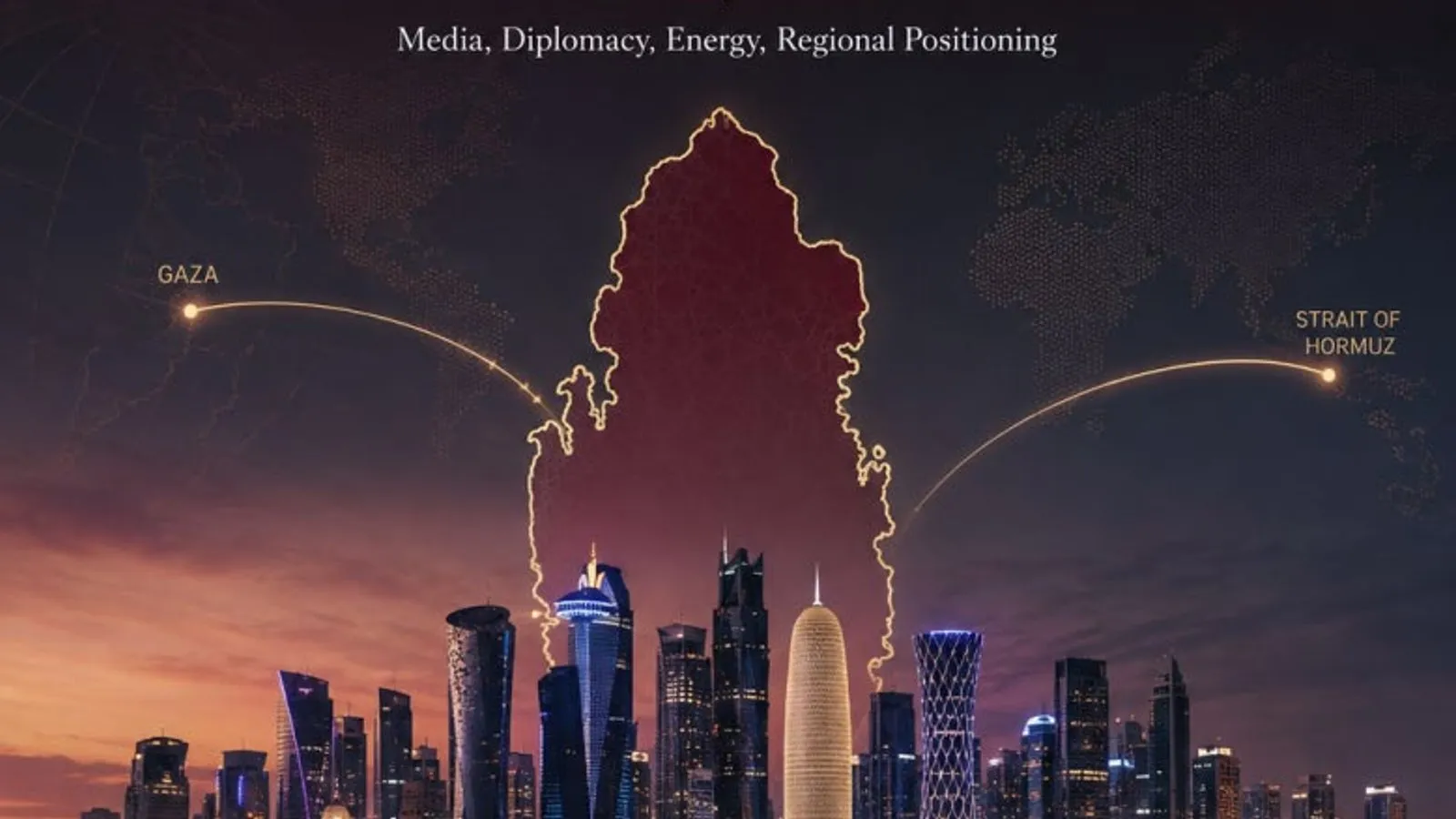
Qatar is building an energy supply base outside the Gulf and a security role inside it. On October 22, QatarEnergy signed its first long-term purchase of American LNG, up to 4 million tons a year from Cheniere for 2031 to 2054, and Reuters reports talks with Venture Global for at least 3 million tons more. In the same week, Doha’s defense minister described mediation and defense as complementary, announced a coming defense-industries center, and proposed a Gulf-Iran dialogue anchored in a non-aggression agreement. Qatar has also declared Saudi security part of its own while keeping its channel to Tehran open. The report judges that this dual posture holds for now, but a heavier defense profile and open alignment with Riyadh could lead Tehran to see Doha as less neutral. Qatar-linked media remain uniformly hostile to President Trump, while the official line praises U.S. institutions. In Washington, a new Senate bill would put Al Jazeera’s U.S. operations back under scrutiny as a foreign agent.
QatarEnergy Turns to American Supply
QatarEnergy signed two long-term sale and purchase agreements with Cheniere Energy on October 22. They cover up to 4 million tons a year of U.S. LNG, with 2 million tons from Sabine Pass in Louisiana and 2 million from Corpus Christi in Texas. Deliveries run from 2031 to 2054 on a free-on-board basis, at a price linked to Henry Hub plus a fixed fee. Cheniere says 1 million tons of the Sabine Pass volume depends on a final investment decision on its expansion project. Minister of State for Energy Affairs Saad Sherida Al-Kaabi said the purchase will “expand and diversify our global LNG portfolio.”
The state-aligned press presented the deal as expansion. Al-Watan ran it across the front of its economic supplement under the headline “Two Agreements to Buy American Gas,” and Qatar Tribune led its business section with the same story. Neither paper connected the purchase to the wartime pressure on Qatari exports, which is its commercial logic.
The report reads the agreements as a strategic shift. A company built around its own export trains at Ras Laffan is now contracting supply in the United States, beyond the reach of Gulf ports and the Strait of Hormuz. Free-on-board terms let QatarEnergy route U.S. cargoes to its own customers or trade them. Reuters reports that QatarEnergy is also discussing a long-term purchase of at least 3 million tons a year from Venture Global, although nothing has been signed. Both deals widen Qatar’s footprint on the U.S. Gulf Coast and give American producers a stake in a stable relationship with Doha. However, volumes that begin in 2031 do nothing for the 2026 disruption, so spot purchases and short-term trading remain the near-term test.
The wider war economy continued to weaken. The IMF’s regional outlook, released on October 22, projects a 1.3 percent contraction for the Middle East, North Africa, and Pakistan in 2026 and a 6.6 percent recovery in 2027. The Fund’s October forecasts place Qatar among the Gulf economies that will shrink this year, with growth above 17 percent in 2027 if Hormuz gradually reopens. Saudi Aramco told staff to leave its Dhahran headquarters and work remotely, the first such order of the war. Doha’s markets kept their access to outside capital. QNB raised QAR 750 million (about $206 million) in its largest riyal-denominated Shogun bond, sold to Japanese investors. The Qatar Exchange index closed Thursday down 32 points at 8,611. Brent traded at about $114 a barrel on Friday morning and WTI near $100.5, after Thursday’s jump of almost 4 percent to the highest level since May.
A Broader Security Concept
Qatar used a dense week of security events to set out a wider idea of national security. At the Global Security Forum, held October 19 to 21, Deputy Prime Minister and Minister of State for Defense Affairs Sheikh Saoud bin Abdulrahman Al Thani said Qatar had reviewed its defense strategy. He named three priorities: air defense; counter-drone, electronic-warfare, and cyber capabilities; and national capacity in these fields built with regional and international partners. He said Qatar will soon announce a defense-industries center and a new partnership with regional bodies, and he described mediation and defense as complementary paths.
He also gave the concept a diplomatic frame. Lasting peace between the Gulf states and Iran, he said, requires a regional dialogue that includes Pakistan and Turkey, is coordinated with international allies, and rests on trust and a non-aggression agreement. He rejected any transit fees in Hormuz. Closing sessions of the forum dealt with cheap drones as a threat to costly air defenses, joint mine clearance in Hormuz and Bab al-Mandab, and data sharing on cyber threats.
Milipol Qatar ran from October 20 to 22 and closed with 96 deals worth about QAR 820 million. Qatar’s interior ministry signed a security cooperation action plan with its French counterpart for 2027 to 2030, which extends the security track opened during President Macron’s visit and covered in our October 22 brief. Prime Minister and Foreign Minister Sheikh Mohammed bin Abdulrahman Al Thani toured the exhibition and launched the sixth edition of the national “Watan” exercise there.
The industrial track runs through the Badr defense-industry memorandum signed by Turkey, Qatar, Pakistan, and Indonesia. Al-Araby Al-Jadeed linked it to a ministerial meeting Turkey is hosting in Istanbul with Egypt, Pakistan, Saudi Arabia, Germany, Britain, and France. Qatar is a party to Badr but is not listed among the Istanbul participants.
The Gulf dimension is now explicit. After the Houthi strike on King Fahd International Airport in Dammam, Qatar’s foreign ministry said Saudi security is an integral part of Qatar’s own security and of the GCC’s collective system. Washington offered its own assurance. The State Department readout of Secretary Rubio’s October 22 call with the prime minister says Rubio stressed the U.S. commitment to Qatar’s security and to freedom of navigation through Hormuz.
The report judges that Doha is building a security identity of its own. Its partnerships run in several directions at once: France for internal security, Turkey and Pakistan for defense industry, Saudi Arabia for Gulf solidarity, and the United States as security guarantor. The risk is that this profile, together with open alignment with Riyadh, will make Tehran see Qatar as less neutral. That would shrink the space for mediation, which remains Doha’s main diplomatic asset.
Iran, Hormuz, and the Limits of Mediation
Tehran raised the stakes during the reporting window. The IRGC Navy warned that encouraging ships to use what it called the illegal, mined route through Hormuz would extend the confrontation to U.S. bases in the region. It claimed that four tankers moving oil in the northern Gulf were struck and that three more ships hit mines west of the strait. These are Iranian claims that have not been verified. Al-Araby Al-Jadeed also relayed an interview in which Mohsen Rezaei said undersea cables, data centers, and AI facilities could become targets, and that Iran has passed seven new conditions to Washington through mediators. Our Hormuz-axis update covers these threats from Tehran’s side.
For Qatar, the threat to cables and data centers is direct. Doha’s telecommunications, cloud services, aviation, and LNG shipping all depend on regional infrastructure that an Iranian campaign would put at risk.
Doha’s public position has not changed. In the Rubio call, the prime minister backed diplomatic efforts toward a solution that guarantees freedom of navigation and leads to a comprehensive peace agreement. Al-Watan’s editorial said Qatar continues to support mediation between the United States and Iran, and Al-Arab’s editorial recalled Qatar’s work with Pakistan to consolidate the truce. There is no sign that these exchanges have produced a new formula. In Al Jazeera English, Russian analyst Dmitri Trenin argued that Moscow could broker a new U.S.-Iran deal, a reminder that Doha’s channel faces competition. Separately, a study from the Al Jazeera Centre for Studies found Iraq’s pro-Iranian factions divided over state control of their weapons and warned that forced disarmament could split Iraq’s Shia political camp.
Houthi attacks on Saudi Arabia widened. The group claimed four operations, including against the defense ministry in Riyadh, Aramco facilities in Yanbu, and the airports at Abha and Dammam. Saudi authorities reported drones downed over Riyadh and Medina. In a column, Al-Araby Al-Jadeed’s editor-in-chief questioned President Sisi’s offer to send Egyptian forces to defend Saudi Arabia, noting that Riyadh has not publicly asked for them. The report finds no substantiated evidence of Qatari funding for Turkish or Pakistani operations against the Houthis.
Lebanon and Syria: Deeper Qatari Engagement
Lebanon’s electricity sector is becoming Qatar’s main economic lever in Beirut. Al-Araby Al-Jadeed examined the Qatari plan in detail. It includes two 825-megawatt gas plants at Deir Ammar and Zahrani, a 20-year LNG supply deal, 800 megawatts of solar power, 440 megawatts of wind, and battery storage. Lebanese government sources told the paper that the plan places no cost on the Lebanese treasury and will go to the cabinet for discussion. The paper described it as a build-operate-transfer concession. Delivery is uncertain, however. Energy Minister Joe Saddi has called the plan the culmination of months of work, yet he has boycotted cabinet sessions for more than two weeks. An energy-policy expert told the paper that the projects are not new and that the real question is whether conditions now allow them to be carried out.
On security, Lebanese-Israeli military talks at U.S. Central Command in Tampa ended without a breakthrough. The Qatar-France joint statement backed the trilateral Lebanon-Israel-U.S. framework as a step toward restoring Lebanese sovereignty, disarming Hezbollah, and securing a full Israeli withdrawal.
Syria received closer attention than in recent days. The same joint statement said Qatar and France are ready to work together on recovery projects in Syria in coordination with the Syrian government. Al-Araby Al-Jadeed reported analyses that Israel is arming the Druze “National Guard” militia in Sweida to keep the province unstable, citing Charles Lister of the Middle East Institute. Columnists in Qatar-linked outlets also examined transitional justice and the status of Palestinian refugees in post-Assad Syria.
Israel’s Election Through the Lens of Trump
Four days before Israel’s October 27 election, the Qatar-linked press reads the vote almost entirely through Trump’s endorsement of Benjamin Netanyahu. In Al Jazeera, Jordanian analyst Oraib Al-Rantawi called that endorsement a slap at the Israeli majority and tied it to a joint U.S.-Israeli agenda on Iran for Trump’s last two years in office. In Al-Araby Al-Jadeed, a columnist used recent Channel 12 and Kan polls to argue that the opposition cannot form a government without the Arab parties, whatever it says in the campaign. An essay in Al-Watan concluded that a Netanyahu win would be read as a mandate for further escalation, while an opposition win would not by itself change Israeli policy toward the Palestinians.
Two Al-Araby Al-Jadeed columns tied the vote directly to war with Iran. Hossam Kanafani asked whether Trump will wait until after the November 3 U.S. midterms or whether Netanyahu will strike Iran first. Osama Abu Irshaid wrote that both elections will decide whether the region moves toward a new war, and noted the unannounced visit to Israel by Defense Secretary Pete Hegseth.
Trump in Qatar-Linked Media, and the Official Counterpoint
Coverage of Trump remained consistently negative. Al-Araby Al-Jadeed led its front page with his open-ended threat to strike Iran and cited a New York Times report that U.S. and Israeli planners have drawn up strike plans for after the midterms. Its columnists portrayed Trump as unable to end the war he began and indifferent to Arab sovereignty. In Al Jazeera, guest writers described him as a president who treats allies as subordinates and shifts the costs of his decisions onto them. The paper also reported that AIPAC is moving away from direct spending through its political action committee, a shift it attributed to growing American aversion to Israel after the Gaza war. The report found no item in the Qatar-linked outlets reviewed that portrayed Trump favorably.
The official and state-aligned line runs the other way and separates Trump from American institutions. Al-Watan’s lead editorial welcomed the Foreign Policy Association’s decision to award the Amir its medal for his role in mediation, and Al-Arab’s editorial called it American appreciation for Qatar’s mediation. The State Department readout of the Rubio call praised Qatar’s mediation efforts. The report judges that this division lets Doha keep its government-to-government channel clean while affiliated media voice Arab public anger at Washington, a pattern likely to sharpen as the midterms approach.
A Senate Bill Targets State-Funded Media
On October 15, Senator Rick Scott (R-FL) introduced S. 5682, the Foreign Government-Owned Media FARA Registration Act, which was referred to the Senate Foreign Relations Committee. The bill would bring any news service operating in the United States that a foreign government owns, controls, or finances, in whole or in part, under the Foreign Agents Registration Act. An outlet could avoid registration only by passing two tests. Its home country’s law must allow it to take positions adverse to the government that funds it, and it must show the Attorney General that it is editorially independent. The bill would also require an annual Justice Department report to Congress listing every foreign state-funded outlet in the United States, whether each is registered, and why any unregistered outlet is not.
The text names no country, but Al Jazeera Media Network is the most prominent outlet it would reach. The report judges that the first test would be hard for any Qatar-funded outlet to meet, since Qatari law penalizes criticism of the Amir. The second test shifts the burden of proof onto the outlet. The reporting clause matters even if the registration change stalls, because an official annual list naming Qatari state-funded outlets would give critics in Congress a record to cite. The bill revives a dispute that dates to September 2020, when the Justice Department ordered AJ+ to register under FARA. It also adds a media strand to the U.S. debate on Qatari influence alongside the Section 117 university disclosure case. A bill introduced by a single senator during the pre-election recess is unlikely to advance this session, so its near-term weight is political. No reaction had appeared in the Qatari press reviewed.
The Section 117 litigation itself is unchanged. Judge Tanya Chutkan’s restraining order bars the Education Department from publishing identifying donor information from Association of American Universities members until October 29, unless extended or replaced, and no new ruling appeared in this window. Our Section 117 special report explains the order.
Gaza and the West Bank
Gaza coverage centered on the return of famine conditions, blocked aid, and hospitals that can no longer function, along with markets that remain empty even after the commercial crossing reopened. The gap between the declared ceasefire and conditions on the ground is a political problem for Qatar as a guarantor. However, no dated Qatari statement on new arrangements, crossings, or commitments appeared in this window. West Bank coverage concentrated on settlement tenders around Jerusalem and attacks on olive farmers, and the Qatar-France joint statement rejected any annexation of the West Bank.
Key Points
- QatarEnergy is building an LNG supply base outside the Gulf through the Cheniere agreements and reported talks with Venture Global. The deals give Doha tradable U.S. cargoes and a stake on the U.S. Gulf Coast, but they do not ease the 2026 disruption (high confidence).
- Doha is positioning itself as a regional security platform and defense partner, adding a defense and convening role to its mediation brand (moderate to high confidence).
- Qatar’s Gulf alignment is hardening without a break with Tehran, as shown by the Dammam statement, the Badr memorandum, the proposed Gulf-Iran non-aggression framework, and continued official support for U.S.-Iran mediation (high confidence).
- The Lebanon electricity plan could give Qatar lasting leverage in Beirut, but cabinet approval is pending and delivery is uncertain (moderate confidence).
- Qatar-linked media treat Trump with consistent hostility, while official channels praise U.S. institutions and the strategic partnership (high confidence).
- The Qatar-linked press frames Israel’s election as a trigger point for renewed war on Iran, tied to reported U.S.-Israeli plans for strikes after the November 3 midterms (moderate confidence).
- No new Qatari step on the Gaza ceasefire is visible in this window (high confidence).
- S. 5682 would put Al Jazeera’s U.S. operations back under FARA scrutiny. Passage this session is unlikely, but the bill adds political pressure (moderate confidence).
What to Watch
- The announcement of Qatar’s defense-industries center and its unnamed regional partnership, and whether that partnership includes Turkey or Pakistan.
- Any Iranian action against Gulf undersea cables, data centers, or energy sites, the hardest test of Doha’s dual posture.
- Israel’s October 27 election and coalition talks that follow.
- The expiry of the Section 117 restraining order and CNN’s Global Perspectives conference in Doha, both on October 29.
- The U.S. midterms on November 3, after which the Qatar-linked press expects a decision on striking Iran.
- Cabinet approval, financing, tendering, and a binding LNG contract for the Lebanon power plan.
- A signed Venture Global agreement, and any QatarEnergy force-majeure or cargo-diversion notices.
- Cosponsors or a House companion for S. 5682, and any public response from Al Jazeera or the Qatari embassy in Washington.
This post summarizes the Qatar Watch daily strategic and media review for October 23, 2026, covering October 22 to 23. The report draws on QatarEnergy and Cheniere statements, Reuters, the October 23 print editions of Al-Watan, Al-Araby Al-Jadeed, Al-Arab, and Qatar Tribune, Al-Sharq, Al Jazeera Arabic and English, Marsal Qatar, the State Department’s Arabic readout of the Rubio call, the IMF via Al Jazeera, Semafor, FinanceFeeds, SANA, the introduced text of S. 5682, the Association of American Universities, Human Rights Watch, and the CNN Press Room. IRGC claims of strikes on tankers and Houthi operational claims are attributed and unverified. The Venture Global talks rest on Reuters’ sources and are unsigned. Signed opinion pieces and cartoons are attributed commentary and do not set Qatari state policy.