Iranian Press Monitor - Sunday, 11 October 2026 (Day 222)
Sunday, 11 October 2026 · یکشنبه ۱۹ مهر ۱۴۰۵ · 29 Rabi’ al-Thani 1448 - Nine Persian front pages of 19 Mehr 1405, read with Kayhan, Sobh-e No and Iran reconstructed from their own channels, alongside six outlet channels and three agency wires; the English-language kiosk had not advanced past the 8 October issue, and Tehran Times, khamenei.ir and the Iran newspaper’s article site were all unavailable at the time of compilation.
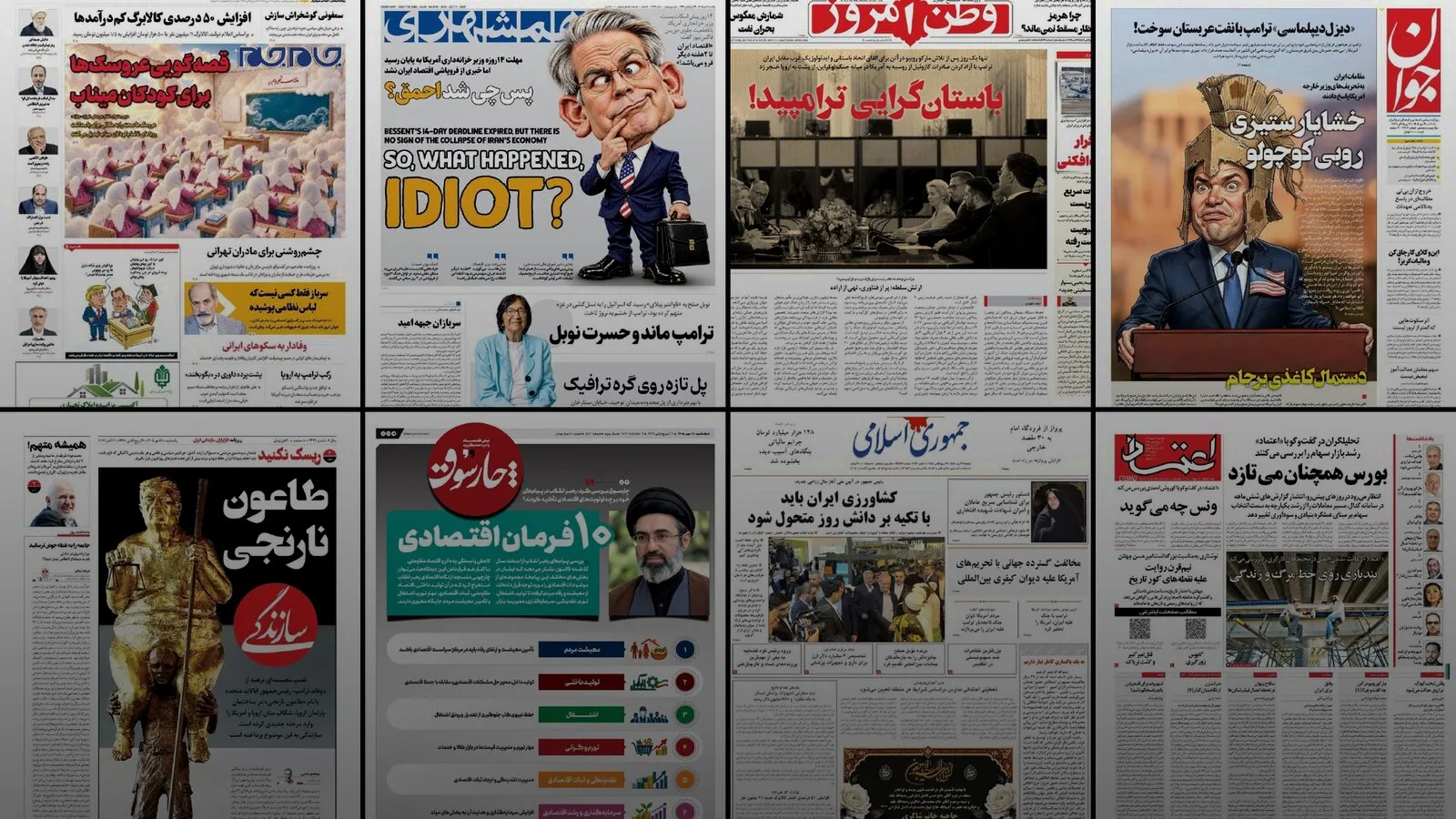
Bottom line: On the morning after the deadliest attack on a Gulf Arab state since this war began, twelve dead and 309 wounded at Riyadh’s main airport, the Iranian front pages were arguing about Xerxes, a failed two-week prediction and a gold statue in Strasbourg: the one hardline paper that led on Saudi Arabia chose an unconfirmed claim that the kingdom’s largest oil field had been destroyed over the attack its own channel had already confirmed, which indicates an estate protecting the legitimacy of its pressure campaign rather than advertising its effect.
Executive Summary
The lead judgment of this edition is that the Iranian press had a verified mass-casualty attack on a Gulf Arab capital available to it and declined to lead on it. Saudi authorities confirmed twelve dead and 309 wounded at King Khalid International Airport in Riyadh, among them four Saudi nationals and one American citizen, in what the independent record describes as the deadliest attack in a Gulf Arab country since this war began in February. The confirmation reached Jam-e Jam’s own channel at item 30626 before the night’s posting had finished. It does not lead a single one of the twelve Iranian front pages retrievable for this cycle. The two titles that did engage the Saudi story engaged it on their own terms: Kayhan led on «بزرگترین میدان نفتی عربستان منهدم شد», and Sobh-e No (No. 2446) on «از محاصره صنعا تا محاصره ریاض». Both are coercion arguments. Neither is a casualty report.
Kayhan’s choice is the edition’s sharpest single finding because the paper refutes its own headline four hundred words below it. The front page asserts that Saudi Arabia’s largest oil field has been destroyed; the accompanying analytic report at item 86454 states «تا لحظه تنظیم این گزارش جزئیات مستقلی درباره میزان خسارتها و تأثیر بر تولید نفت اعلام نشده» and describes the attribution to Yemeni forces as the paper’s own. Independent open-source reporting records satellite-visible smoke plumes in the Eastern Province and disagrees about whether they originate at Abqaiq, Ayn Dar or Ghawar; there is no Aramco or Saudi confirmation of damage, production impact or casualties. The headline is not supported by the body beneath it and is reported here as a claim. The analytic point is the selection, not the exaggeration: an infrastructure-destruction claim argues that Saudi Arabia cannot afford to continue the war, while a civilian airport attack invites exactly the charge the UN Secretary-General made within hours, a condemnation Etemad’s own channel relayed at item 538484. The hardline estate took the argument that costs it nothing.
What the covers did lead on was the adversary’s credibility, and three of them did it with material that checks out. Hamshahri gave its entire upper page to a bilingual attack on the US Treasury Secretary, «پس چی شد احمق؟» set beside the paper’s own English “SO, WHAT HAPPENED, IDIOT?”, decked to the expiry of a fourteen-day deadline with no sign of the predicted Iranian collapse. The predicate verifies and the clock is exact: Scott Bessent told Fox News on 27 September 2026 that Iran would make its final oil deliveries to China “probably within the next two weeks” and would then have nothing left to trade, and fourteen days from 27 September is this cover’s own date. Sazandegi led on «طاعون نارنجی», the gold-leafed nude Trump unveiled by Jens Galschiot in the European Parliament building in Strasbourg on 7 October. Vatan-e Emrooz led on «باستانگرایی ترامپید!», arguing that the American president knifed Europe over Russian diesel one day after his Secretary of State invoked Western civilizational unity in Athens. These are not claims about Iranian capability. They are claims about whether the adversary can be believed, and the method, a dated audit against a named official’s checkable quotation, is new in this monitor’s record.
The civilizational frame this monitor first recorded in the previous cycle has been institutionalised in twenty-four hours, and the government’s own daily did it. Iran newspaper fielded a coordinated edition against the 7 October address at the Pnyx: the archaeologist Malekzadeh rejecting the claim that the Achaemenid army destroyed Greek civilisation (item 509458), Touraj Daryaee of the University of California, Irvine, arguing that Rubio places the present war in continuity with 480 BC and that «در حال حاضر نیز این ایران نیست که به غرب حمله کرده» (item 509460), the foreign minister with «سناتورهای آمریکایی خواهان خروج از مهلکه هستند», Zarif with «روبیو که هیچ؛ سخنرانینویس او هم سواد ندارد», and the editor-in-chief Hadi Khosroshahin with a Mead-taxonomy reading of American foreign-policy traditions whose coinage, «ویلسونیسم در چکمه», the front page then promoted to a headline (item 509461). Javan ran the same speech as a cartoon, «خشایارستیزی روبی کوچولو», the Secretary of State in a cardboard Corinthian helmet. A state press capable of fielding a credentialled counter-argument within one cycle, including a named scholar resident in the United States, is demonstrating a capability it has not shown on any operational subject in this monitor’s record, and it is spending that capability on a quarrel about 480 BC.
Two escalation signals sit below the folds and neither is in a lead. Javan’s right rail carries «خروج از انپیتی مطالبهای در پاسخ به ناکامی تعهدات», withdrawal from the Non-Proliferation Treaty presented as a demand answering the failure of commitments, on the same cover whose bottom banner writes off the nuclear agreement as «دستمال کاغذی برجام». Vatan-e Emrooz’s top strap reads «چرا هرمز در انتظار مسقط نمیماند؟» over «شمارش معکوس بحران نفت», which puts a clock on the Omani mediation channel whose agreed coordinates the previous edition of this monitor recorded. Both are placed in rails rather than leads, which is either a judgment that they are not yet ripe or a deliberate normalisation of them as settled background. If either migrates to a lead in any hardline title, that is a change of state.
The chokepoint produced measurable third-party damage for the first time in this monitor’s record. UKMTO reported an outbound tanker struck on its port side by an unidentified projectile while leaving the Strait of Hormuz, with a fire aboard and the crew safe (Defa Press item 69559, Etemad item 538486, Vatan-e Emrooz item 28117); Defa Press item 69557 reports that following an IRGC Navy statement on the explosion of a violating tanker in the Persian Gulf, the United Arab Emirates reported one of its own tankers on fire in the same area. Sobh-e No’s channel carried TankerTrackers reporting Kuwaiti crude exports falling again because several KOTC very large crude carriers are under repair after the recent Hormuz attacks, with regional freight and insurance costs sharply higher and Kuwait possibly obliged to charter foreign tonnage. Until now the chokepoint has appeared in Iranian print as posture, then as bargain, then as enforcement doctrine. This is the first cycle in which it appears in the export volumes of a Gulf Arab state.
Domestically the cycle is governed by one internal-security event and one economic measure. Second Colonel Nosrat Eftekhari, the deputy for cultural and social affairs of the Sistan and Baluchestan police command, was killed on Friday 9 October by a roadside device on the Cheshmeh Ziarat road outside Zahedan, together with a second officer, Ehsan Dahmardeh; Jomhouri Eslami prints the president’s order for rapid identification of the perpetrators and the instigators, with the feminine form «شهیده» as printed, and the dispatch of an investigating delegation. The sequence across three cycles is tight: a senior policewoman killed on Friday, the Leader’s Police Week message to the internal-security force printed Saturday, a presidential order printed Sunday. On the economic side the food-coupon increase is the most-carried domestic item of the cycle, present on Jam-e Jam, Iran and Ta’adol and on every wire, with the Programme and Budget Organisation putting roughly forty million people in about 18.3 million households in scope after a self-declaration at my.gov.ir closing on Tuesday 21 Mehr. Ta’adol alone treats it sceptically, printing «سیاست حمایتی دولت زیر فشار تورم» over «جهش قیمت خودرو در بازار رکودی»: a car-price jump inside a recession is a statement about currency pass-through, not about demand.
The Leader returned to the covers for a second consecutive cycle, and the register changed completely. Saturday’s return was a Police Week message to the internal-security force; today Charsoogh gave its entire front page to «۱۰ فرمان اقتصادی», an infographic compiling his economic priorities from his own previous messages under his portrait. Two things follow. The compilation form requires no new text, which is how an office with thin public output is kept visibly present. And the tenth item is «جنگ و بازسازی اقتصادی»: compensating losses, securing goods, managing energy, and reconstruction after the war. That is the first instance in this monitor’s record of an Iranian cover printing, in the Leader’s own attributed voice, a category that presupposes the war ending. The «امام» honorific recorded on Kayhan’s rendering in the previous cycle does not recur anywhere in this batch.
Net assessment: this is a displacement edition. The war’s loudest event of the past twenty-four hours happened in Riyadh and reached Iranian readers through Telegram rather than through newsprint, while the front pages spent themselves on the adversary’s honesty, the adversary’s history and the adversary’s statuary. Part of that is a press-time artifact and this edition says so; the pages closed on the evening of 10 October and the Saudi toll was confirmed at about 22:00 UTC. But the part that is not an artifact is the choice made by the two titles that did have the material, and both chose coercion framing over casualty reporting. Set against that, the most consequential printed items of the cycle are small and placed low: a treaty-withdrawal demand in a rail, a clock on the Omani mediator in a strap, and a post-war reconstruction category in the Leader’s own compiled voice. Lebanon is absent for a ninth consecutive cycle and the Israeli front has no presence on any cover as an active theatre. The Iranian state is describing this war to its own public as a Gulf and Red Sea conflict about shipping, airspace, fuel prices and ancient history, and it is now describing it, in one line on one economic cover, as a war with an after.
Key Judgments
- KJ-1 [HIGH] The Iranian press had the deadliest Gulf Arab attack of this war available to it and no front page led on it. The evidence is one verified event and twelve covers. Saudi authorities confirmed twelve dead and 309 wounded at King Khalid International Airport in Riyadh, including four Saudi nationals and one American citizen, which the independent record describes as the deadliest attack in a Gulf Arab country since the war began in February. Jam-e Jam’s own channel carried the Saudi confirmation at item 30626, Etemad’s carried the UN Secretary-General’s condemnation at item 538484, Vatan-e Emrooz carried the Egyptian flight suspension and the week-long closure of Riyadh’s schools, and Nour News carried the airport’s 24-hour closure extension. None of it leads a cover. The calibration runs both ways and this monitor states it: the Persian pages closed on the evening of 10 October and the Saudi toll was confirmed at roughly 22:00 UTC, so treating the whole absence as editorial judgment would overread a press-time artifact, while treating it all as timing would miss that two titles did have Saudi material and chose what to do with it. The significance is that the cycle in which Iranian-aligned forces inflicted their heaviest civilian toll on a Gulf Arab state is the cycle in which Iranian front pages were least willing to make the Gulf the subject.
- KJ-2 [HIGH] Kayhan’s lead claim is contradicted by Kayhan’s own reporting, and the selection, not the exaggeration, is the finding. The front page of 19 Mehr asserts «بزرگترین میدان نفتی عربستان منهدم شد» with the deck «مرشایمر: هیچ راهی برای شکست ایران و یمن نیست». The paper’s own analytic report at item 86454 states «تا لحظه تنظیم این گزارش جزئیات مستقلی درباره میزان خسارتها و تأثیر بر تولید نفت اعلام نشده», describes the attribution to Yemeni forces as the paper’s own, and puts the verifiable material, more than 400 Riyadh cancellations since Friday, FlightRadar’s count of 335, Cirium’s near-half of departures, advisories from five states, flydubai suspended to 11 October, in the body. Independent open-source reporting records satellite-visible plumes in the Eastern Province and disagrees about whether they originate at Abqaiq, Ayn Dar or Ghawar; there is no Aramco or Saudi confirmation of damage, production impact or casualties. The claim is reported here and expressly not adopted. The significance is in the logic of the choice: an infrastructure-destruction claim argues that Saudi Arabia cannot sustain the war, while a mass-casualty civilian airport attack invites precisely the charge the Secretary-General made within hours. The estate took the argument that carries no liability, which indicates it is protecting the legitimacy of the pressure campaign rather than advertising its effect.
- KJ-3 [HIGH] The Iranian press has shifted from contesting adversary claims to auditing adversary credibility, and in this cycle it did so with material that checks out. The evidence is four covers. Hamshahri gave its upper page to a bilingual «پس چی شد احمق؟» set beside its own English “SO, WHAT HAPPENED, IDIOT?”, decked «مهلت ۱۴ روزه وزیر خزانهداری آمریکا به پایان رسید اما خبری از فروپاشی اقتصاد ایران نشد». The predicate verifies: on 27 September 2026 Scott Bessent told Fox News that with 15 million barrels of Iranian oil on the water Iran would make its final deliveries to China “probably within the next two weeks” and would then have nothing left to trade, and fourteen days from 27 September is this cover’s own date. Sazandegi led on «طاعون نارنجی», which verifies to Jens Galschiot’s gold-leafed nude unveiled in the European Parliament building in Strasbourg on 7 October at an exhibition hosted by the Danish MEP Per Clausen. Vatan-e Emrooz and Kayhan both built leads on the Russian diesel licence. The significance is methodological and it cuts against the Iranian press’s own recent record: this monitor has repeatedly found adversary-origin material arriving in Persian with an upgraded verb, and here the strongest covers of the cycle are the ones that needed no upgrade at all. A press that has learned it can win on the adversary’s own checkable statements will reach for them more often, and it is a harder form of information operation to answer than a fabricated one.
- KJ-4 [HIGH] The civilizational frame recorded as new in the previous cycle has been institutionalised by the government’s own daily within twenty-four hours. The evidence is one coordinated edition. Iran newspaper, published by IRNA under editor-in-chief Hadi Khosroshahin, ran the archaeologist Malekzadeh rejecting the claim that the Achaemenid army destroyed Greek civilisation and citing the Achaemenid assumption of the pharaonic title in Egypt (item 509458); Touraj Daryaee, professor of Iranian history and culture at the University of California, Irvine, arguing that the Secretary of State is placing the present war in continuity with 480 BC and that «در حال حاضر نیز این ایران نیست که به غرب حمله کرده» (item 509460); the foreign minister with «سناتورهای آمریکایی خواهان خروج از مهلکه هستند» and Zarif with «روبیو که هیچ؛ سخنرانینویس او هم سواد ندارد» (item 509456); and the editor-in-chief’s own Mead-taxonomy analysis concluding that the speech signals contest among American traditions rather than a settled turn, coining «ویلسونیسم در چکمه», which the front page then printed as a headline (item 509461). Javan rendered the same speech as a cartoon, «خشایارستیزی روبی کوچولو». The significance is capability rather than content. A state press that can field a credentialled, non-polemical counter-argument including a named scholar resident in the United States within a single news cycle is demonstrating something it has not demonstrated on any operational subject in this monitor’s record, and the subject it chose to demonstrate it on is a quarrel about 480 BC that contains no negotiable quantity.
- KJ-5 [MODERATE-HIGH] Withdrawal from the Non-Proliferation Treaty is now a printed demand in the Guard Corps’ daily, and it is placed in a rail rather than a lead. The evidence is one cover. Javan’s right rail carries «خروج از انپیتی مطالبهای در پاسخ به ناکامی تعهدات», withdrawal framed as a demand answering the failure of others’ commitments, on the same page whose bottom banner runs «دستمال کاغذی برجام», the nuclear agreement as a paper tissue. No other cover in the batch carries either item. The calibration matters: a rail item in one hardline title is not state policy, and reading it as such would inflate a single editorial decision into a decision of the Supreme National Security Council; but treating it as noise would miss that the same page disposes of the agreement and demands exit from the treaty in one cycle, which is a coherent position rather than two separate complaints. The significance is that the position is now in print and available to be escalated. The tracking cue is placement: if the NPT line migrates from a rail to a lead in any hardline title, or appears on a second cover, that is a change of state and not a change of emphasis.
- KJ-6 [MODERATE-HIGH] The hardline estate has begun putting a clock on the Omani mediation channel in print. The evidence is one strap and one absence. Vatan-e Emrooz’s top strap reads «چرا هرمز در انتظار مسقط نمیماند؟» over «شمارش معکوس بحران نفت», asking in the paper’s own voice why Hormuz will not wait for Muscat. The previous edition of this monitor recorded the chokepoint moving from posture to bargain, with coordinates agreed through Oman, and recorded Jomhouri Eslami as the single daily sponsoring the negotiating track in print with «پاسخ به پیشنهاد جدید آمریکا روزهای آینده داده میشود». Three days after the foreign minister’s «روزهای آینده», Jomhouri Eslami has dropped the track entirely and led on the crop year, and no other cover has picked it up; the only trace on any front page is a strap on Javan assigning the answer to the foreign minister. The significance is that the mediation channel has lost its last print sponsor in the same cycle in which the hardline estate started asking publicly why it should be waited for. A track with no defender and an attacker with a clock is a track that can be abandoned at low political cost.
- KJ-7 [MODERATE-HIGH] The Hormuz campaign has produced its first measurable damage to a Gulf Arab state’s own exports, as reported by an Iranian principlist paper. The evidence is three surfaces. UKMTO reported an outbound tanker struck on the port side by an unidentified projectile while exiting the Strait of Hormuz, with a fire aboard and no crew injured, carried by Defa Press at item 69559, Etemad at item 538486 and Vatan-e Emrooz at item 28117. Defa Press item 69557 reports that following an IRGC Navy statement on the explosion of a violating tanker in the Persian Gulf, the United Arab Emirates reported one of its own tankers on fire in the same area. Sobh-e No’s channel at item 116655 carried TankerTrackers attributing a renewed fall in Kuwaiti crude exports to a shortage of operational tonnage, with several KOTC very large crude carriers under repair and the company’s fleet damaged by the recent attacks in Hormuz, regional freight and insurance costs sharply higher, and Kuwait possibly obliged to charter foreign vessels. The attribution of the individual strikes is not established and is not asserted here. The significance is the progression this monitor has now recorded in four stages: Hormuz as posture, then as bargain with coordinates, then as enforcement doctrine reaching beyond the strait, and now as a measurable reduction in a neighbouring producer’s export volumes. The fourth stage is the one that creates pressure on parties who are not belligerents.
- KJ-8 [MODERATE-HIGH] The Leader’s print presence has stabilised across two consecutive cycles, and today it printed a category that presupposes the war ending. The evidence is one cover. Charsoogh (Year 3, No. 577) gave its entire front page to «۱۰ فرمان اقتصادی», an infographic compiled by the paper from the Leader’s own messages and printed under his portrait with the strap «چارسوق بررسی کرد: رهبر انقلاب در پیامهای خود بر چه اولویتهای اقتصادی تأکید کردند؟». The tenth of the ten is «جنگ و بازسازی اقتصادی»: compensating losses, securing goods, managing energy, and reconstruction after the war. Two observations follow. The compilation form means a Leader cover can be produced without any new text from him, which is how an office with thin public output is kept present on the front pages, and it should temper any reading of his return as renewed activity. And the post-war category is, in this monitor’s record, the first time an Iranian cover has printed in the Leader’s own attributed voice a heading that only makes sense if the war ends. The «امام» honorific recorded on Kayhan’s rendering in the previous cycle does not recur anywhere in this batch, which is filed as a non-recurrence and not as a correction.
- KJ-9 [MODERATE] The Iranian system is answering internal-security attrition with visible command attention at the highest level, in the same week the Leader addressed the police. The evidence is one cover item and a three-cycle sequence. Jomhouri Eslami prints «دستور رئیس جمهور برای شناسایی سریع عاملان و آمران شهادت شهیده افتخاری», with a portrait, the feminine «شهیده» as printed, and bullets recording the dispatch of an investigating delegation and identifying the victim as the deputy for cultural and social affairs of the Sistan and Baluchestan police command. The independent record names her as Second Colonel Nosrat Eftekhari, killed on Friday 9 October by a roadside device on the Cheshmeh Ziarat road outside Zahedan together with a second officer, Ehsan Dahmardeh, with the national police commander stating that retribution is certain. The sequence runs: a senior policewoman killed on Friday, the Leader’s Police Week message to the internal-security force printed Saturday, a presidential order printed Sunday. In the same cycle the qisas sentence for the killer of Second Lieutenant Reza Ehterami of the FARAJA relief unit in Bandar Abbas, killed in a clash with fuel smugglers, was carried out and reported on five channels in one morning. The significance is that the internal-security file is the one subject on which this press is currently reporting Iranian losses by name, with a face and a rank, which it does not do for any external theatre.
- KJ-10 [MODERATE] The state press is converting the war’s heaviest Iranian civilian loss into commemorative culture rather than evidentiary claim. The evidence is three surfaces in one cycle. Jam-e Jam, the state broadcaster’s own daily, gave its entire front page to «قصهگویی عروسکها برای کودکان میناب» over a photograph of a classroom of small girls, with no restatement of what happened in Minab. Javan’s rail carried the Tehran theatre festival work «خیالنامه میناب» described as addressing the narration of this crime. Fars carried video of the FARAJA special-units commander paying respects to the «شهدای دانشآموز میناب». The event underneath is the 28 February 2026 strike on the Shajareh Tayyebeh girls’ elementary school in Minab, with an independently recorded toll of roughly 156 to 168 dead including about 120 children, the heaviest single civilian loss of this war and the subject of an internal American military review that found US forces likely responsible. The significance is that a system with a legally potent grievance is choosing puppetry, theatre and a wreath-laying over the toll. That is consistent with a decision to build a durable commemorative vocabulary rather than to spend the event on a single news cycle, and it means the absence of casualty figures from these covers is not evidence that the claim has been dropped.
- KJ-11 [MODERATE] The Iranian press is no longer defending the economy; it is defending the proposition that the economy has not collapsed, and the economic papers are marking the difference themselves. The evidence is four covers read against each other. Hamshahri’s whole page argues that a dated American prediction of collapse expired unfulfilled. Ta’adol prints «سیاست حمایتی دولت زیر فشار تورم» over «جهش قیمت خودرو در بازار رکودی», with «از رکود مسکن تا مهاجرت سازندگان» and «عقبنشینی بیتکوین از مرز ۸۷ هزار دلار» in the rail. Etemad leads on «بورس همچنان میتازد» and then qualifies it in its own deck, expecting the six-month filings on Codal to turn an across-the-board rally into selection on actual profitability. The food-coupon increase, the cycle’s most-carried domestic item, reaches the covers as relief on Jam-e Jam and Iran and as a policy under inflationary pressure on Ta’adol. A car-price jump inside a recession is a statement about currency pass-through rather than demand, and an equity index at a high that the paper itself attributes to nominal rather than real factors is the same statement in another market. The significance is that the gap between the political and the economic covers is now wide enough to be measured in a single cycle, and both halves are published by the same state.
- KJ-12 [MODERATE] Negative evidence, filed as a finding: Lebanon is absent for a ninth consecutive print cycle and for a third consecutive cycle from the wires. The evidence is a complete absence across twelve front pages, six outlet channels and three agency wires. No cover carries a Lebanese item of any kind; no outlet channel carried Lebanese political content; and Defa Press, Fars and Nour News, which in earlier cycles carried Hezbollah statements and southern Lebanon strike reports as routine filler, carried none. The previous edition recorded the eighth empty print cycle and the second empty wire cycle, so this is continued consolidation rather than a gap. The significance is unchanged and the limit of the inference is restated: a theatre the Iranian system spent two decades presenting as the forward edge of its deterrence has been entirely withdrawn from the Iranian public’s field of vision, which is consistent either with a theatre that has gone quiet or with a theatre whose condition the system has decided not to describe. Iranian print cannot distinguish the two and this monitor does not attempt to.
- KJ-13 [MODERATE] Negative evidence, filed as a finding: the Israeli front appears on the Iranian covers only as the object of other people’s legal arguments, for a second consecutive cycle. The evidence is three mentions across twelve covers, none of them operational. Hamshahri’s «ترامپ ماند و حسرت نوبل» reaches Israel through the laureate who accused it of genocide in Gaza; Jomhouri Eslami carries «مخالفت گسترده جهانی با تحریمهای آمریکا علیه دیوان کیفری بینالمللی» and the laureate’s dedication of her prize to the survivors of international crimes; Vatan-e Emrooz carries a signed piece on Yahya Sinwar’s legacy in the making of a new Palestinian. No cover carries an Israeli strike, an Iranian retaliation, a casualty figure or a battle-damage claim. The calibration is the same as in the previous edition and bears repeating: inferring a quiet front from editorial silence would overread, since this monitor has repeatedly found that Iranian print suppresses losses rather than reporting them. What can be said is narrower and still useful. For a second consecutive cycle the Iranian state described this war to its own public as a Gulf and Red Sea conflict, with Israel present only as a defendant in other people’s courtrooms.
- KJ-14 [MODERATE] The epithets attached to the American president in Iranian state-adjacent media have moved from political to personal, and the shift is not confined to one estate. The evidence is three channels in one night. Kayhan’s channel at item 86440 introduces him as «رئیسجمهور پدوفیل آمریکا» before quoting him calling Iran an evil nation and the world’s largest source of terrorism. Vatan-e Emrooz at item 28121 introduces him as «رئیسجمهور تروریست آمریکا» before reporting his judgment that the attacks on Saudi Arabia were catastrophic, that «ما با انصارالله در ارتباط هستیم», that he has not yet spoken to the Saudi crown prince and that Iran may act again before the American elections. Nour News, linked to the Supreme National Security Council, uses the same «رئیسجمهور تروریست آمریکا» formula at item 400958. The calibration is that Iranian media have insulted American presidents for four decades and a harsher adjective is not by itself an escalation. What is new is the convergence: a hardline daily, a principlist daily and a security-council-linked wire using personal-conduct epithets as standing descriptors in the same cycle, attached to verbatim quotation rather than to commentary. The significance is that this is the vocabulary a system adopts when it has decided the counterpart is not a negotiating partner, published on the same morning the only daily that sponsored the negotiating track dropped it.
Macro Trends
- The deadliest attack of the war on a Gulf Arab state reached the Iranian wires and almost none of the Iranian covers. Saudi authorities confirmed twelve dead and 309 wounded at King Khalid International Airport in Riyadh, including four Saudi nationals and one American, in the deadliest attack in a Gulf Arab country since the war began in February. Jam-e Jam’s channel carried the confirmation at item 30626, Etemad’s channel carried the UN Secretary-General’s condemnation of «حمله مرگبار حوثیها» at item 538484, Vatan-e Emrooz carried Egypt’s suspension of Cairo-Riyadh flights and the week-long closure of Riyadh’s schools at items 28116 and 28125, Nour News carried the 24-hour extension of the airport closure at item 400962. Not one of the twelve retrievable front pages leads on it. Part of this is press time, since the pages closed before the toll was confirmed; the part that is not is which frame the two engaged titles chose.
- Kayhan’s lead is refuted by Kayhan’s own text. The front page asserts «بزرگترین میدان نفتی عربستان منهدم شد»; the report beneath it at item 86454 states that no independent detail of damage or effect on oil production had been announced at the time of writing, describes the attribution to Yemeni forces as the paper’s own, and places the aviation disruption, 400-plus Riyadh cancellations since Friday, FlightRadar’s 335, Cirium’s near-half of departures, advisories from five states, in the body rather than the headline. Independent open-source reporting records smoke plumes in the Eastern Province and disputes whether they originate at Abqaiq, Ayn Dar or Ghawar, with no Aramco or Saudi confirmation. An infrastructure-destruction claim argues that Riyadh cannot afford the war; a civilian airport toll invites a war-crime charge. The estate took the first.
- Adversary credibility, not Iranian capability, is what the covers now attack, and the material checks out. Hamshahri ran a bilingual «پس چی شد احمق؟» / “SO, WHAT HAPPENED, IDIOT?” timed to the expiry of the US Treasury Secretary’s fourteen-day window, a predicate that verifies to his 27 September Fox News remarks almost to the day. Sazandegi ran «طاعون نارنجی» on the Galschiot statue unveiled in the European Parliament on 7 October. Vatan-e Emrooz ran «باستانگرایی ترامپید!» on the Russian diesel licence as a knife in Europe’s back. Kayhan ran «ترامپ درمانده در جنگ | غرب را به ۳۰۰ هزار تن گازوئیل فروخت!». Four covers, four different adversary-credibility arguments, no Iranian capability claim among them.
- The civilizational frame was institutionalised by the government’s own daily within one cycle. Iran newspaper fielded an archaeologist (item 509458), a professor of Iranian history at the University of California, Irvine (item 509460), the foreign minister, the former foreign minister and its own editor-in-chief (item 509461) against the 7 October Athens address, and promoted the editor’s coinage «ویلسونیسم در چکمه» to a front-page headline. Javan ran the same speech as «خشایارستیزی روبی کوچولو» with the Secretary of State in a cardboard helmet; Vatan-e Emrooz built its lead on it. A press that can assemble a credentialled rebuttal in twenty-four hours is showing a capability it has not shown on any operational subject.
- Treaty withdrawal and a clock on the mediator are both in rails, not leads. Javan’s right rail carries «خروج از انپیتی مطالبهای در پاسخ به ناکامی تعهدات» on the same cover whose bottom banner reads «دستمال کاغذی برجام»; Vatan-e Emrooz’s top strap reads «چرا هرمز در انتظار مسقط نمیماند؟» over «شمارش معکوس بحران نفت». The previous edition of this monitor recorded the chokepoint acquiring a bargain with coordinates agreed through Oman. Asking in print why Hormuz should wait for Muscat is how a negotiating track is put on notice without an official saying so. Placement below the fold is the variable to watch in both cases.
- The chokepoint has begun to register in a Gulf Arab state’s export volumes. UKMTO reported an outbound tanker struck on the port side by an unidentified projectile while leaving the Strait of Hormuz, with a fire aboard and the crew safe; Defa Press item 69557 reports that after an IRGC Navy statement on the explosion of a violating tanker, the United Arab Emirates reported one of its own tankers alight in the same area. Sobh-e No’s channel carried TankerTrackers attributing a renewed fall in Kuwaiti crude exports to KOTC very large crude carriers under repair after the recent Hormuz attacks, with freight and insurance costs sharply higher. Posture, then bargain, then enforcement doctrine, now measurable third-party damage.
- The Leader is present for a second consecutive cycle, as an economic rulebook that names a post-war category. Charsoogh (No. 577) gave its whole cover to «۱۰ فرمان اقتصادی» compiled from the Leader’s own messages under his portrait, running from «معیشت مردم» through «اقتصاد مقاومتی» and «دلار و وابستگی ارزی» to a tenth item, «جنگ و بازسازی اقتصادی», compensating losses, securing goods, managing energy and reconstruction after the war. The compilation form needs no new text from him. The tenth item is the first Leader-attributed category on any cover in this monitor’s record that presupposes the war ending. The «امام» honorific recorded on Kayhan’s rendering in the previous cycle does not recur anywhere in this batch.
- Internal security produced the cycle’s one Iranian casualty story, and the command response was printed at presidential level. Second Colonel Nosrat Eftekhari, deputy for cultural and social affairs of the Sistan and Baluchestan police command, was killed with a second officer by a roadside device outside Zahedan on Friday 9 October. Jomhouri Eslami printed the president’s order for rapid identification of the perpetrators and the instigators, in the feminine «شهیده», with an investigating delegation dispatched; the Iran channel carried the same at item 509456; the national police commander has said retribution is certain. Separately, the qisas sentence for the killer of Second Lieutenant Reza Ehterami of the FARAJA relief unit in Bandar Abbas was carried out and reported on five channels in a single morning.
- The Minab school killings returned as commemoration on two covers, never as a casualty claim. Jam-e Jam gave its entire front page to «قصهگویی عروسکها برای کودکان میناب», a puppet and storytelling programme for Minab’s schoolchildren, over a photograph of a classroom of small girls. Javan’s rail carried the Tehran theatre festival work «خیالنامه میناب»; Fars carried the FARAJA special-units commander paying respects to the «شهدای دانشآموز میناب». The event underneath is the 28 February strike on the Shajareh Tayyebeh girls’ elementary school, roughly 156 to 168 dead including about 120 children, the heaviest civilian loss of this war. The state press is building it into a commemorative vocabulary rather than an evidentiary one.
- The economic press is contradicting the political press about the same week, in the same cycle. Hamshahri’s cover argues that the predicted collapse did not happen. Ta’adol’s prints «سیاست حمایتی دولت زیر فشار تورم» over «جهش قیمت خودرو در بازار رکودی», plus «از رکود مسکن تا مهاجرت سازندگان» and «عقبنشینی بیتکوین از مرز ۸۷ هزار دلار». Etemad leads on «بورس همچنان میتازد» and immediately qualifies it with the expectation that six-month filings will turn the rally from across-the-board growth into selection on actual profitability. Both accounts can hold at once: the measurable claim is not that the economy is well but that it has not collapsed, and the papers themselves have begun marking the difference.
- Lebanon is absent for a ninth consecutive cycle and the Israeli front has no presence on any cover as an active theatre. No Lebanese item appears on any of the twelve retrievable front pages, on any of the six outlet channels or on any of the three agency wires, a third consecutive wire blackout following the two the previous edition recorded. Israel appears on the covers only as the object of other people’s legal and moral arguments: the Nobel laureate who accused it of genocide in Gaza (Hamshahri, Jomhouri Eslami), worldwide opposition to the American sanctions on the International Criminal Court (Jomhouri Eslami), and a signed piece on Yahya Sinwar’s legacy (Vatan-e Emrooz). No strike, no retaliation, no casualty figure and no battle-damage claim from the Israeli front appears anywhere.
Front-Page Snapshot
- Kayhan - “Saudi Arabia’s largest oil field destroyed” (Hardline, Supreme Leader’s office) - Unverified Ghawar destruction claim chosen over the Riyadh airport toll [HIGH]
- Sobh-e No - “From the siege of Sanaa to the siege of Riyadh” (Principlist) - Siege symmetry, plus measured damage to Kuwaiti crude exports [MODERATE-HIGH]
- Javan - “Little Rubio’s war on Xerxes” (Hardline, IRGC-affiliated) - NPT withdrawal in the rail under a civilizational cover [HIGH]
- Vatan-e Emrooz - “Antiquarianism, Trumped!” (Hardline principlist) - Western unity prosecuted and dismantled; a clock on Omani mediation [HIGH]
- Iran - “Falsifying history, justifying warmongering” (Official government daily (IRNA)) - Coordinated state rebuttal of the Athens address [MODERATE]
- Hamshahri - “So, what happened, idiot?” (Tehran municipality, centrist) - Dated prediction audit of the US Treasury Secretary, printed in English too [MODERATE]
- Sazandegi - “The Orange Plague” (Reformist, Kargozaran party) - European ridicule of the adversary; inward warning on street enforcement [LOW-MODERATE]
- Charsoogh - “The ten economic commandments” (Economic daily, No. 577) - The Leader’s economic doctrine compiled, including post-war reconstruction [LOW]
- Jomhouri Eslami - “Iran’s agriculture must be transformed by relying on modern knowledge” (Clerical establishment) - Crop year and internal security; the negotiating track drops out of print [MODERATE]
- Jam-e Jam - “Puppets tell stories to the children of Minab” (State broadcaster (IRIB)) - War memory as cultural recovery [LOW-MODERATE]
- Etemad - “The bourse keeps galloping” (Reformist) - Equity rally and workplace safety; adversary read through a named diplomat [LOW]
- Ta’adol - “The government’s support policy under inflationary pressure” (Economic daily) - Support policy under inflation; car prices jump in a recession [LOW]
- Iran Daily (8 Oct, out of cycle) - “Speaker warns of enemy plots to foment domestic insecurity after failure on battlefield” (English-language state daily (IRNA)) - Out-of-cycle English kiosk issue retained for thread continuity [LOW]
Full report
The complete edition - per-paper front-page analysis and full translation appendices - is available as a PDF: Download the full report.
Compiled from Iranian front pages and outlet channels via open-source monitoring. Translations are editorial; named-figure attributions are verified against the source pages where possible.