Tehran's Morning Papers: Hormuz Becomes the Story Iran Can't Stop Telling
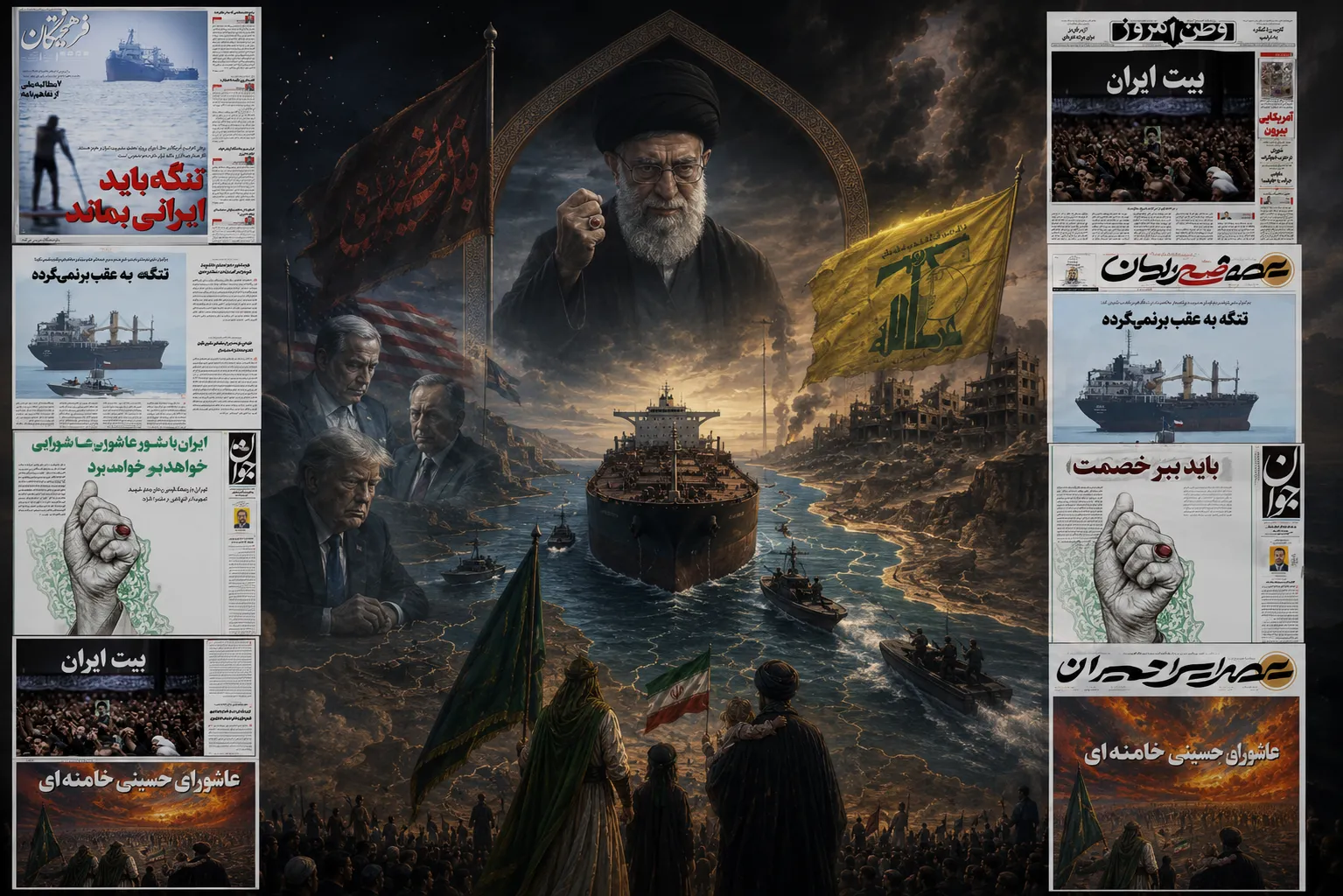
Iranian press roundup — Saturday, 27 June 2026
After three days of silence for Ashura and Tasua, Iran’s daily papers are back on newsstands — and they came back with one message stamped across nearly every front page: the Strait of Hormuz is not going back to the way it was.
The strait that won’t “revert”
If you only read one headline from today’s stack, it would be hard to avoid the word “Hormuz.” At least eight papers led, or nearly led, with it.
Javan, the IRGC-aligned daily, ran the most blunt version: “Hormuz Pressure on America’s Throat,” arguing that Iran’s quiet control over shipping through the strait — exercised without anyone’s permission — is now Tehran’s strongest card, one Washington can complain about but can’t actually take away.
Farhikhtegan went further into threat territory with “The Strait Must Remain Iranian,” reporting that “some Arab states and America” are working on a plan to limit Iran’s role there — and warning that if Oman doesn’t fall in line, “military tools remain available.”
The Khamenei-affiliated Sedaye Iran made it almost a constitutional principle: “The Strait Will Not Revert Backward,” with an op-ed asking why Iran can’t and shouldn’t step back from exercising sovereignty over Hormuz. Sobh-e No added an interesting wrinkle — citing Oman as having told European counterparts that the pre-war status quo simply isn’t coming back unless there’s another war. And Etelaat, the state paper, published the operational version of all this rhetoric: an actual IRGC navigation order, “New Route in the Strait Forbidden,” telling vessels they may use only routes Iran has announced.
Even the business press joined in. Jahan Sanat’s lead editorial had perhaps the most candid framing of the week: “A Weapon Called the Strait of Hormuz,” treating Iran’s transit-fee leverage over the waterway as a legitimate economic weapon, full stop.
Cracks in the consensus
Not everyone is convinced this leverage is risk-free. NoBonyad, a more hardline-critical outlet, ran a striking piece asking whether all this “costly diplomacy” with Oman has actually allowed the US to quietly engineer a way around Iran’s position in the strait rather than reinforcing it. And Jam-e-Jam complained that some Gulf Arab states are — its words — being “milk cows” again, rejoining a US-led coalition against Iran, which sits awkwardly next to other reports (citing Nournews and even the New York Times) suggesting the Gulf is actually warming up to Tehran. Tehran’s papers, in other words, aren’t all telling the same story about how well this is going.
Adding real weight to the week: Iran’s Foreign Ministry issued a formal statement confirming that the US struck several points along Iran’s southern coast on Friday, and that Israel hit Lebanon at the same time — both, Tehran says, violations of the ceasefire deal signed in Islamabad. Iran says it struck back. Separately, an IRGC spokesman went out of his way to deny that there’s any “direct line” arrangement with Washington over Hormuz, calling the idea “an absolute lie.” Translation: Iran wants the world to know this is unilateral, not negotiated.
Ashura still owns the front page
Even with all that, religion and mourning haven’t been pushed aside. Hamshahri’s “The Street Became a Hosseiniyeh” described this year’s Ashura as the most fervent in a decade, with neighborhoods turning into open-air mourning grounds. Kayhan ran a global report headlined, in effect, “Hussein is no longer alone in the world,” pointing to mourning processions abroad — right under a much more domestic headline blasting the government for a 100% hike in bread prices. Jam-e-Jam and Etemad both leaned into the Ashura-as-resistance theme, with several papers noting that Hezbollah’s Sheikh Naim Qassem used his own Ashura remarks to pledge Lebanon will stand “alongside Iran” — and to vow Israel will be pushed out “with contempt.” That, notably, sits in tension with a separate claim — denied by Hezbollah-aligned voices — that Israeli media are already treating a Lebanese-government deal with Israel as a done deal.
The economy is the quiet subplot
Strip away the geopolitics, and there’s a tougher domestic story underneath. Sazandegi devoted its top headline not to money but to politics — accusing hardline preachers of running an unchecked campaign of insults against President Pezeshkian — while still finding room for a striking number: an estimated $200 billion war bill, with daily losses still running at $50 billion. NoBonyad cited fresh central-bank data showing two straight years of negative growth, calling the government’s economic management “planless.” Add in Shargh’s lead on a fresh wave of bank-system hacking and Donya-e Eqtesad’s recession indicators, and the picture underneath all the Hormuz bravado is of a press corps — even on the hardline side — increasingly willing to print the bad economic news.
The bottom line
Today’s papers tell two stories at once: a confident, almost celebratory one about Iran having permanently rewritten the rules in the Strait of Hormuz, and a quieter, more anxious one about insults flying at the president, a war bill nobody quite knows how to pay, and a Gulf-Arab relationship that depends on who you ask. Both are true at the same time — which is, in a way, the most accurate single sentence anyone could write about Iran on the morning of 27 June.