Reading the Islamabad MoU Through the Lebanon-Hormuz Lens
Iran’s posture toward Lebanon today is not a new policy. It is the latest chapter of an investment that is decades old, and the logic behind it has not changed: Hezbollah is not a proxy Tehran can afford to lose; it is the load-bearing wall of the entire Axis of Resistance. Everything Iran has built around deterring Israel and the US rests on the assumption that Hezbollah survives, intact and credible, no matter what is thrown at it.
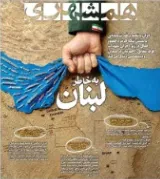
A War Iran Insists It Won
This is the frame Tehran is determined to apply to its own recent confrontation with the United States and Israel, and it is the same frame it wants applied to Hezbollah: not survival, but victory. The narrative Iran has built around its own war is straightforward - it absorbed serious blows, and it came out of them stronger, more capable, and more entrenched than before. Whatever the battlefield cost, the political and strategic result, as Tehran tells it, was consolidation, not retreat.
Iran wants exactly that story to repeat itself with Hezbollah. The damage Hezbollah has taken is real, and Tehran does not pretend otherwise in private, but the public and strategic objective is identical to its own case: emerge from the campaign not weakened but hardened, with its deterrent value restored and its place at the center of the resistance axis reaffirmed rather than diminished. Hezbollah’s survival as a credible armed actor is, in this sense, a test of whether Iran’s entire model - take the hit, absorb it, and come back stronger - actually works as a transferable doctrine, or whether it only worked once.
Hormuz as the Proven Instrument
This is where the Strait of Hormuz enters the picture, and why it matters far beyond its role as a shipping choke-point. In Iran’s own recent confrontation with Washington and Israel, the threat to Hormuz functioned as what Iranian strategists describe as a doomsday weapon: a lever so economically catastrophic in the potential use that it forced restraint on the other side without ever needing to be fully triggered. It worked. Iran believes it worked and intends to continue relying on it.
That precedent is now the template for how Iran wants to manage the Lebanon front as well. Just as Hormuz leverage helped stabilize the outcome of Iran’s own war and protect it from further escalation, Tehran wants a comparable instrument of leverage standing behind Hezbollah. This mechanism raises the cost of bringing the campaign in Lebanon to a conclusion, just as it raised the cost of pressing the campaign against Iran itself. The recent move to formalize control over transit through the strait, turning a rhetorical threat into something closer to an institutional one, should be read in this light: it is less about shipping policy and more about keeping the doomsday option credible and ready, for Lebanon’s sake as much as Iran’s own.
The Bottom Line
Iran’s behavior in Lebanon is continuity, not improvisation. Hezbollah is the pillar Tehran has spent decades building and cannot allow to fall. Iran wants Hezbollah’s outcome to mirror its own: battered but unbroken, and ultimately stronger for having endured. The Strait of Hormuz is the proven instrument Iran credits with helping deliver that outcome for itself, and it is now being deliberately positioned as the same kind of insurance policy for the Lebanon front. Watching how seriously Iran treats its own authority over Hormuz transit is, in effect, watching how seriously it intends to defend Hezbollah.